Dark Days

Content warning: still about terminal cancer.

The dark is getting to me this year—persistent, cold, bitter. But, I’ll be damned if I let it stop me. One thing I know about the dark, is it must be faced. Not feared. Not ignored. Not fought. Not run from. And, for goodness sake, not given into.

That’s my weakness—giving in. I’m captivated by the dark. The stars, that milky stroke across the sky, the fleeting shadows, and the mystery draw me in. I could easily fall into the dark and let it consume me. Indeed, for much of the last four years I’ve had to hide in the dark to protect my skin, sanity, and immune system—staying away from sun and people.
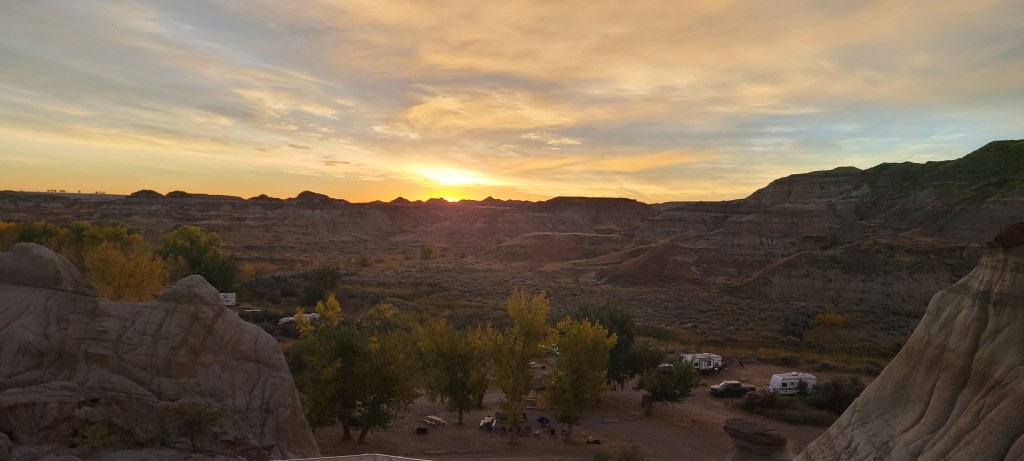
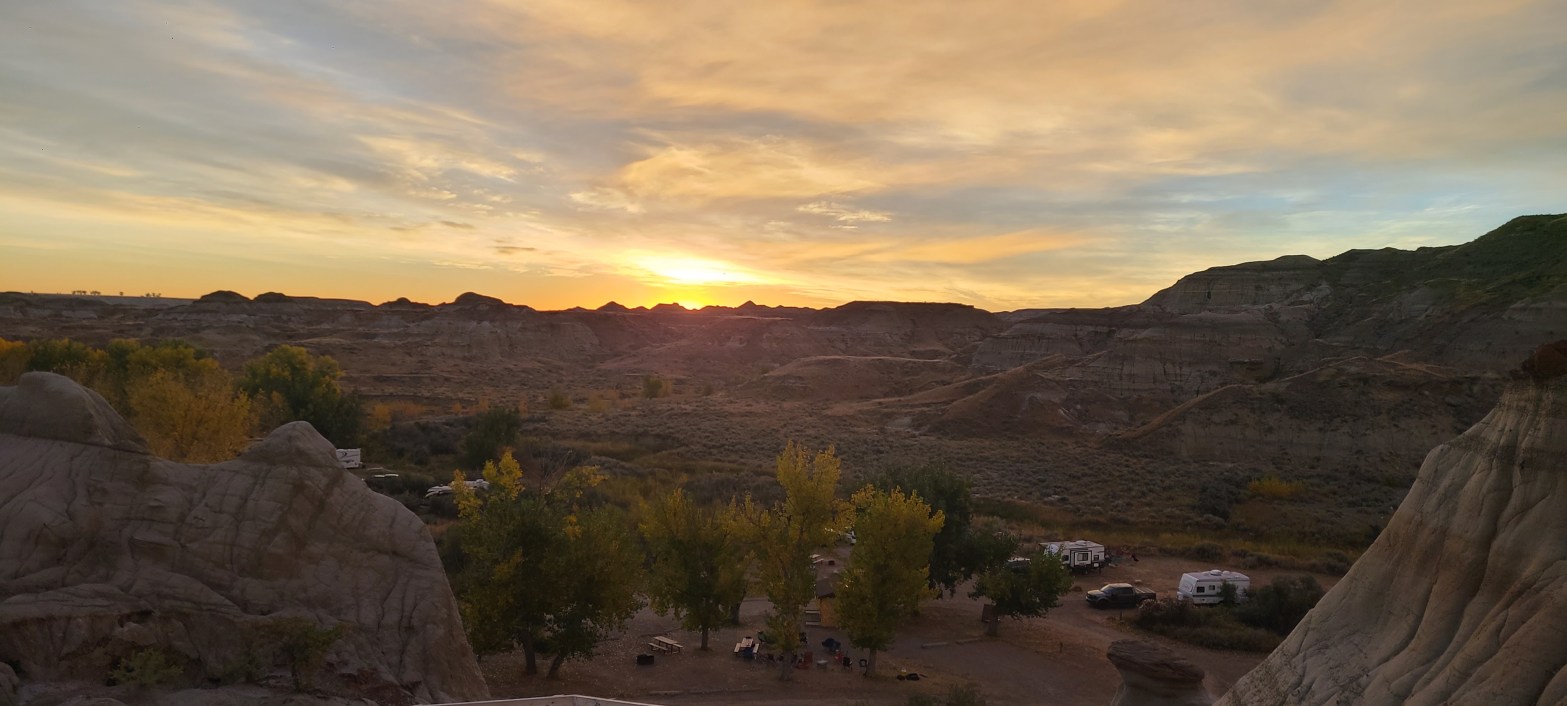
Rod and I went to Dinosaur Provincial Park in September.

A month ago, I sat in my doctor’s office and tears trickled down my cheeks, my breath caught in my throat, and sobs rang from my chest. I held my heart like a hug—a way to comfort myself. My onocologist handed me the tissue box. I’d just been told that the treatment I’m on usually extends survival by about 10 months. It’s a hard thing to hear. I’d just turned 39 and the laughter of my best friend’s first child still rang in my ears from the day before. There’s always light in the darkness, those stars that make the shadows flicker.

It’s not easy getting bad news as the nights grow longer and days become colder. There’s fewer activities to distract me and I’m forced to stay still, to nest… and ruminate. Furthermore, my new treatment makes me quite fatigued, which suits the 16 hour-long nights, but not keeping busy. Still, I get up the next day and make a grocery list because, goodness, I’ve dealt with everything else ad nauseam.

But this is what I’m talking about. I can give in too easy. I can plan so much for darkness that may never come (some darkness always does though). But my weakness is also my strength, because I can also plan for miserable things that need to be planned for. Not that I think death is miserable or dark, per se. But, to be honest, I still like life quite a lot and want to get the full experience—the good and bad, the sublime and imperfect, the light and dark—before I become dust and soil. And, so, I am looking at options. I may be going to the States next year for treatment, if I qualify. There’s a clinical trial coming to Calgary that may be a strong option for me.

And so, I dwell in the darkness of the season, for a bit. I go for walks when the low-hanging sun hits my face. I let stars guide me to new horizons and opportunities, being ready for what may come.
Gratitude

Another milestone approaches, one I’d never thought I’d reach: my fiftieth round of chemo. Honestly, I thought I’d have left cancer well behind me by this point. There’s a small chance I have; there’s many chances I haven’t. I’m choosing a practical optimism at every opportunity I get, but to be honest, it’s difficult to deal with the uncertainty of what this actually means.

The remaining three tumors in my liver (each the size of dice) appear to be largely calcified—like little skeletons buried in the vibrant ecosystem of my liver. I’m so grateful and awed by the ways the body strives to live. And, I’m grateful for medicine, and the ongoing development of new and better tests and therapies. The thought of going off of the treatment that has kept me alive for the last thirty-two months is frightening, while also relieving (two seemingly competing truths existing together). But even to be here is amazing. Even just fifteen years ago, I wouldn’t have had access to the same drugs I have today.

This got me thinking. I looked up causes of death through history. The first thing I saw was that only a century ago almost fifty percent of people died before they were adults. Nowadays, that number is below one percent. Frankly, I’d be dead if I was born a century earlier. I had pneumonia when I was around eight years old. It would have killed me a hundred years ago, and it could have killed me had I not been born in a wealthy country even now. Type 1 diabetes was a miserable death sentence a century ago. It’s frankly amazing that discoveries and innovations, combined with a handful of other close calls, have given me as much life as I have. And this is probably true for nearly half of the people reading this, half of your friends, half of your coworkers, half of the brilliant people making these discoveries.

I have a lot of gratitude these days. It keeps me uplifted and hopeful. It helps me see all beings as caring and giving of their best. It helps me see and feel my place in the web of being. Basically, it helps me just to see so much. I think about being a kid, and writing thank you cards to family members after Christmas gifts were exchanged. It was a simple practice of gratitude that informed my inclination to the practice later in life. And am I ever thankful for that too.

I remember (perhaps inaccurately, but to the best of my knowledge) being part of the health and safety committee at work, and as part of a mental health strategy, we implemented a thank you board in the office. It was largely a success, but concerns were raised that we shouldn’t be thanking people just for doing their jobs. I get where people are coming from with this argument, but I put forth that thanking someone is a rather simple action in comparison to the meaningful effect it can have. And who knows, some people struggle to get out of bed in the morning, how does some recognition change their morning? Others may feel like an imposter, or face any other struggles that plague us in the workplace, how does some appreciation change their work? I think about how differently I show up to conversations when someone simply shows appreciation for the effort I have put into a piece of work, even if my efforts turn out to be misinformed or otherwise shit.

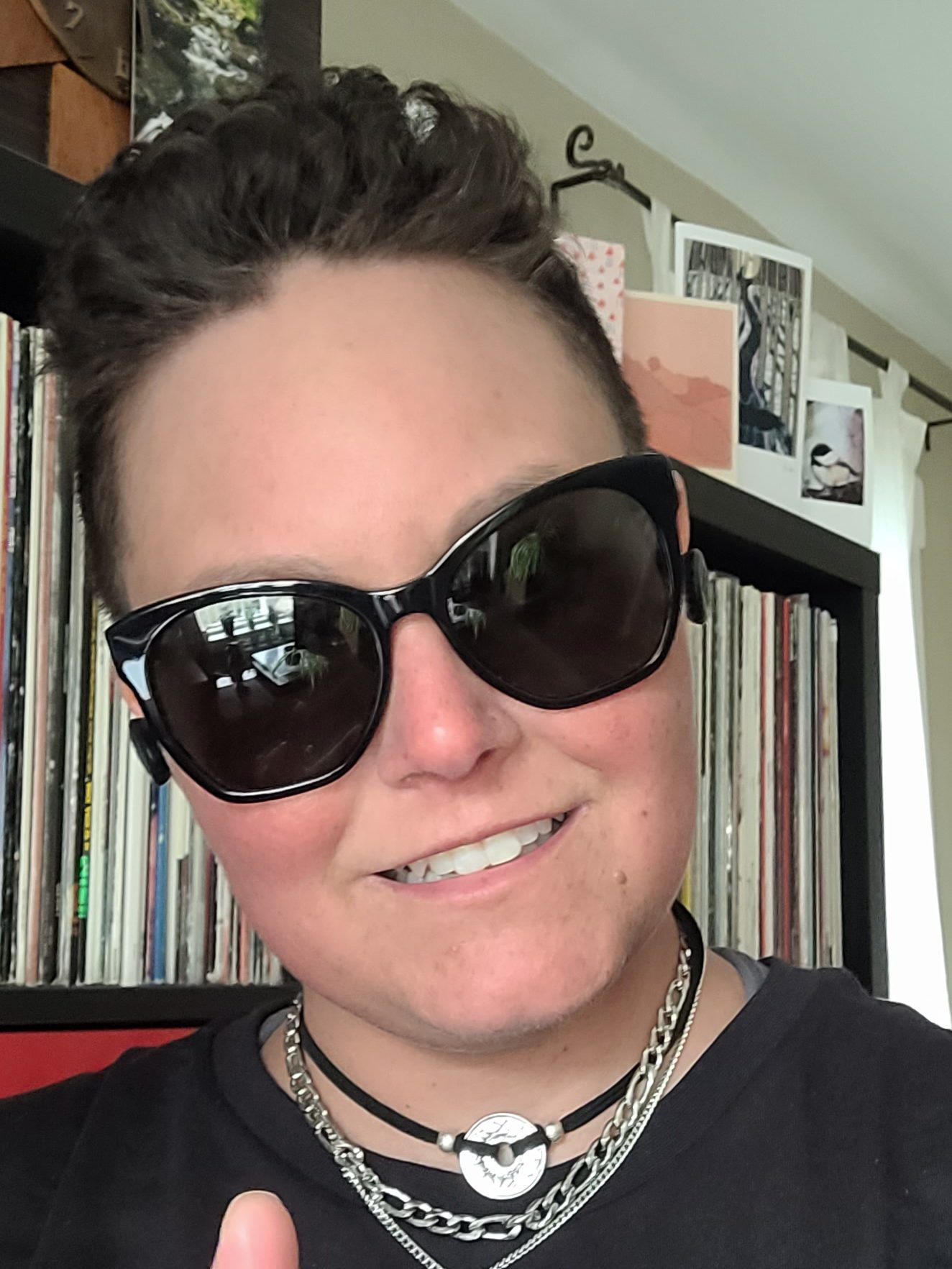
In this spirit of appreciation, I’ll stop with the sappy, self-helpy vibes and say that the best thing these days is my hair. Although there is chemo-induced thinning, there is also chemo-induced curls. After getting over the initial confusion of coping with this newfound mess, I found a style that I adore. I honestly think that this is the first time in my life that I’m genuinely pleased with how my hair looks. It’s a funny fluff on the top of my head, which is perfect for my face shape, looks the perfect amount of androgynous, actually requires very minimal styling, and the curl shampoo and conditioner moisturizes my scalp so no more dry skin flakes! It’s a bit weird to be overjoyed with a hairstyle that was caused by cancer treatment, but there you have it. Thanks chemo!

Chemo curls always look cool

I’ll leave it there for now. I’ve been changing and learning (and being grateful for my consistently curious self) these last thirty-two months. Perhaps I’ll say more next time. Be well and be grateful!

Grieving

I want to share a bit of cancer-related grief I’ve been feeling recently. It might not seem huge, but grief doesn’t revolve around the ominous losses alone. 

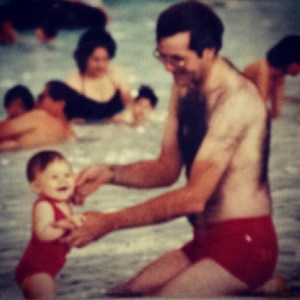
I’ve been a swimmer since before I have conscious memory. My grandparents and parents would take me to the pool at Village Square every Sunday until I started swimming competitively with the Dinos around age 12. Swimming was an escape for me during a couple particularly traumatic events in my childhood—a house fire and the sudden loss of my father. It was the only place I didn’t talk much about my life, allowing me to simply exist. Being in the water felt stabilizing in those tumultuous times, and I insisted on attending every practice I could.

A white-skinned, brunette man with red swim trunks and trucker's tan holds up a tiny human in a red bathing suit. They're in shallow water of a pool. Other swimmers can be seen in the background.
My dad and I in the pool. I’ve been swimming since I was a baby!

After I retired from competition, I always bought gym memberships with access to a pool. Covid and cancer have changed that. Obviously, pools were closed with so much else when Covid struck in 2020. But, with my cancer diagnosis in the summer of 2021, I have only been able to take a few measured risks even though pools have reopened. Namely, a dip in the ocean and a visit to the Radium Hot Springs, both with ready access to showers and small, off-season crowds. The thing is, I have low neutrophils (a white blood cell key to fighting infections and healing tissue), and I can’t justify putting myself at increased risk from pools and water.

Low neutrophils have probably been my most impactful side effect. Yes, I detest all the hair on my bathroom floor, but thinning hair hasn’t bothered me too much since I prefer shorter hairstyles. Neuropathy (numbness in hands and feet) is mild in my case. I dislike the fatigue and chemo-brain, but it generally lasts only a few days. But low neutrophils (aka neutropenia) have delayed my treatments numerous times. Neutropenia makes me cautious in crowds and poorly ventilated areas. I take extra precautions when doing chores. My husband and I still wear masks almost everywhere. But even these adjustments don’t feel as significant as losing my access to swimming. I’ve felt less choice in letting go of swimming.

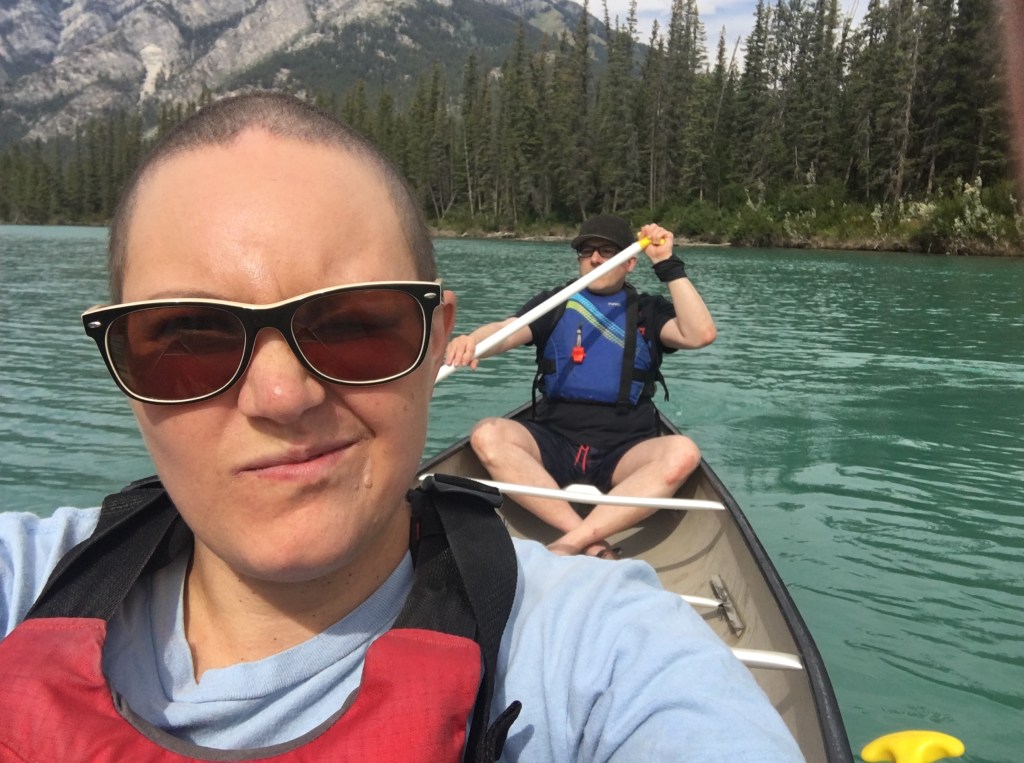
In the spirit of change and adaptation, I have found kayaking and canoeing a welcome return to the water, albeit no replacement for swimming. I still miss being in the water, gliding smoothly with a concentration on my stroke alone, enjoying my solitude. I can’t wait for kayak rentals to reopen for the season—only a week away! (Maybe I’ll buy a foldeable kayak this year.) Plus, I’m diving headfirst into a supportive three-day canoe expidition for young adults with cancer at Poisson-Blanc Reservoir in Québec next week. Nonetheless, the extended absence from water since last summer has contributed to my grief around swimming these past few months.

A short-haired (almost bald), peach-skinned person in sunglasses smirks into the camera while a blue-life jacketed man with a black cap paddles the canoe. They float above turquoise water with a rocky mountain and spruce forest in the background.
My BFF and I canoeing on the Bow River in Banff last summer.

Just a bit of mourning for the swimmer I am/was. Loss is loss in all its forms. I welcome change as I attend to the grief.

Identity

I don’t want to talk about cancer all the time, yet it pervades so much of what I share here. I expect the new year to bring a shift into more expansive writing. Here’s why:

At this time last year, I was settling into the cycles of chemo. The grief of diagnosis gave way to an urge to reconnect with myself and my community. Although treatment and my body’s healing still demanded much of my time throughout the year, I gradually sunk into connecting with my passions and giving what I had to offer. Over time, I spent more energy being me than worrying about cancer.

“No Self stands alone. Behind it stretches an immense chain of physical and—as a special class within the whole—mental events, to which it belongs as a reacting member and which it carries on.”

Erwin Schrödinger, My View of the World

I have found throughout the last year that cancer has undeniably shaped me and yet not become the sole definition of who I am, as I once feared it would. I don’t push away or deny cancer as part of my identity. I like to think I’ve been learning how to let cancer identity take the space it needs, no more and no less. In doing so, I’ve also found the parts of me that shine—an outdoor enthusiast, an active person, an art lover, an educator, and a designer. Oddly, as I’ve seen these parts, I’ve been drawn to the simple question of “who am I,” exactly? Like the Earth shifting from season to season, the “I” is so constantly in motion with the world around it that the question is not so simple.

As I tried to answer this question and connect with the threads woven throughout my life, I observed how the cancer thread integrates with them. I wish these threads wove into a tight braid because that would be an easy and narratively clean answer to that “who am I” question. In reality, these threads loosen into a fabric lovingly woven with odds, ends, and beginnings—an “I” entwined with a messy whole. First, I find I cannot be defined by cancer alone, nor by any single part. So, while cancer happened to me and the self which sits here today has undoubtedly been shaped by the experience, I am still me. Second, there is no single identity in cancer. For each person, cancer’s impact takes a different shape. I notice that while I have the same experiences as others in the community, there is much I don’t relate to also. I am still that piece of fabric so different than the others and still sharing threads. Instead of denying this new part of my identity, I allowed it in, which has led to healing and for myself to come forth. In this healing, I have affirmed that I love being outdoors, moving, preparing food to share, learning, and helping others to learn by designing experiences. These activities have happily appeared throughout my life and have made me feel settled in who I am.

“There is no single entity whose identity is changeless. All things are constantly changing. Nothing endures forever or contains a changeless element called a ‘self.'”

Thich Nhat Hanh, Thundering Silence: Sutra on Knowing the Better Way to Catch a Snake

As I’ve dove more into systems practice, the most astounding realization of the year has surfaced. Since I was a teenager, a piece of advice has clung to me: If you want to change the world, you must first change yourself. Before 2022, I interpreted this to mean that one needed to be perfect before entering into service work for others. If you know me, you know I didn’t take this entirely literally, but it still nagged at me and led me toward constant self-improvement. It’s only been over the last few seasons that I’ve understood how simply changing oneself changes the larger whole one is part of. As the fabric of the self changes, it pulls on the threads of the entire universe. Likewise, as the cancer experience integrates, it shifts the other parts of me and all to which I am connected.

So, I see how I have been shaped by every experience that has brought my consciousness here, and no one else shares that. This experience—reaching back to eternity—makes a self so incredibly unique and at once impossible without the whole. As I shift like the seasons, I change my future and all I am connected to. It sounds grandiose, but with the perspective of my size in the immensity of time and space, it also seems remarkably insignificant.

All this reflection and what I want to say is I’ll write more over the coming year as I continue to explore. I’m unsure if I’ll share it on this blog, but if I do and you follow me, you will likely find more stories and thoughts without cancer as a feature.

For now, know that I am recovering well from surgery (a colon and liver resection). My bowels have pulled through for me and are 95% up to pre-surgery function—amazing. I have a big scar running through my abdomen, and I am excited for summer weather to show it off. I’ll hopefully have another surgery in the next few months for the rest of my liver. If all goes well, I’ll be able to ease back into doing those things I love more full-time and reliably.

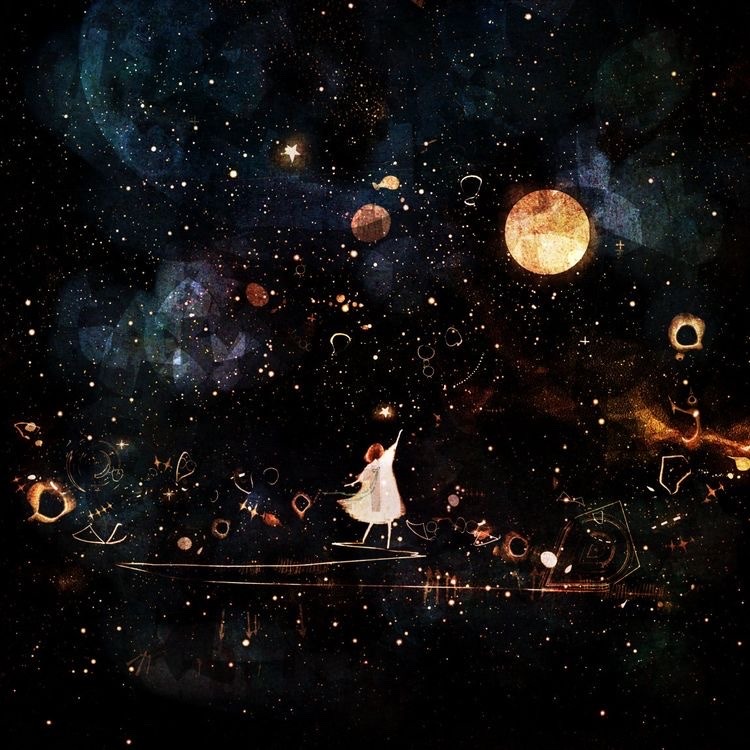
A dark collage of space elements and shapes. A small ethereal figure with short ruddy hair is reaching out to a bright sun-like object.
Artist Unknown

Surgery

I had surgery on October 14th. The surgeons removed the tumors in my colon and from the left side of my liver. Recovery has been slow and challenging: Tubes, pokes, and hospital misadventures.

So many tubes. Tubes that send pain relief through my spine, one that carries out urine, another that drains my stomach, a tube for oxygen, tubes delivering nutrition and a tube for medicine. These tubes have stuck around for days and days. Most are gone now, but not all. I make the same joke to the nurses: I’m a meatball in spaghetti.

I’ve been poked with needles so many times. Every night another draw of blood. I have small veins that reject the use of IV tubes. For every new IV placement, there are probably three probing needles. Yikes. The bloody dots mark my arms and hands like constellations. I can count seven dots, forming what may be a dolphin with a ball.

I’ve been in the weirdest sectors of the hospital. Driven into what felt like a closet in the basement where they drained litres of fluid from my lung and belly. Where I nearly held my breath as I stared at shelves of various N95 masks and wondered what was going on.

More adventures to come but I’m almost out.

Community Care

I don’t feel qualified to write this post. I’ve rewritten and revised it over half-a-dozen times. Despite my hesitation, I’m compelled to share. Why? Because community is an essential part of well-being and deepening community is one of the most immediate actions one can take to improve survival in this world. Bold statement, I know.

One of the greatest helps since being diagnosed with cancer has been community. Community has been a significant part of my life for a long time, even if I didn’t always acknowledge it.

In my teens and twenties, I placed a high value on independence. I got a car shortly after turning sixteen, and loved being able to get myself around. At some point in those years of discovering my independence, I found myself less interested in the clothes and entertainment my “popular” peers were interested in. I would go to the mall, movies and coffee-shops on my own if I wanted. I even read up on living off the land, how to grow soy and hemp, and how to forage. I never needed to ask for help, and thought that doing so was a weakness. I saw it as an asset that I didn’t need to rely on anyone else.

Truth be told, I relied heavily on others. Not just material reliance, but reliance on the acceptance from others too. I didn’t realize it.

But with time has come a different understanding of the world. While I am grateful for those years spent getting to know myself through the search for independence, my values have shifted much more towards community and interdependence. By this, I mean the various clusters of beings who are connected by a common root and grow together. These beings, some of whom I know deeply and others whom I barely know, have helped navigate these difficult and magnificent times of my life.

There are communities of shared interests, like that which I found in community radio and music. Without fully realizing at the time, working in radio was about community more than anything else. Here, a diverse mix of people come together to share something they love. I wouldn’t (still don’t) consider myself a community builder, but moving into this community space at a young age showed me so much about listening, sharing, gathering, and showing up.

There are communities of shared geography, like the beautiful neighbourhoods I’ve chosen to live in. These vibrant communities are home to friends and familiar faces. Like I said, I’m no community builder, but I do benefit from the work others have done to create exciting community spaces where I can participate in building community. I love participating. I love going to my neighbourhood coffee shop and making small talk. I’ve followed the stories of babies being born to starting school, and so much more. I frequently run into neighbours and friends on my walks and it is one of the most magical feelings. Admittedly, sometimes I’m too caught up in my own thoughts to say hi, sometimes it’s just a smile and wave, and sometimes it turns into a half-hour conversation. My body bubbles with joy after even the smallest encounters. I’m amazed at the generosity of people I hardly know extending their help to me this last year.

There are communities of shared struggle, like the cancer community. A close community that allows the sharing of personal stories, struggles, and successes.

As I’ve been appreciating community more and more over previous years, I’ve come to make some observations. I’ve noticed how communities shift, change, and adapt to be what’s needed in the moment. People come, stay, go, and return at different frequencies. Communities form and dissolve, ebb and flow, like tides. I’ve noticed the way everyone contributes in different ways to holding and weaving the space. I’ve noticed the benefits of showing up, and creating a welcoming environment for others to do so too. I’ve noticed that it helps to throw out the scorecard: to give what I can when I can without needing the deed returned, and to accept help graciously. Most importantly, I’ve noticed the brilliance with which communities emerge over time spent caring and sharing together. It doesn’t always have to be heavy, and nor should it be. But it does take time.

I’m heading in for surgery very soon. In some ways, I feel like I’m stepping away from my communities as I recover. I’ve put volunteering on hold and won’t be stopping into my neighbourhood coffee shop. But, in other ways, I am deepening into my community by allowing friends and neighbours to support me when I need help. It’s a very strange feeling for someone who’s valued independence for so long, but I’m doing my best to get more comfortable.

Holding Pattern

There hasn’t been much change to my routine in the last few weeks. Not much news either, as I find myself in a sort of holding pattern. I am finding it difficult to write about myself amidst all the world’s heaviness. To find focus, I put together a playlist. Let’s start this entry there:

As I said, it’s difficult to focus solely on healing my own body when it feels the larger body of the Earth is also undergoing existential threats. It’s never seemed this heavy before. Is it the fatigue from two years of navigating a pandemic? The sight of love being co-opted and abused—a movement of toxic love-bombing? Is it the magnitude of information streaming from the internet? Countless streams begging for attention? Is it the sheer power of human technology? The exponential growth lines shooting away from our organic presence? The ability of these technologies to wipe out cities? To poison the Earth even more? Perhaps all these factors mark the equation for my current melancholy.

I can make out the reflections between my personal healing work and my response to global issues that threaten life on a much more global scale. So, I strive to choose my actions intentionally with each day I can get up. I balance my tasks, finding both challenges and relaxation. I welcome all my emotions, knowing they are arriving for a reason and that they shall ebb and flow as terrible as it is in the moment. I remember to breathe.

Still, I feel discombobulated. I don’t always get it right. I lose my temper. I scream. I yell cruel words. I make mistakes. I always hope I find my way back to my centre. I’m not seeking any unattainable perfection, no perfection at all. I’m just hoping that my actions result in a net positive, one day at a time.

Loss

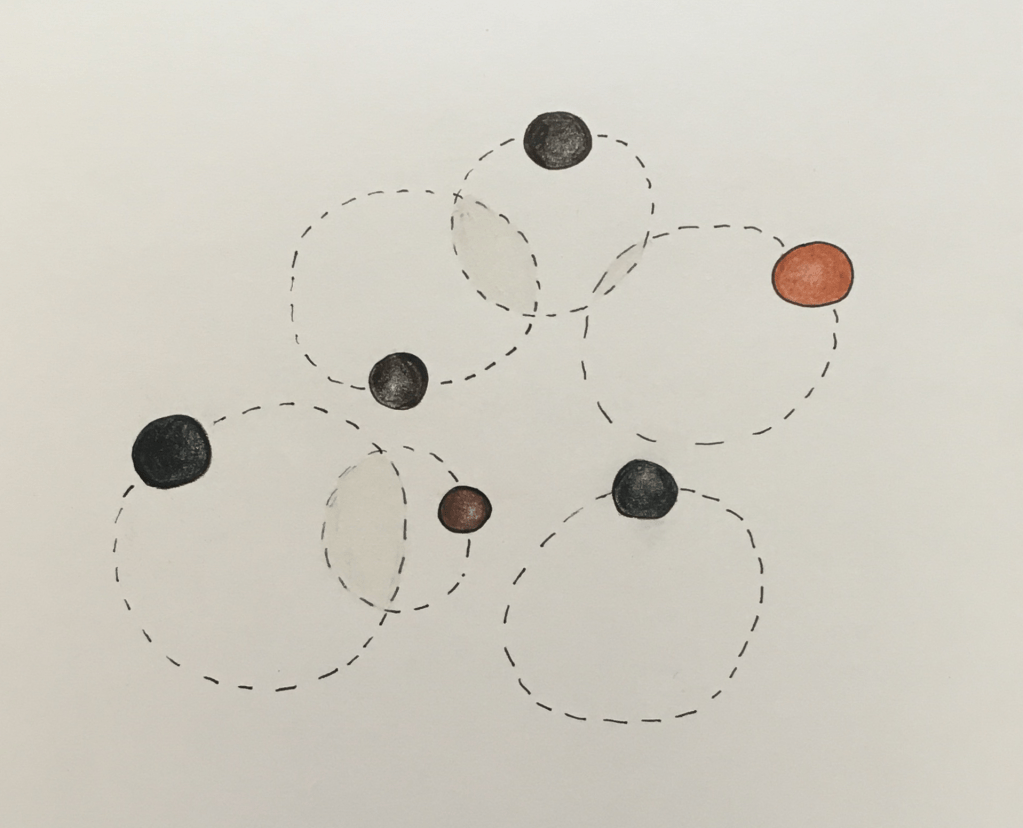
“These lovely people whose orbits have collided with mine…”

I was afraid I’d lose myself—become rewritten. I worried that therapy would erase me, my passions, my life.

A month into chemo, I find I am not lost. I am not erased. But this isn’t easy.

A month in, strong, strong emotions. I hate chemotherapy. There’s nothing to like about it—nothing to even fool myself into liking about it. It sucks. It makes me feel like shit. I barely have the energy to lift my head. My legs ache. If I’m not proactive with preventing nausea, I’m up at 2 AM puking. It sucks.

I’m losing my hair: “Thinning” (I’m unlikely to lose all my hair with the particular chemo I’m on). I’m caught by an unexpected sadness seeing my hands and fingers coated in the dark thin threads snaking every which way. I was warned, but tears wash away in the spray of the shower anyway. I wouldn’t mind being bald, honestly. The worst part is the numerous strands jumping out against my bathroom’s shiny white tile floor and threatening to clog the shower drain. I’m going to have to clean all this up. Barf. It’s yet another signal of how real this is and how powerful the chemotherapy drugs are. Even on this good day where I plan to eat a fancy dinner and take a long walk, my hair is falling out. I’m going to shave my head, I’m sure of it.


Unfortunately, my upcoming chemotherapy is delayed. A high fever, antibiotics, and borderline white blood cell counts indicate my body needs more time to recover from this cycle—a mixed blessing. As usual, I make sure to eat well and walk daily. I throw in some dancing for good measure. I still meditate every day—five hundred consecutive days of meditation this week! Add that to a couple of 250-day streaks broken by a missed morning, and that’s over a thousand days! I suppose all of this is healing. But, my heart is unsettled.

I feel myself on the rocky terrain of discovery, uncovering what each day and week are. I’m gentle with myself even as fears and passions lurch from my heart in a coded language I’m not sure I understand. I want to write and draw and change [eco-social systems of oppression]. Alas, I find myself boxed into my couch watching another season of British Bake-Off. It is what it is.

My birthday approaches. The love my friends and family have shown me over the last two months has been nothing short of the best birthday present I could ever want. The food, the company, the cards, the rides, warm blankets, and books. The list goes on, but there’s no way to fashion these words into a worthy monument of what they are: love.

It pains me that I can’t find the words to express how powerful this is. These lovely people whose orbits have collided with mine, who have shared in the joy of life, who have co-created places where we live fully and ready to take on a brutal world together. And at this moment, as I take on the lot this chaotic universe has landed me in, I find myself not too small or insignificant to receive care. Even as it feels the entire world is burning, I matter enough for people to show up at my door with baskets and blessings. There is so much space in love like this, the way it multiplies between us. And I find I am not lost.

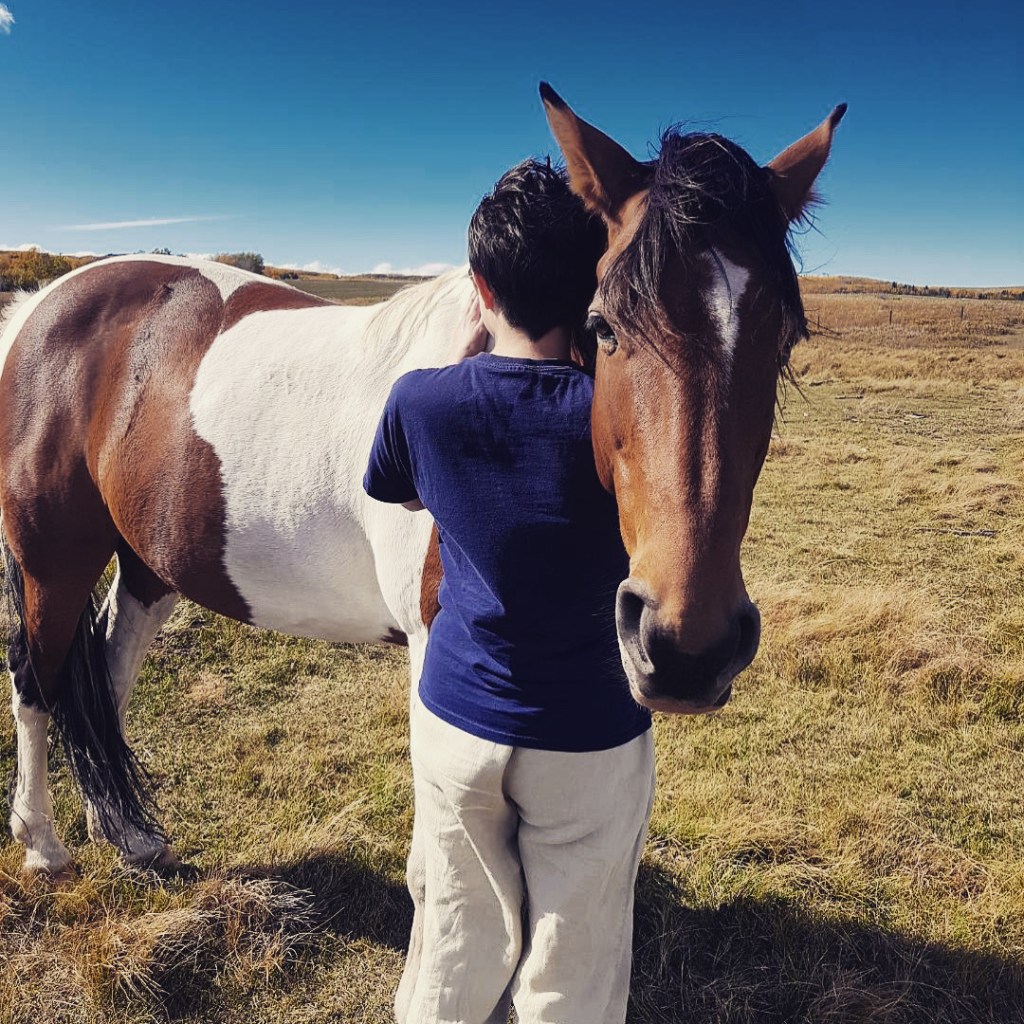
I spent some time getting hugged by Shaker at Whispering Equine #horsetherapy

First Cycle

My first chemo cycle is coming to an end. Each cycle starts with a dose of drugs that halt quick-regenerating cells from regenerating. If all goes well, the cancer cells—mutant human cells—can’t figure out what to do and die off. Healthy cells get their act together and spring back.

Following the in-hospital bit of chemo, they gave me a bottle with more drugs inside. These drugs drip into my body for 48 hours. They put me on steroids to help as well. As a result, I feel kind of buzzed all the time. By day three, my body’s not doing so well. It’s starting to crash. Nausea and fatigue. My body’s healthy cells not doing what they usually do—not regenerating like normal. It’s exhausting, and I’m coming off the steroid buzz at the same time. I try to stay healthy. I wash often. I go on little walks. I eat protein-rich foods and try to stomach vegetables. Bread is digestible, so I eat that most. I remind myself that I’m safe and healing. I’m tired. I am so tired, but I try to get up every hour and sip some water.

Food is a struggle on these low days following chemotherapy. I stay away from soft yolks and soft cheese and raw nuts. I can’t eat and drink things at room temperature—a chemo side effect. It was just “weird” at first, but after every liquid spawns an explosion of soft-headed pins in my throat, I give up on anything below tepid. The warm drinks start to taste tiring, so I experiment with herbal teas. I long for a cool glass of water.

I begin understanding hope differently. In August, when I described hope to my journal, it was “a field of sunflower stretched to infinity” with sights set on images decades and years away. Slowly over the last month, hope has become much more active. Hope shows up in the acts of every moment. I think the best way to describe it is in the story of planting a seed (and I do mean this very literally, but it works metaphorically as well). Hope is planting a seed. I cannot control the seed’s reproduction, nor the sun and rain. But I can plant that seed in the best spot I know for it. I nourish it, and that act of nourishment is hope. I can’t protect it from every ravenous sparrow or insect or mouse, but I can give it protector plants nearby and build shelters. The seed may grow, or it may not. It may not make a stunning flower or a substantial fruit. That’s what gardening is. But hope is planting the seeds. And like this seed, I’ve been nourishing my own body as a practice of hope without expectation. My journal now reads, “hope is helping wounds to heal.” I’m finding so many actions that are hope. The actions are not reactionary nor transactionary; From eating my proteins and washing my feet to riding my bike for the planet and writing politicians for equity. I’m finding releasing hope from expectation makes it, well, much more hopeful to engage*!

A week after chemotherapy starts, I feel myself bouncing back. I can go on long walks; I soak up the sun and smells of late summer. By day nine, I actually want to do things. I want to read, write, and dance again. It feels like there’s more sun coming through the windows. A couple days on, and I’m cleaning the house readying for the next cycle to start. Dusting, vacuuming, and washing. I trim my nails and take a bath. This cleaning will be a pre-chemo ritual. It feels good to clean, to prepare the nest for my body when it’s low. To put things in their place.

I enjoy a glass of cold water. Cold water has never tasted so good. I appreciate how much I have savoured the moments in my life like this. One day the memories will be broken apart into hundreds of trillions of atoms and dispersed across the cosmos; Right now, those moments fill my being.


* I must give credit to the sower of this understanding of hope: Frank Ostaseski in The Five Invitations. A number of years ago that book helped me to reframe forgiveness. My understanding of forgiveness moved away from forgetting and towards healing my own wounds. The book also speaks about not confusing love with attachment, which also resonates with me so much.

Month One

One month with a cancer diagnosis. It’s moved quickly and yet so slowly as well.

August began in a whirlwind. I had a DJ gig, a teaching appointment, and hopes of finishing my thesis. I had a colonoscopy, MRIs, CT scans, bloodwork, and bone scans. I had appointments with gastroenterologists, surgeons, and oncologists. I had to tell loved ones and confront the sense of dread weighing on me.

It wasn’t long before my work and school commitments fell away. The only thing left was to wait, to focus on healing, and to endure the waves of nausea and cramps from the cancer in my colon and liver. Waiting is difficult for me. I’m impatient. I want the cancer out like a house guest who’s overstayed their welcome. Sleep helped to pass the time. Even with the fatigue, one can only sleep so much.

I told my friends and family about my diagnosis. I received help and several messages (many still unreplied to). I think about them everyday, like I should organize something, but a general discomfort pervades even simple things like that.

I’m trying to find a comfortable space to do things. I’ve set up inviting plants friends everywhere. I’ve decorated with the puff of wool, dried grasses, and simple beeswax candles I’m told to love so much. And yet, I’m restless and uncomfortable. I don’t know where the days go when I tally up the minutes: I meditate, stretch, line up rides, lie down, feel sorry for myself, wish things were different, meditate, try to read, try to watch tv, try to clean, try to be helpful, hate myself, hate this situation, meditate as though it’s the only cure, pace, compose thank you notes and stories in my mind, sleep.

I’ve received relief from work and school. All I have to do is heal now; I remind myself of this everyday. All I have to do is heal. I feel the force of a transition in this healing. The way the cancer is building in gooey, mutated masses within me. That house guest who’s still here even though I’ve asked them to leave three times. The house guest who’s clumsy and loud. I wrap this cancer, this overstayed guest, in a large leaf and I swaddle it. I don’t know why yet. I’m not even sure I should. There’s little direction here.

I’m just doing my best. I’ve always done my best.

I enter the new month greeted by chemotherapy. It is unknown and scary. Questions prevail but only time will tell how my body reacts. There are predictions, but everyone is different. Chemotherapy will help stop the cancer from replicating and spreading. It is the fortification of a boundary between “me” and “it”. I will heal, the unwelcome guest will tire and shrink.


Near the beginning of the month, I wrote a poem about my uninvited guest. Later, I came across Rumi’s poem titled The Guest House. The latter prescribes a practice of inviting and being grateful for all the emotions that come. I was struck by the contrast of my own moods towards cancer and Rumi’s wisdom towards emotions.

A Welcoming Home
by Kat Dornian

A welcoming home

might have loose bounds
allowing in all sorts.

A flustered flurry
of a party inside.

Warmth, bounty, comfort
for anyone who comes.

A home of love
torn apart e’ry night
by everyone needing
a warm hearth.

A home of love
flaking away with each guest.
Carried in pockets, upon shoes,
replaced with trash, dirt.

A home of love
devoid of boundaries means
all move in… until
I no longer remain;
A stranger in my home
no traces to be found.
Eaten from the inside out.


The Guest House
by Mewlana Jalaluddin Rumi, translated by Coleman Barks [Source]

This being human is a guest house.
Every morning a new arrival.

A joy, a depression, a meanness,
some momentary awareness comes
As an unexpected visitor.

Welcome and entertain them all!
Even if they’re a crowd of sorrows,
who violently sweep your house
empty of its furniture,
still treat each guest honorably.
He may be clearing you out
for some new delight.

The dark thought, the shame, the malice,
meet them at the door laughing,
and invite them in.

Be grateful for whoever comes,
because each has been sent
as a guide from beyond.

Here’s a drawing of me after receiving my “Power Port” (for delivering chemotherapy drugs). The photograph is a bit bloody, but I think you can get the gist from my quick sketch… I was pretty high on sedatives at the time, haha.