Took a quick road trip to the coast. I wish I could stay, erase the cancer cells in my body, and breathe in the continuous flow of rainforest air forever.
Wild Pacific Trail
Unfortunately, nature doesn’t erase cancer. It does soothe my nervous system. It calms my breathing. It puts things in perspective.
I should be heading into surgery, round one, sometime in September to erase the cancer cells, so to speak. A date is to be determined. Before that, I hope to soak up as much nature as possible in these waning days of summer. Hence, a trip to the magnificent Pacific Ocean and the North American temperate rainforest.
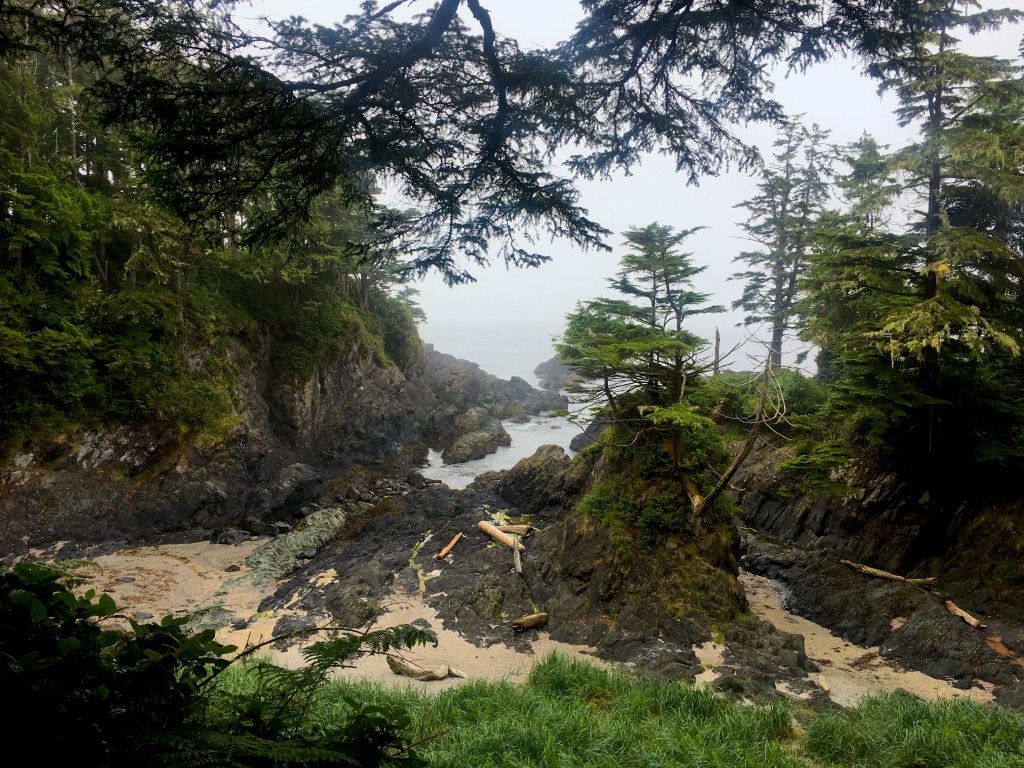
Way Point Beach at sunrise, on Yuułuʔiłʔatḥ territory
Before taking this trip, I wanted to explore some apps that facilitated connections with nature. I played with a few of them throughout my travels. My favourites have been Roots: Connect with Nature (nature meditations and soundscapes) and Seek by iNaturalist (identify and find wildlife). Both offer experiences that seem to enhance time in nature rather than detract from it.
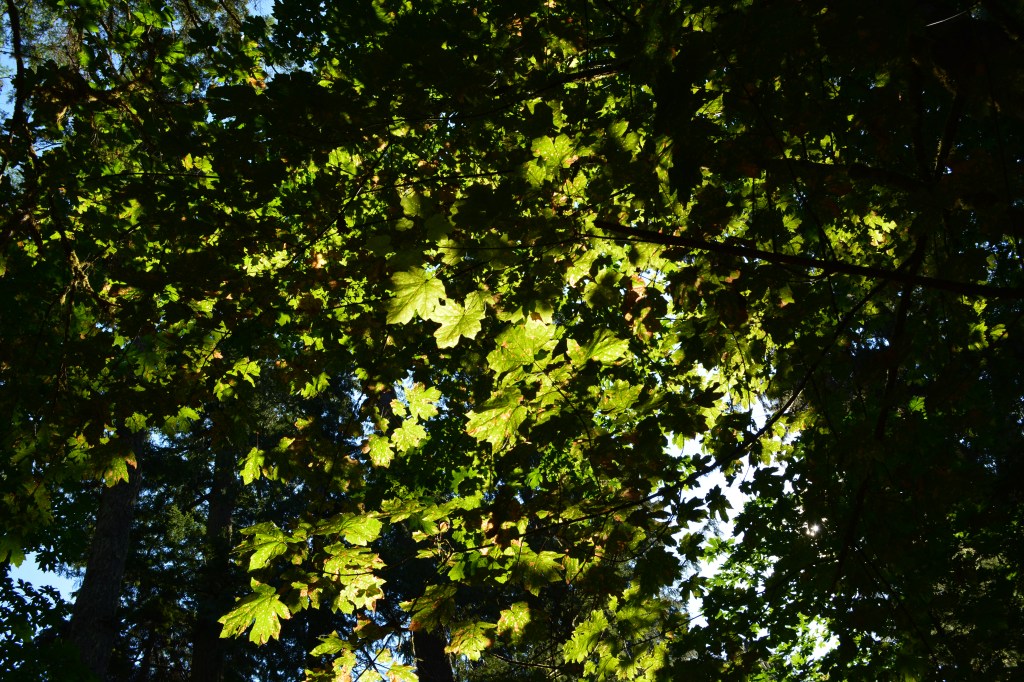
Bigleaf Maple in Cathedral Grove
During my explorations, I thought a lot about abundance. The forests are so rich in life. I thought about how there could be enough for everyone, especially now. Our wisdom, knowledge, and technological advancements can eliminate hunger, poverty, and much disease. Yet, the fear of scarcity is baked into our bones and synapsis. It began before we became humans; from the millennia we spent running and fighting; from the times before we built walls and locks and the times after, up to today. These learned behaviours are ancient. So we hoard and control resources from minerals to the carbon of dead beings to seeds to people. Instead of happiness, the resources require more walls, more locks, more protection, more fighting, more resources… And we never say, “Enough!” Despite all the advances, we’re forcing ourselves back into scarcity. Heat waves are drying out massive rivers. Wars are destroying staple crops. Rapid extinctions are collapsing ecosystems that maintain our (and many others) lives. These are just a few of the issues bearing down on us as we simultaneously have the know-how to stop them and continue to ignore the warnings about what brought us here.
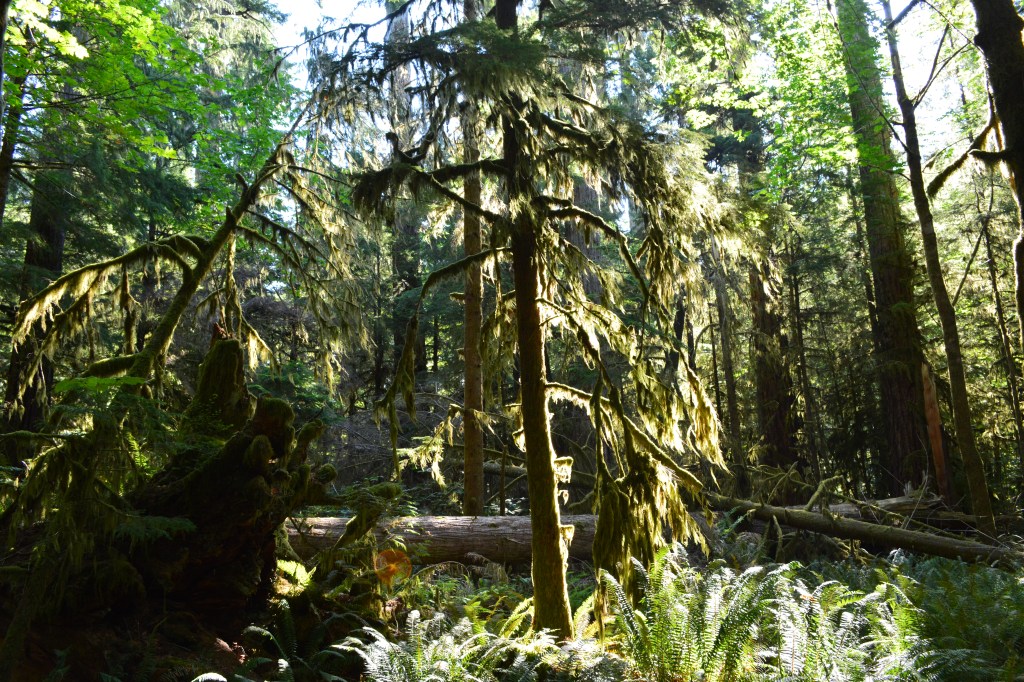
Cathedral Grove
I wish pictures could bring the experience of abundance to everyone. Even the closest facsimiles seem to fall short. (However, I’ve experienced some pretty good ones like iMax nature documentaries and—very oddly—that Avatar ride at Disney.) Luckily, I don’t think one needs to travel to distant places to feel that wonder: Gazing at the night sky, watching the clouds, waking up early for a sunrise, catching the murmurations of birds, enjoying a rain shower, going into a forest near where one lives and just soaking it all in.
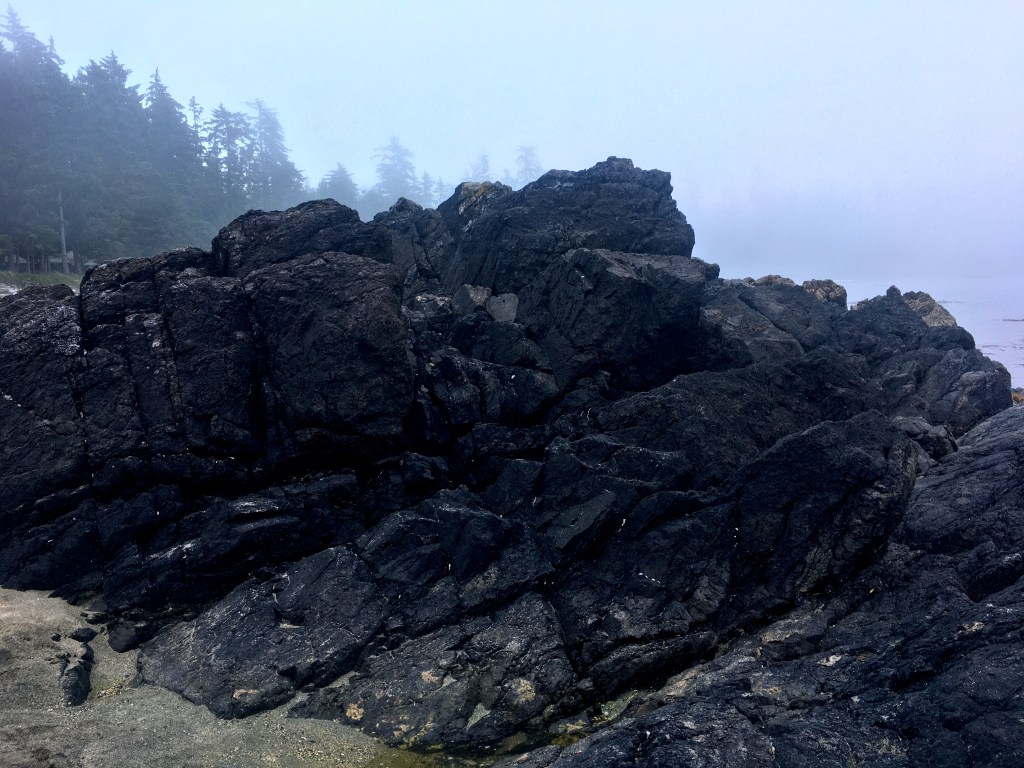
Black rocks on Wya Point Beach
Maybe technology can help. So, I’m curious: what technology connects you more to nature?
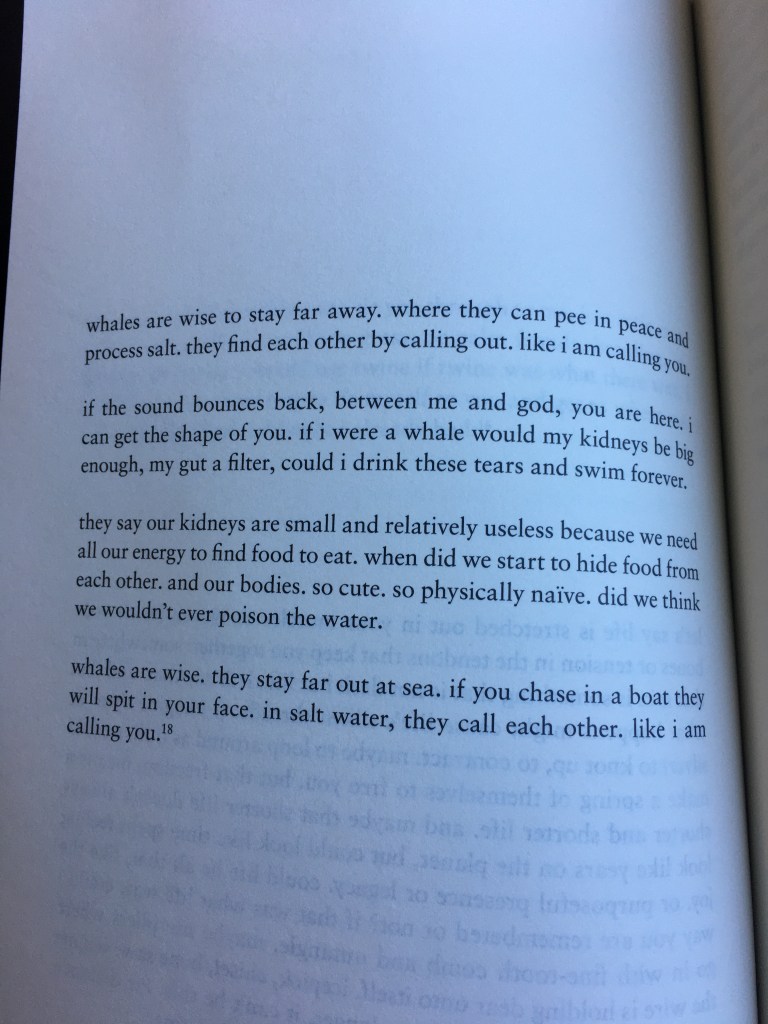
From the book I packed for the trip: “Dub: Finding Ceremony” by alexis pauline gumbs
I’ve been wanting to write an update to my blog for sometime about my treatments. Not today though. What I can say for now is that I’m still flowing with the ups and downs of treatment. Or, at least, trying. Figuring out how to be myself, how to slip back into creativity after fatigue, and still manage all the appointments, prescription pickups, self-care etc. This week has been exhausting.
I’ve had some really good laughs though. Belly laughing. Laughs from resonating hearts.
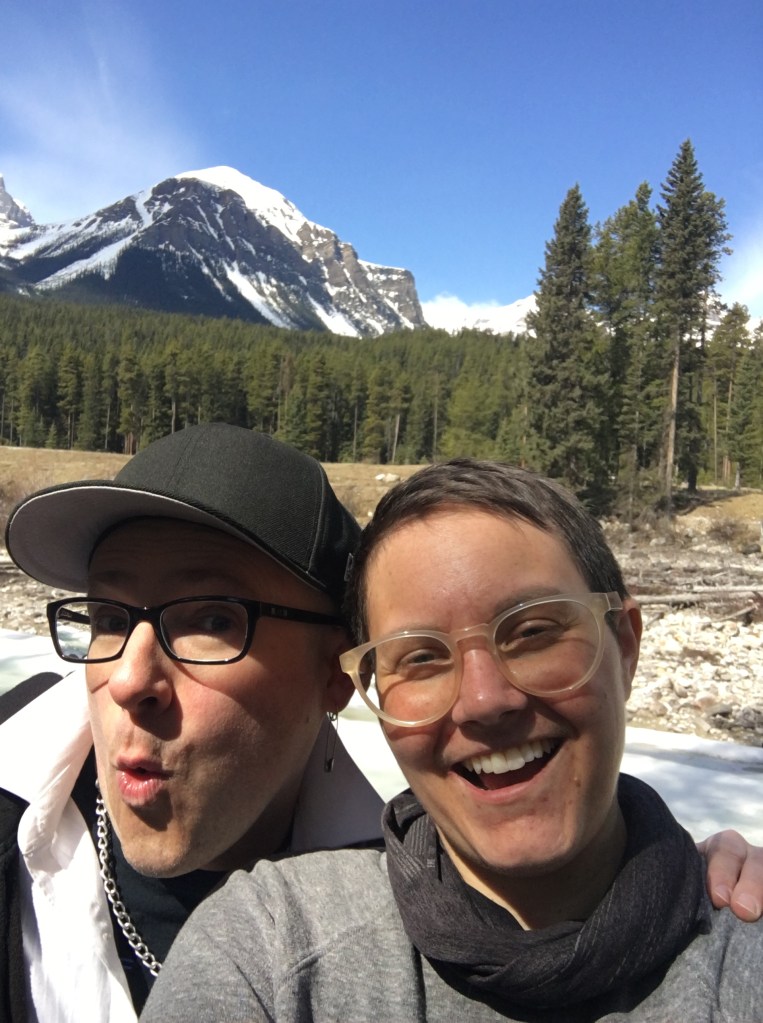
My love and my loves
This year I’ve been thinking a lot about love. I am awestruck by love. I remember first being in love and feeling my soul open up so wide, seeing life so vividly, the earth shaking, my being rooting so deep into the universe that nothing seemed to matter while at the same time every cell of every being seemed so sacred. It was awkward love as young love is, but it was really good love. It was love that saw me and wanted me as I was. An eros love, but an eros love that truly valued the life in me. It shocked me—and I don’t mean that lightly. It was life changing. Even thinking about it now I can feel my centre shaking like those days love washed over me.
I’d thought I’d been in love years before this. But, when I realized love does not impose rules on how one must be, I realized how one-sided my love had been. False love like this became easy to spot and it is abundant, unfortunately. The love I felt gave me purpose. But that purpose was just to be. And that purpose made me want the world to be well, if not flourishing.
“The transformative power of love is not fully embraced in our society because we often wrongly believe that torment and anguish are our ‘natural’ condition.”
bell hooks
I don’t know how I’ve been so blessed in my life. To have had that experience. To have met that person who cared so much for me that I wanted to ensure everything that makes life is thriving for them, for us, for me. I have been feeling so loved over this past year. I hope it is due in part to having loved well more than not; And I also hope that love can enter less hospitable places too… even if I am that place at times.
There’s so much to say about love. bell hooks is a good start. I may write more about it too. I love love.
The reason I wrote this: I was listening to a podcast the other day and the co-host, Autumn Brown, said, “love is what makes surviving worth it.” So true.
Puberty hit me differently than most. I spent the prime summers of my teenage years in the woods. The days were filled with forest games, forging trails, and mud baths. The nights were spent around campfires or sprawled on smooth rocks next to the gentle woosh of the river. I fell in love with nature during these summers. It wasn’t the Taylors or Alexes that I wanted; I longed to connect with the Engelmann spruces and Douglas firs.
Ironically, my love of nature did not drive me toward a career in ecology. Quite the opposite; In the months beyond summer, I would create computer games, design websites, and fiddle with breadboards in my spare time. And that was the passion I followed as I matured.
Nonetheless, I could not sever my bond with Earth. I didn’t have words for it at the time, but I understand this love as biophilia now. The term put forth by Edward O. Wilson is defined as the human’s affinity for other life and the natural world.
When I received my diagnosis, my first instinct was to bathe in wild lakes and forests. I felt the powerful force of life surge through me, the force written into the DNA of every organism that lived to bring me here today. Starting with the single-cell lifeforms that divided billions and billions of years ago to these beautifully complex ecosystems that continue to find creative ways to sustain and persevere another tomorrow. Throughout my treatment, I’ve prioritized time with these incredible systems. I’ve rekindled my love with the natural world into a bright and steady glow.
Alas, with love comes pain. I once heard it said that to give oneself to love is to accept the eventual pain when the day comes for one to leave and one to be left behind—what some take as a worthy price for the most euphoric of human emotions. And so, extraordinary measures are taken to extend and protect life, the seemingly most innate instinct in our being.
In the month I got my diagnosis, the Intergovernmental Panel on Climate Change (IPCC) began issuing its sixth assessment on the science around climate change, its impact on our world, and what we can do about it. Here I was in August 2021: dealing with my own personal health crisis as news poured in about the escalating health crisis of this planet I deeply love.
Since then, I’ve undergone the medical treatments to shrink and eradicate my tumours (I’m still going). Like many interventions, the medicines come with a price: loss of sensation in fingers and toes, fatigue, and lowered immunity. So too, may we need to accept some losses in mitigating the most severe consequences of climate change, or else there may be much more to lose. But technical solutions are not the sole course of action available, so I’ve learned.
There are so much more than technical interventions in healing. I’ve seen presence, engagement, community, meaning-making, and hope work as some of those interventions. They’ve helped me through this time and could serve in confronting even global crises.
“So let’s resolve ourselves to live meaningfully, honestly acknowledging the truth that life is fragile, time is fleeting, and death is certain—and rather than ignore, avoid, or deny these realities, may we engage this time with greater clarity for our values, a deeper sense of gratitude and appreciation for what we do have, in richer authenticity to ourselves and others, so that we might invest in those relationships we deeply cherish and seek to make the world a better place.”
Daryl R. Van Tongeren
Presence and Engagement
“We must reinvent a future free of blinders so that we can choose from real options.”
David Suzuki
There is no use turning away from reality and pushing away discomfort. It seems fine at first, but it is much more painful in the long term. It’s said avoidance “dilutes our lives by robbing us of the urgency of a finite existence.” (Daryl R. Von Tongeren, Ph.D). Furthermore, Buddhist teacher Frank Ostaseski teaches that “Suffering is exacerbated by avoidance. … Our attempts at self-protection cause us to live in a small, dark, cramped corner of our lives.”
Presence is the practice of being in the moment and appreciating the little things. This practice fills life with meaning, purpose, and wholeness. That meaning is so vital in the difficult times. As psychologists JoshuaHicks and FrankMartela have proposed, “We should slow down, let life surprise us and embrace the significance in the everyday.”
From my own experience of practicing mindfulness, I can attest to and offer a different advantage. As I look back over my life, it is filled with these savoured moments and feelings: warm winds on my face during morning rides, rich risotto in a dim and lively restaurant, raucous laughter around a board game table. These gentle memories remind me of the meaning of my life while also giving me comfort that I’ve lived life well.
Engagement starts with presence. It is standing with our problems and reactions. It’s what allows us to choose meaningfulness day by day. Researchers have seen that this focus can allow negative emotions to coexist with action, instead of letting the emotions paralyze us. To do this, psychologist Susan David offers a reminder that “Emotions are data, they are not directives.” And feelings can be explored by investigating the function they might serve, allowing the emotion to be worked with and through. So too, looking deeper into problems we face, even globally, can give more hope and meaning to our lives.
While presence and engagement are excellent first steps, there’s deeper work needed for our planetary healing.
Community
“There’s never a clear point at which a being begins or ends, and that’s why we are all lichens: a being made up of multiple separate symbiotic organisms.”
Donna Haraway
There is a robust community among cancer patients if one should choose to pursue it. I’ve found great solace and connection with these friends. I’ve also been blessed to be in caring communities in my life beyond cancer. The power of community is incredible when others are there to lift and support the glow of each other. It breaks the walls of loneliness, makes connections, and moves us forward together. There’s hope, support, and meaning in the community… if done well.
Paul Born, founder of the Tamarack Institute, offers that we cannot settle for shallow communities or fear-based communities. These are rooted in turning away or against others. We must strive for deep community. Community, where stories unite us, time together is enjoyed, care is taken, and a better world emerges from our work. It is not passive work; it requires diligence and care, but the rewards are vast: connection, joy, and emergent good.
A “raft” of ants can cross a body of water that would be an insurmountable obstacle for one individual. Credit: Tim J. Patterson via Wikimedia CC BY-SA-3.0
Sarah Jaquette Ray, whose interdisciplinary pursuits have made her an expert on coping with climate anxiety, speaks to the importance of community in movements. In a recent LATimes article, she recommends, “We need to start where we are, use the talents we already have, and plug into groups and communities that are already doing the work. Building community around action should be our measure of success, and it can happen right now.”
Building a community cannot wait until the crisis is at the doorstep. Anyone can start today by working with organizations moving action forward and even by just reaching out to our neighbours. It can begin as simply as sharing ourselves, sharing a story.
Meaning-making
“The more one forgets himself—by giving himself to a cause to serve or another person to love—the more human he is and the more he actualizes himself.”
Viktor Frankl
Meaning-making weaves tightly with presence and engagement. Meaning builds as we appreciate the small things and know how our actions serve greater problems. In challenges as enormous as climate change, it is often more meaningful to focus on what choices and leverage points we do have control of.
Crisis and grief, such as comes with the threat of cancer or planetary extinction, can lead people to find more meaning in life. Grief leads to meaningful shifts in behaviour, such as spending more time with family, being more charitable, volunteering, or deepening spiritual practices. Furthermore, this meaning can surface through community or counselling work with methods such as storytelling (storytelling to cope with grief around climate crisis is abundant).
In his highly popular book, Man’s Search for Meaning, Austrian psychiatrist and Holocaust survivor Viktor Frankl reminds us of the importance of engagement in finding meaning: “What man actually needs is not a tensionless state but rather the striving and struggling for a worthwhile goal, a freely chosen task. What he needs is not the discharge of tension at any cost but the call of a potential meaning waiting to be fulfilled by him.” Luckily, Frankl reassures us that simply our actions and responsibleness towards our everyday choices give life that meaning.
Perhaps that worthwhile goal is a liveable planet. Those actions and choices can be as simple as choosing sustainable transport, buying local and buying less, talking to loved ones, and pushing decision makers toward sustainable choices, away from fossil fuels. Add to that the power of community action; Hope for a better world is palpable.
Practicing Hope
“Hope is a verb with its sleeves rolled up.”
David Orr
Ameme circulates from time to time, saying “When people think about travelling to the past, they worry about accidentally changing the present, but no one in the present really thinks they can radically change the future.” The intervention to this, I believe, is hope.
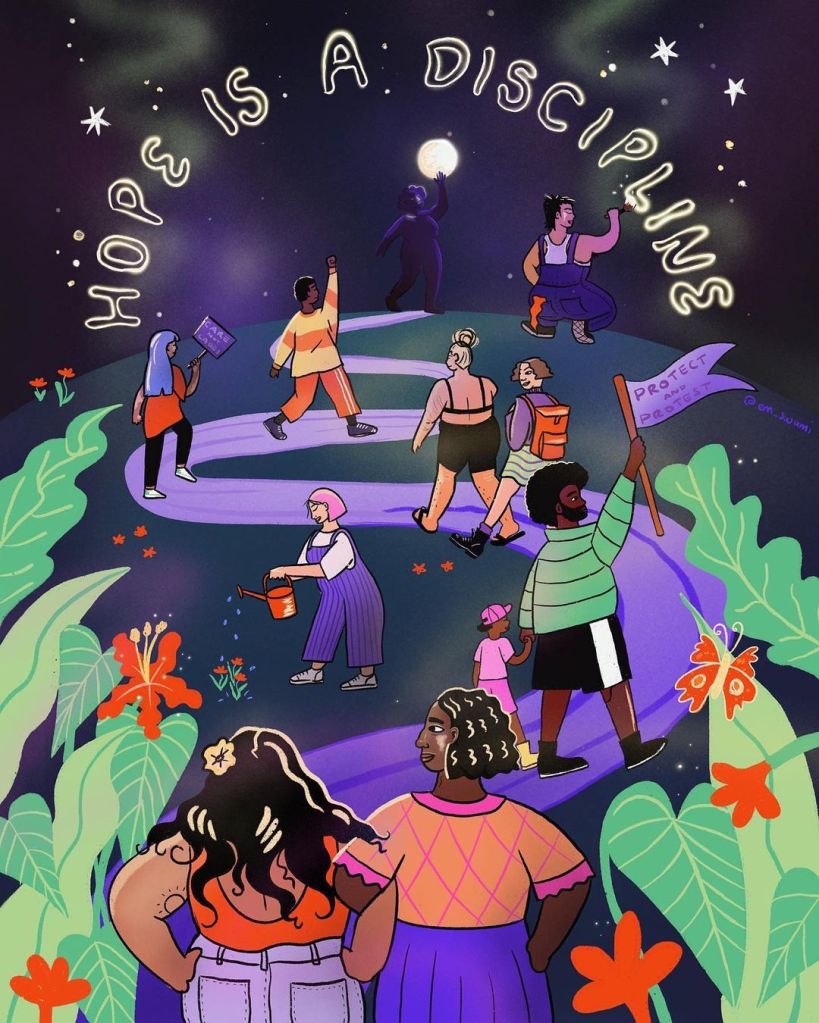
“Hope is a Discipline” – Mariame Kaba. Credit: @em_swami
For some, hope can feel defeating. But the future exists in the practice of hope. We can begin—today—to live stories of hope; Plantingmetaphoricalseeds for the future we want to see written. But to plant those seeds, we need the hope that they will grow, or else what’s the point?
Whether in the world of cancer or climate emergency, we can practice hope by engaging, choosing our actions with purpose, and becoming active in communities. We can have personal daily practices of mindfulness, presence, storytelling, and joyful connection. We can allow ourselves to fall in love, even though it may be painful. We can fall in love with every precious moment we get to spend among the trees.
Collected Resources
Creating deep community and why that matters: Born, Paul. Deepening community: Finding joy together in chaotic times. Berrett-Koehler Publishers, 2014.
How does meaning emerge from grief and crisis: Brody, Jane E., “Making Meaning Out of Grief.” New York Times, 2019. Lee, Virginia, et al. “Meaning-making and psychological adjustment to cancer: development of an intervention and pilot results.” Oncology nursing forum. Vol. 33. No. 2. Oncology Nursing Society, 2006.
A psychosocial healing strategy offered to cancer patients: Cunningham, Alastair J. Healing Journey. Key Porter Books, 1994.
The importance of meaning in adverse situations (and life in general): Frankl, Viktor E. Man’s search for meaning. Simon and Schuster, 1985.
For more on biophilia, look at the work of Edward O. Wilson: Kellert, Stephen R., and Edward O. Wilson, eds. The Biophilia Hypothesis. Island press, 1993.
How appreciating the little things can add depth and meaning to life: Hicks, Joshua, and Martela, Frank. “A New Dimension to a Meaningful Life.” Scientific American, 2022.
Speaking about different points at which we affect a system and make change: Meadows, Donella H. “Leverage points: Places to intervene in a system.” (1999): 980989.
For lessons about turning toward suffering, welcoming everything, and showing up whole (as well as more on living fully): Ostaseski, Frank. Five Invitations: Discovering What Death Can Teach Us About Living Fully. Pan Macmillan, 2017.
To read more about how problem- and meaning-focused teaching helps youth (and us) deal with climate change: Ratinen, Ilkka. “Students’ Knowledge of Climate Change, Mitigation and Adaptation in the Context of Constructive Hope.” Education Sciences 11.3 (2021): 103.
About dealing with climate anxiety through communities of action: Ray, Sarah Jacquette. “Op-Ed: Is Climate Anxiety Bad For the Planet.” Los Angeles Times, 2021. Ray, Sarah Jaquette. “A Field Guide to Climate Anxiety.” A Field Guide to Climate Anxiety. University of California Press, 2020.
Different ways to look at and practice hope: Tippet, Krista (host). “Future of Hope.” On Being, 2021.
I’m flipping my format for this post. In the last few months, I’ve struggled to keep myself occupied. There was a series of days in late November where I languished with boredom. I wouldn’t have it though, no more funnelling television into my brain. I needed hobbies. Of course, I must be aware of health-risks in public spaces (Covid and the flu), as well as manage my own abilities brought on by side-effects of treatment. Furthermore, being on medical leave means reduced income, adding limits to certain activities. Nonetheless, there are plenty of distractions.
I’ve compiled a bunch of activities below that I really enjoy. Most don’t require leaving the house, or even much money. Admittedly, I’m a bit of a weirdo and eccentric so they might not be for everyone. But I’m also known to partake in the acclaimed and tried and true at times as well. in the end, I hope my suggestions may help someone who finds themselves languishing on a medical leave or just bored.
1. Watch television:
I’m pretty over television at this point, but it does help to pass the time. Services that offer these shows will vary widely by region. If you’re in Canada, CBC Gem is free and hosts a surprising abundance of quality shows, including the first three on this list. Otherwise, you may have to do a bit of searching to find a (paid) service. Sorry I can’t help more.
Here’s what I’ve enjoyed recently (that’s not too depressing):
Chewing Gum (comedy, offbeat, British)
Pen15 (comedy, for 90s kids)
The Great British Bake-Off (reality, feel-good, baking, British, lots of episodes)
Westworld (sci-fi, drama)
Fleabag (comedy, drama, brilliant, British)
We Are Lady Parts (comedy, music, british)
Halt and Catch Fire (drama, nerdy)
Mr. Robot (drama, great ending)
Atlanta (comedy, drama, music)
Twin Peaks (crime, surreal)
How to with John Wilson (comedy, documentary-ish, new york)
I’m not a huge video game person, but boy do I love Untitled Goose Game. It’s stealth and adventure and a good dose of humour. I just wanted to mention that. You may have to pay a bit of coin, but it is hours of entertainment well worth the buck.
3. Do citizen science:
Find projects on scistarter.org. There are lots of science research initiatives that don’t need you to leave the house, with varying degrees of commitment. None of them require much expertise so you can dive right in, have fun, and help out scientific discovery!
4. Go for walks:
If you’re not completely housebound, AllTrails lists walks you can take even in city settings! They provide difficulty and the community often leaves comments on current trail conditions. I’d be remiss not to caution you to only try for what you’re actually qualified to take on; Too many people overextend themselves and require emergency rescues from not being properly prepared for their hike. That said, as someone on medical leave, I’m personally not taking anything particularly difficult at this time.
5. Or workout indoors:
If going out doesn’t work (read: treatment side effect), here are a few sites I’ve tried that offer accessible workouts that can be done indoors and don’t necessarily need equipment or a ton of space. I’m keeping the list to the lower intensity stuff as there’s enough healing to do when on medical leave that adding the stress of intense workouts needs to be handled carefully.
Walk at Home (light exercise, varying lengths 15-45mins)
First, find a library near you! Books are very accessible. My library has ebook apps as well so I don’t even need to leave the house to have tons of books delivered to me.
These are some books that have really stuck with me over the last few years (in no particular order):
The Gift: How the Creative Spirit Transforms the World by Lewis Hyde (nonfiction, arts, philosophy)
Invisible Cities by Italo Calvino (fiction, fantasy)
Parable of the Sower and Parable of the Talents by Octavia Butler (fiction, sci-fi, dystopia)
Fahrenheit 451 by Ray Bradbury (fiction, sci-fi, dystopia)
Split Tooth by Tanya Tagaq (fiction, poetry, canadian, adult)
Life of Pi by Yann Martel (fiction, fantasy, adventure)
Packing for Mars: The Curious Science of Life in the Void by Mary Roach (nonfiction, science, humour)
Far From the Tree by Andrew Solomon (nonfiction, psychology, parenting)
On Looking: Eleven Walks with Expert Eyes by Alexandra Horowitz (nonfiction, observation)
Braiding Sweetgrass by Robin Wall Kimmerer (nonfiction, nature, science)
Between the World and Me by Ta-Nehisi Coates (memoir, race, culture)
Homegoing by Yaa Gyasi (fiction, historical)
The Hate U Give by Angie Thomas (fiction, young adult, social justice)
The Five Invitations by Frank Ostaseski (nonfiction, philosophy, self-help)
The Body Is Not An Apology: The Power of Radical Self-Love by Sonya Renee Taylor (nonfiction, feminism, self-help)
The Marrow Thieves by Cherie Dimaline (fiction, sci-fi, young adult)
How to See by Thich Nhat Hanh (nonfiction, spirituality)
From The Ashes by Jesse Thistle (memoir, canadian)
Tree: A Life Story by David Suzuki and Wayne Grady (nonfiction, nature, science)
The Break by Katherena Vermette (fiction, canadian, adult content)
7. Learn something:
If you know me, you know I’m a learning fiend! So naturally I’ve tried a lot of different learning platforms:
Coursera and edX have a wide selection of courses and excellent platforms to inspire learning. Their courses are free, with the option to pay for a certificate and other features (like unlimited access). These sites offer courses mostly from universities so focus on the sorts of things you might find in a university: science, business, health, literature, philosophy, etc.
There are lots of resources online to help you learn to code, including the two sites above. There are also dedicated sites like FreeCodeCamp and Codecademy. Also, game-making tools like Unity (used to build hundreds of games like Untitled Goose Game and even Pokémon Go) have tutorials so you can create an app/game in no time at no cost (if you want to get more complex though, you’ll need to start purchasing additional tools and collections) . Compared to Coursera and edX, these are more casual and open ended.
You might have access to kanopy (i.e. through your library); This streaming site has several courses made by The Great Courses on a wide range of subjects from history to cooking, science to self-help. The courses are a little less interactive than the previous suggestions, but they are full of content and if you choose to follow along with their suggested activities in a class like cooking, drawing, or meditation, it can be really engaging.
For more creative-oriented learning there are lots of subscription and pay-per-class sites like Skillshare, Udemy, Domestika, and CreativeLive. I’ve used the first two and turned out some interesting projects from the classes I’ve taken and grown my skills at things like Photoshop, hand-lettering, writing, and storytelling.
8. Socialize:
Even thought it’s challenging to do big events when managing a compromised immune system, not all hope is lost. Sites like EventBrite.com and Meetup.com offer easy ways to find happenings in your area and beyond (seriously, don’t limit yourself to local when the world is available via these amazing wire networks). Both allow you to filter for online and by price. You can even subscribe to hosts that appeal to your interests to get updates when they open a new event.
If you just like chatting with people, the Clubhouse app offers real-time voice conversations around various and wide-ranging topics. It’s pretty cool to both eavesdrop and participate with people around the globe.
9. Do crafts and make art:
There are several relatively low-cost crafts to keep someone busy. Of course, there is some money needed for supplies, whose cost will depend on how much you want to dedicate to it. That said, you can learn almost any craft for free through YouTube and other online resources (see the learn something category above). I’ve tried a lot of these hobbies over my time, and have added what seems to be a good resource for learning each. A quick search online will turn up many results if the one I provide isn’t your jam.
Blogging. vlogging, and podcasting (I use WordPress and they have lots of resources to help get you started)
10. Learn a language:
I’m sure everyone’s heard of this by now, but if you haven’t, get yourself over to Duolingo and learn how to say “I want a sandwich” in Klingon.
BONUS. Volunteer:
I’ve found volunteering has really helped lift my spirits while being stuck at home. It lets me apply my skills to help others without the pressure of it being work. The people I’ve volunteered for have been really understanding and flexible to accommodate my needs. I used a very local-specific platform (Volly) to find volunteer opportunities, but the Canadian government website seems to offer some help in this domain.
I was in a very different place three months ago. The shifts and changes over this time surprise me. Some expectations unmet, and some exceeded. I find myself in new territory and navigating with determination on my way.
Over the last few months, I have met more and more cancer survivors—seeing the incredible variety of forms this generic term “cancer” contains. The treatments are just as vast and remarkably progressing in their effectiveness. Although we forge different courses on the proverbial map, I see how mine is shaped by those who’ve travelled before me. I think of the leaders of cancer organizations, often cancer survivors themselves, and of donors and researchers who contribute to the journey. Much support and research flourishes, and I’m thankful my path benefits from this growth of understanding.
The tumours in my colon and liver have come exceptionally down in size since starting chemotherapy three months ago. The path set by my medical team has indeed been a good one. Granted, it leaves me fatigued, sensitive to cold, and nauseous. Still, I have visions of a future where there’ll be treatments less brutal as well as more early detection in young people like myself. This journey is tiring indeed. I will continue to chart forward, continuing chemo for a bit longer, and then a high chance of surgery in a couple months.
I have a fantastic support community and a lovely psychologist with cancer expertise. The effects on my mental health are some of the most difficult to navigate. Not having the straightforward tasks of a job make some days feel bleak, but small projects are helping uplift me in that regard. I find myself dreaming more, laughing more, and reminding myself of the value of doing small acts.
That said, the shortening days and colder air have brought on a particular sorrow. The grey of the sky drones with the grey of grief in my spirit. I try to light my candle for brightness, but its light is small and untrained for this ordeal. Although there is much to hope for in my progress so far, cancer is a nebulous threat that looms with fierce uncertainty. I return to the present moment often—the flickering candle and my steady breath—but cancer sits ominously near… and within. It feels heavy, but I am getting to know it better. I imagine my community in my body, clearing the misguided cells and setting them down a river. Healing. This is the best way I’ve found to approach my cancer. I’ve found little gratitude or warmth for it. Do I need to? Who knows what the future will bring.
When I look back at the beginning of this trek, I remember the pervading feeling of guilt. So. Much. Guilt. It manifested in my angry reaction to questions about causes. I’d felt this was my doing and felt the reason was my mistake. That’s the story I’d heard in my life. To avoid cancer, you must exercise, eat greens, avoid red meat, limit alcohol, cut sugar, live in alignment, live in balance, and so forth. And even though I did my best (most of the time), here I am. I wish I’d been more firm with doctors when my concerns were being written off… but perhaps I was scared myself. I find forgiveness. I release the guilt. Some days it is more challenging than others, but when I look back at the path I travelled, I see the burial mounds where guilt was shed. I’m doing better now. I hope others know they can ask for more from doctors, and I hope others know that life plays out as chaotically as the stars overhead and cancer follows these same rules. Whether you did everything right or everything wrong, there is always a chance that the path ahead will be more treacherous than anticipated. We will never dominate the natural world. So, I’m learning how to live with it beyond the longing to control what scares me.
My gratitude for a life well-lived has come to my aid many times. Over the worst parts, I lean on the strengths I’ve gained to ease the turmoil and remind myself how to move forward. Gratitude is definitely one of my strengths, and thank goodness. I know the coming months and years will continue to put me to the test. I learn, and I grow as I go. And keep living well.
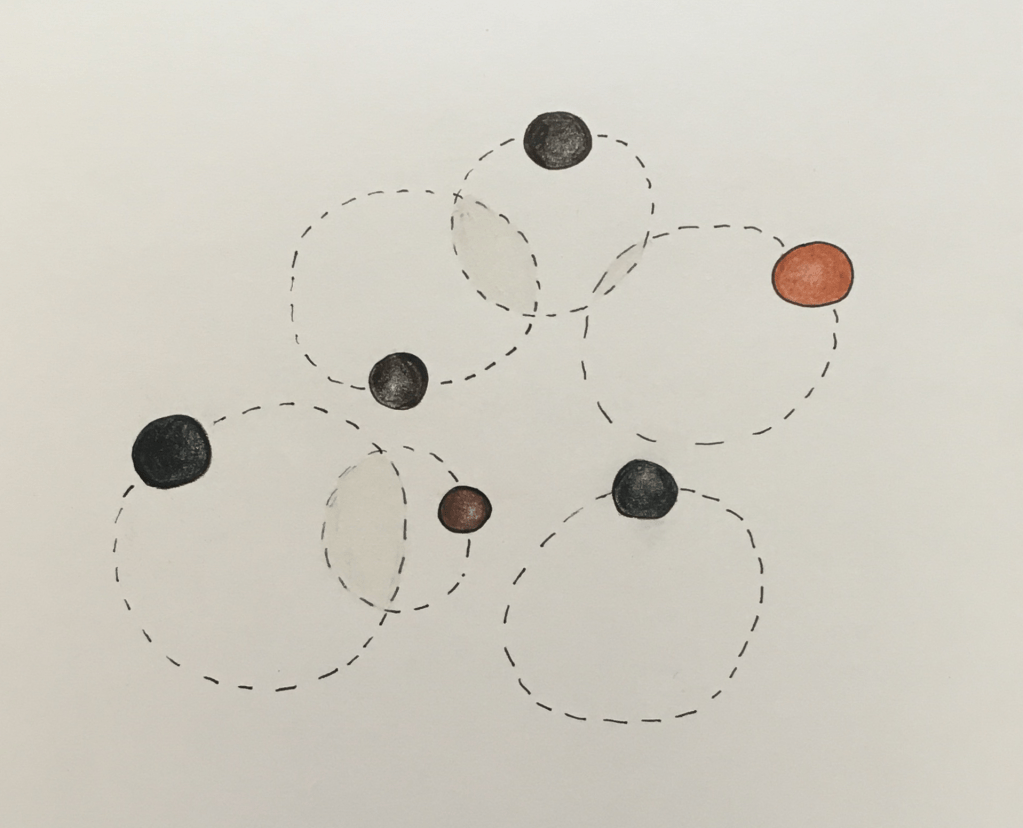
“These lovely people whose orbits have collided with mine…”
I was afraid I’d lose myself—become rewritten. I worried that therapy would erase me, my passions, my life.
A month into chemo, I find I am not lost. I am not erased. But this isn’t easy.
A month in, strong, strong emotions. I hate chemotherapy. There’s nothing to like about it—nothing to even fool myself into liking about it. It sucks. It makes me feel like shit. I barely have the energy to lift my head. My legs ache. If I’m not proactive with preventing nausea, I’m up at 2 AM puking. It sucks.
I’m losing my hair: “Thinning” (I’m unlikely to lose all my hair with the particular chemo I’m on). I’m caught by an unexpected sadness seeing my hands and fingers coated in the dark thin threads snaking every which way. I was warned, but tears wash away in the spray of the shower anyway. I wouldn’t mind being bald, honestly. The worst part is the numerous strands jumping out against my bathroom’s shiny white tile floor and threatening to clog the shower drain. I’m going to have to clean all this up. Barf. It’s yet another signal of how real this is and how powerful the chemotherapy drugs are. Even on this good day where I plan to eat a fancy dinner and take a long walk, my hair is falling out. I’m going to shave my head, I’m sure of it.
Unfortunately, my upcoming chemotherapy is delayed. A high fever, antibiotics, and borderline white blood cell counts indicate my body needs more time to recover from this cycle—a mixed blessing. As usual, I make sure to eat well and walk daily. I throw in some dancing for good measure. I still meditate every day—five hundred consecutive days of meditation this week! Add that to a couple of 250-day streaks broken by a missed morning, and that’s over a thousand days! I suppose all of this is healing. But, my heart is unsettled.
I feel myself on the rocky terrain of discovery, uncovering what each day and week are. I’m gentle with myself even as fears and passions lurch from my heart in a coded language I’m not sure I understand. I want to write and draw and change [eco-social systems of oppression]. Alas, I find myself boxed into my couch watching another season of British Bake-Off. It is what it is.
My birthday approaches. The love my friends and family have shown me over the last two months has been nothing short of the best birthday present I could ever want. The food, the company, the cards, the rides, warm blankets, and books. The list goes on, but there’s no way to fashion these words into a worthy monument of what they are: love.
It pains me that I can’t find the words to express how powerful this is. These lovely people whose orbits have collided with mine, who have shared in the joy of life, who have co-created places where we live fully and ready to take on a brutal world together. And at this moment, as I take on the lot this chaotic universe has landed me in, I find myself not too small or insignificant to receive care. Even as it feels the entire world is burning, I matter enough for people to show up at my door with baskets and blessings. There is so much space in love like this, the way it multiplies between us. And I find I am not lost.
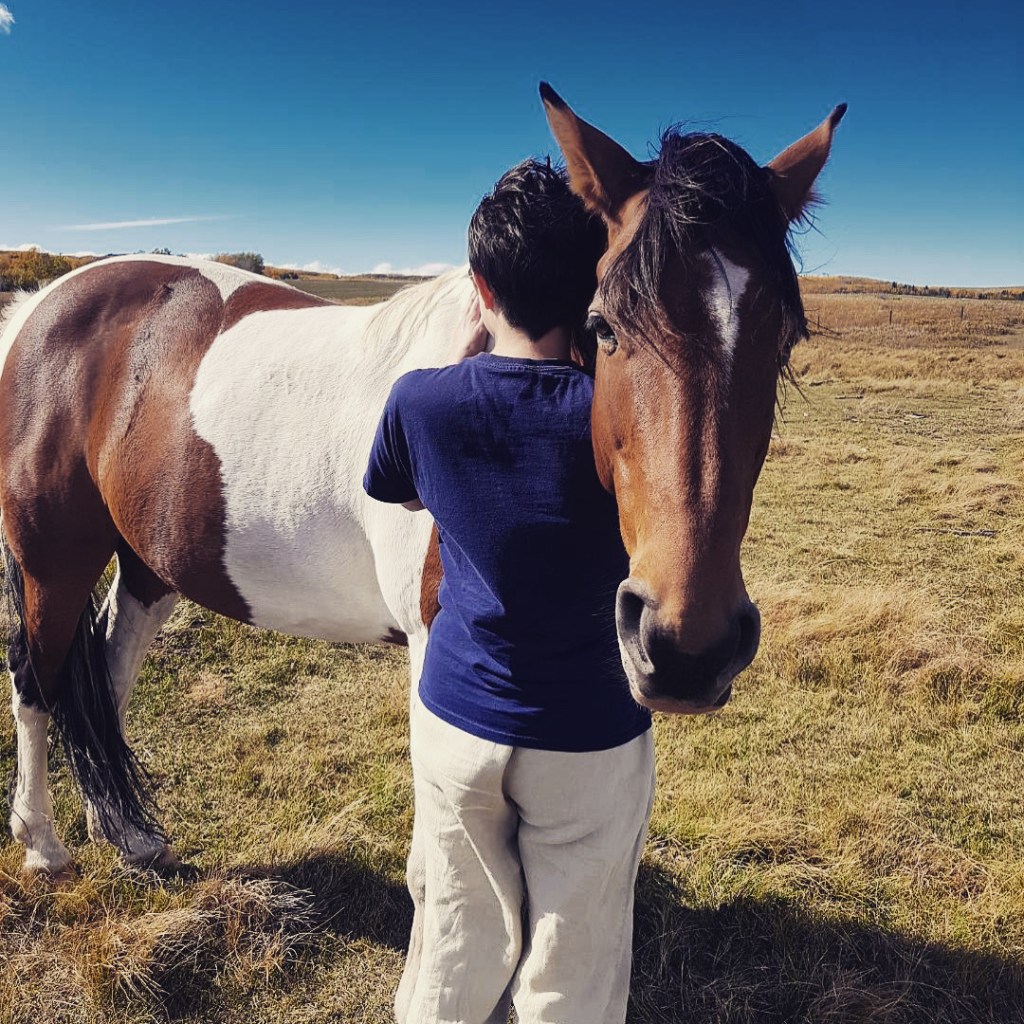
I spent some time getting hugged by Shaker at Whispering Equine #horsetherapy
My first chemo cycle is coming to an end. Each cycle starts with a dose of drugs that halt quick-regenerating cells from regenerating. If all goes well, the cancer cells—mutant human cells—can’t figure out what to do and die off. Healthy cells get their act together and spring back.
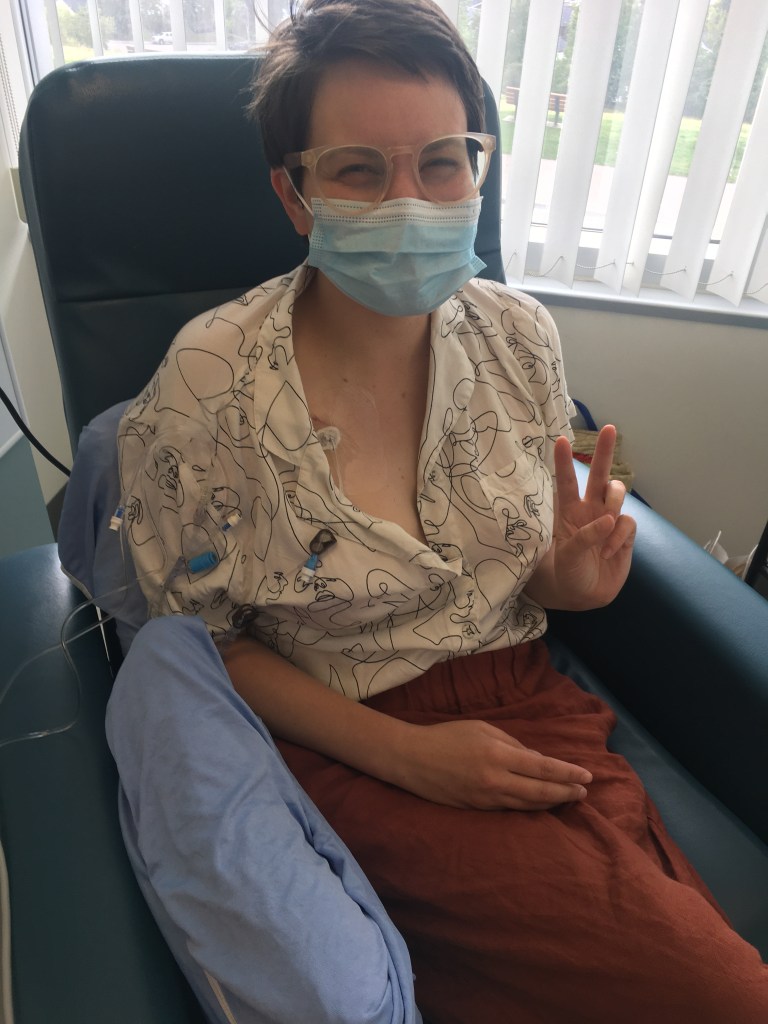
Following the in-hospital bit of chemo, they gave me a bottle with more drugs inside. These drugs drip into my body for 48 hours. They put me on steroids to help as well. As a result, I feel kind of buzzed all the time. By day three, my body’s not doing so well. It’s starting to crash. Nausea and fatigue. My body’s healthy cells not doing what they usually do—not regenerating like normal. It’s exhausting, and I’m coming off the steroid buzz at the same time. I try to stay healthy. I wash often. I go on little walks. I eat protein-rich foods and try to stomach vegetables. Bread is digestible, so I eat that most. I remind myself that I’m safe and healing. I’m tired. I am so tired, but I try to get up every hour and sip some water.
Food is a struggle on these low days following chemotherapy. I stay away from soft yolks and soft cheese and raw nuts. I can’t eat and drink things at room temperature—a chemo side effect. It was just “weird” at first, but after every liquid spawns an explosion of soft-headed pins in my throat, I give up on anything below tepid. The warm drinks start to taste tiring, so I experiment with herbal teas. I long for a cool glass of water.
I begin understanding hope differently. In August, when I described hope to my journal, it was “a field of sunflower stretched to infinity” with sights set on images decades and years away. Slowly over the last month, hope has become much more active. Hope shows up in the acts of every moment. I think the best way to describe it is in the story of planting a seed (and I do mean this very literally, but it works metaphorically as well). Hope is planting a seed. I cannot control the seed’s reproduction, nor the sun and rain. But I can plant that seed in the best spot I know for it. I nourish it, and that act of nourishment is hope. I can’t protect it from every ravenous sparrow or insect or mouse, but I can give it protector plants nearby and build shelters. The seed may grow, or it may not. It may not make a stunning flower or a substantial fruit. That’s what gardening is. But hope is planting the seeds. And like this seed, I’ve been nourishing my own body as a practice of hope without expectation. My journal now reads, “hope is helping wounds to heal.” I’m finding so many actions that are hope. The actions are not reactionary nor transactionary; From eating my proteins and washing my feet to riding my bike for the planet and writing politicians for equity. I’m finding releasing hope from expectation makes it, well, much more hopeful to engage*!
A week after chemotherapy starts, I feel myself bouncing back. I can go on long walks; I soak up the sun and smells of late summer. By day nine, I actually want to do things. I want to read, write, and dance again. It feels like there’s more sun coming through the windows. A couple days on, and I’m cleaning the house readying for the next cycle to start. Dusting, vacuuming, and washing. I trim my nails and take a bath. This cleaning will be a pre-chemo ritual. It feels good to clean, to prepare the nest for my body when it’s low. To put things in their place.
I enjoy a glass of cold water. Cold water has never tasted so good. I appreciate how much I have savoured the moments in my life like this. One day the memories will be broken apart into hundreds of trillions of atoms and dispersed across the cosmos; Right now, those moments fill my being.
My first dose of chemotherapy goes well.
I was in high spirits for my sister’s wedding.
* I must give credit to the sower of this understanding of hope: Frank Ostaseski in The Five Invitations. A number of years ago that book helped me to reframe forgiveness. My understanding of forgiveness moved away from forgetting and towards healing my own wounds. The book also speaks about not confusing love with attachment, which also resonates with me so much.


 Kat Dornian