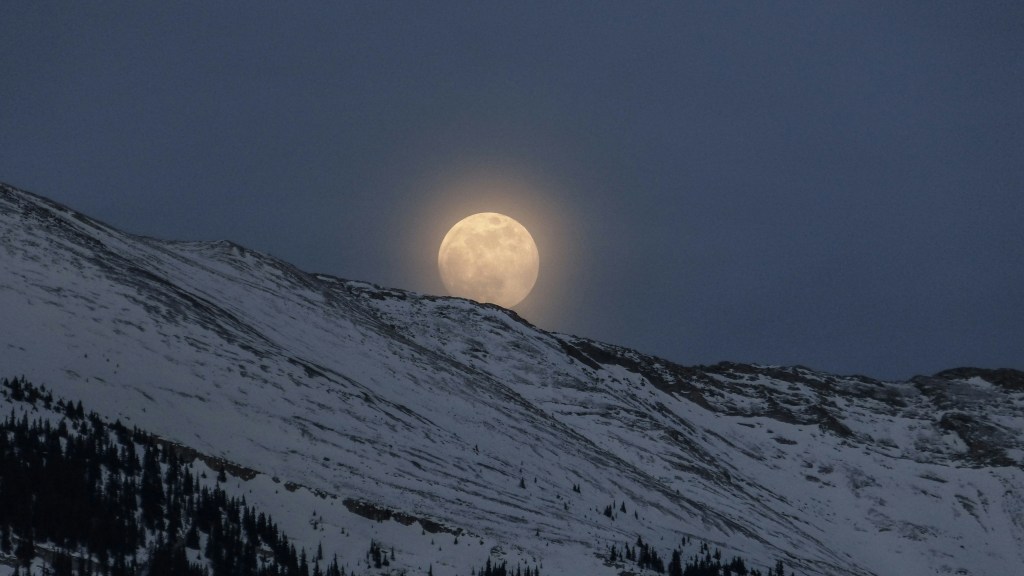
The dark is getting to me this year—persistent, cold, bitter. But, I’ll be damned if I let it stop me. One thing I know about the dark, is it must be faced. Not feared. Not ignored. Not fought. Not run from. And, for goodness sake, not given into.
That’s my weakness—giving in. I’m captivated by the dark. The stars, that milky stroke across the sky, the fleeting shadows, and the mystery draw me in. I could easily fall into the dark and let it consume me. Indeed, for much of the last four years I’ve had to hide in the dark to protect my skin, sanity, and immune system—staying away from sun and people.
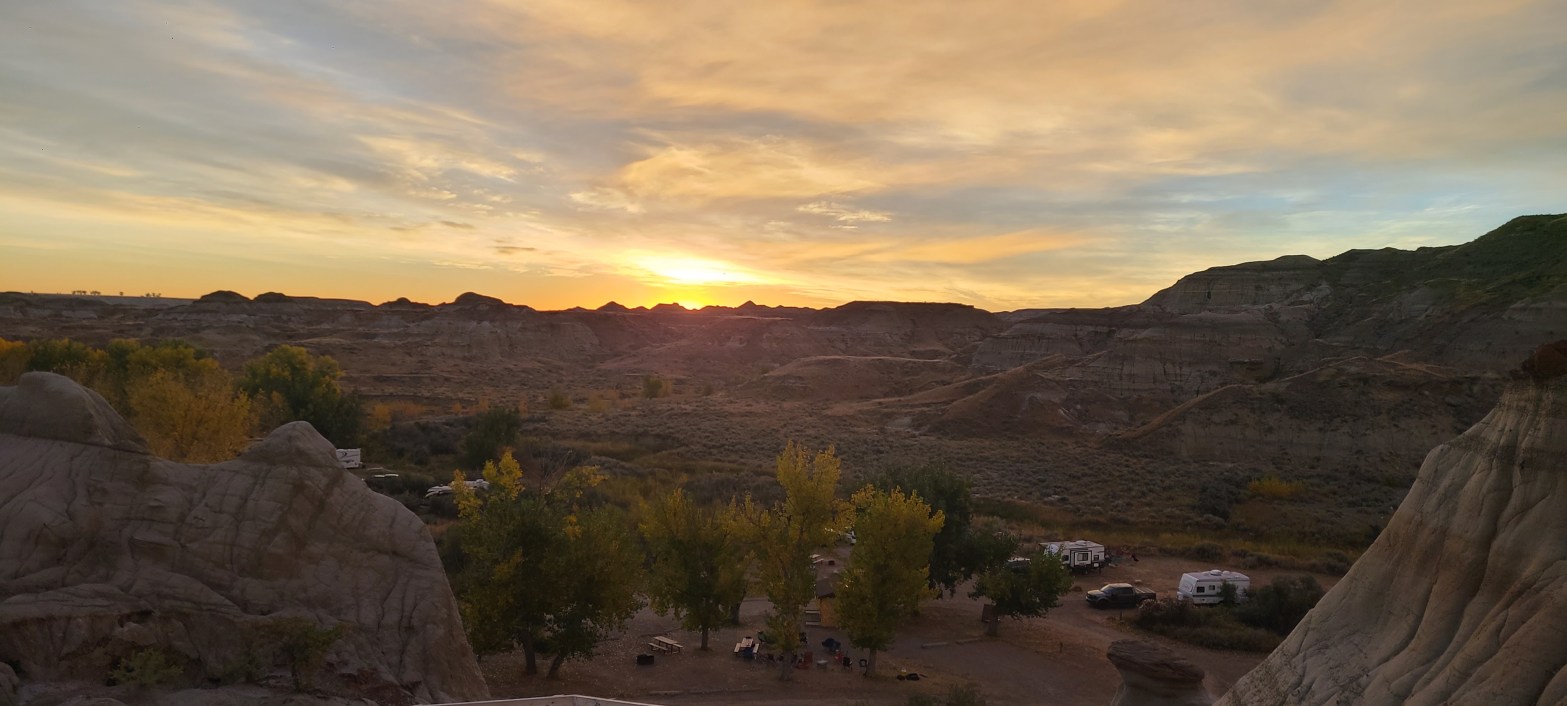
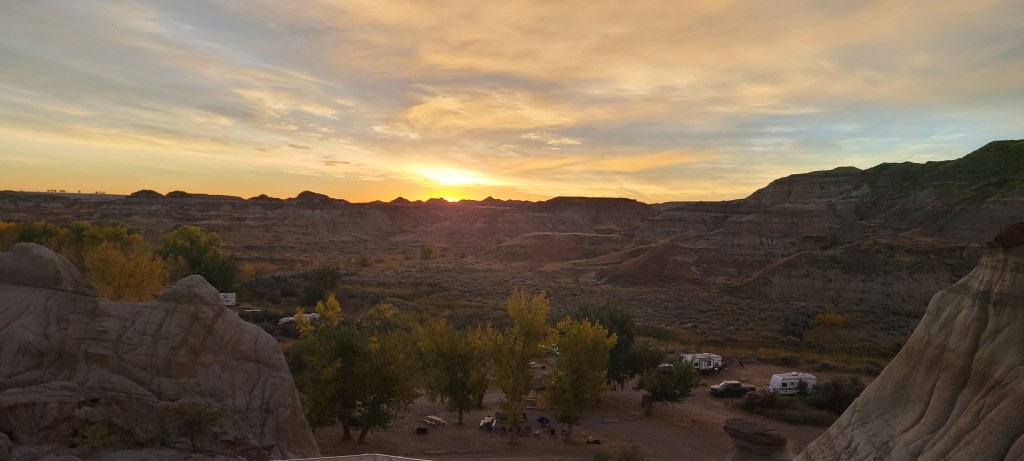
Rod and I went to Dinosaur Provincial Park in September.
A month ago, I sat in my doctor’s office and tears trickled down my cheeks, my breath caught in my throat, and sobs rang from my chest. I held my heart like a hug—a way to comfort myself. My onocologist handed me the tissue box. I’d just been told that the treatment I’m on usually extends survival by about 10 months. It’s a hard thing to hear. I’d just turned 39 and the laughter of my best friend’s first child still rang in my ears from the day before. There’s always light in the darkness, those stars that make the shadows flicker.
It’s not easy getting bad news as the nights grow longer and days become colder. There’s fewer activities to distract me and I’m forced to stay still, to nest… and ruminate. Furthermore, my new treatment makes me quite fatigued, which suits the 16 hour-long nights, but not keeping busy. Still, I get up the next day and make a grocery list because, goodness, I’ve dealt with everything else ad nauseam.
But this is what I’m talking about. I can give in too easy. I can plan so much for darkness that may never come (some darkness always does though). But my weakness is also my strength, because I can also plan for miserable things that need to be planned for. Not that I think death is miserable or dark, per se. But, to be honest, I still like life quite a lot and want to get the full experience—the good and bad, the sublime and imperfect, the light and dark—before I become dust and soil. And, so, I am looking at options. I may be going to the States next year for treatment, if I qualify. There’s a clinical trial coming to Calgary that may be a strong option for me.
And so, I dwell in the darkness of the season, for a bit. I go for walks when the low-hanging sun hits my face. I let stars guide me to new horizons and opportunities, being ready for what may come.
December had been coming to a close with a glow of optimism. In the final weeks of 2024, I had a CT and MRI scan. I expected good results, given that September’s tests showed an excellent response to the new drugs I was on. My continued skin problems should have been a sign that the drugs were working on my tumours as much as they were irritating my skin. As you might detect in my wording here, the scans were not great, but not terrible. Heck, maybe they’re better than I’m giving them credit for. The lesions in my liver remain the same size as they were in September, which means I probably won’t qualify for surgery and that I may need to move onto another treatment path (or not) yet again. This isn’t uncommon, but it still sucks. In particular, the ongoing uncertainty sucks.
With this news, the new year didn’t have the “turning a new page” glow that I often experience around this time.
After ringing in two new years while on chemo and having been in treatment for so long, the fascination with it all–which gave some excitement to the otherwise horrendous experience–has largely faded into the dull hum of life. (This is part of the reason I don’t post as much anymore). I’ve gotten so much bloodwork and so many scans that they all feel mundane. One pathetic highlight of the last year was finding free parking near the hospital, which also provides a rather scenic and peaceful walk before appointments.
It feels like I’ll be on this journey forever, and I don’t know what that means or looks like.
Although uncertainty about the future is a fact of all our lives, going into 2024 feels like a particularly unwelcome point of uncertainty for me. I still look forward to the fruition of some projects, but I worry about my ability to be fully present. I expect myself to be the person I was before diagnosis, which just isn’t the case anymore. I have chosen projects that give me the flexibility and accommodations I need. Still, I remember when prioritizing flexible work hours and modes of work was less important. Navigating my abilities and limitations makes everything more complicated.
I try to find grounding, joy, and hope, but sometimes the ominous grey clouds do not clear as readily.
I am frustrated by the slow pace at which I operate. For one, treatments put me out for a few days, followed by a few more slow days as I recover my energy. I have so many healthcare appointments to manage. My mental ability is hit or miss; I find myself forgetting a lot more and finding it hard to focus for extended periods of time. I lose words. I become overwhelmed with how best to take care of myself. I worry about people noticing my difficulty forming and expressing coherent thoughts.
I’m practicing several ways to cope, and I am grateful for a younger version of myself who developed many healthy strategies.
Of all the healthy routines I’ve practiced, I’ve always struggled with enjoying the present moment. A moment can be a fraction of a second or extend over millennia. The past and future press into even the most minuscule moment, shaping it. I can’t divorce the history of my body and surroundings from the millisecond I reside in, the present. Likewise, although in a more obscured way, I am aware of the buzzing of the future that my body enters and builds from this moment. For these reasons, I struggle to find presence.
Is the present a tiny speck in the universe of time? By the time I register what my senses perceive, the present is past, and I am catapulted against the portal to the future.
I am working on being present. That’s the most sure thing I can lay down for 2024. I don’t know where my health journey will take me, but the projects I’m working on are full of possibilities, and I look forward to them taking their shape. For me, I’ll be sitting in the present each day and trying to sense its fullness. Maybe this year, I’ll find it.
As I write, the turning over of the Gregorian clocks is looming closer. Many of us will write resolutions or tuck them away in our heads as another thing to do and accomplish this coming year. The resolutions will run the gamut of creative accomplishments, travel, relationship goals, self-improvement, and wellness aspirations. The latter is one of the more common.
I was browsing through some of my old journals recently and observed my consistent value for health and wellness. My drive for self-improvement has been consistent since I was a teenager, if not earlier. Around grade three, I remember learning that laughter makes you live longer. I was obsessed with laughing since then. I quickly picked up a staggering list of wellness rituals that would, supposedly, add years to my life. This made getting cancer at age 34 a great disappointment, to say the least. But perhaps it saved me from getting cancer in my twenties, or maybe I’m just unlucky; who knows? Nonetheless, my perspectives on health and wellness have undergone much scrutiny since my diagnosis 29 months ago. I’ve now come to believe the rituals I’ve incorporated into my life have positively impacted me. They’ve added richness and fulfillment to my being, which has made this life quite enjoyable. I want to share some of that with you and the stories behind how I got there.
Before getting into the thick of it, I can’t deny that there were struggles. As a teenager diagnosed with type 1 diabetes at age 15, I struggled with diet, restricting and binging food to control my blood sugars and weight. Although this was before the rampant wellness misinformation found on social media, I was still drawn in by pop wellness. My teenage mind was so status-focused that I was quickly drawn into trends, as are many teenagers whose minds are built to build their social capital. This is all to say I’ve had my experiences in the not-so-good and ill-informed wellness cultures, but I think I’ve developed a more critical eye over the years.
Regarding happiness, some of the most positive work I’ve seen recently is from cognitive scientist and professor of psychology Dr. Laurie Santos. As much as I love self-improvement, I was skeptical of “self-help” and “happiness” literature for most of my life. I scorned books promoting happiness; I didn’t believe they’d hold that the recipe I found brought happiness to my life. And, frankly, I found my life full of joy and doubted these books would have much more to offer. Having faced a few life-changing tragedies in my youth, I knew that happiness came easier after processing the so-called “negative” emotions, which I doubted self-help books would address. I knew that life was not a constant state of happiness, but rather an overall happier-ness (this may sound familiar to people who’ve heard about Oprah and Arthur Brook’s new book, Build the Life You Want). Despite all these beliefs, I enrolled in Dr. Santos’ Science of Well-being course a few years ago with some friends. I found her approach refreshing, and I have been an avid listener—and sharer—of her podcast, “The Happiness Lab,” ever since. She offers a science-backed approach to well-being without the toxic-positivity aspects, and she acknowledges that sometimes life sucks. Still, it is possible to rewire ourselves for better experiences. For more about this, watch this quick video:
The video provides a nice framing for me to explore well-being and what I’ve learned over my life, particularly since being diagnosed with cancer.
Intuitions
Intuition is the first self-help paradigm Dr. Santos tackles in the above video, stating that many of our intuitions about what will make us happier (more money, material possessions, job promotions, marriage, etc) are misguided.
In late junior high school, I longed to be one of the popular kids. I thought hanging around cool people, wearing the right clothes, and doing my makeup right would bring me this popularity that felt so important. It was a struggle, and I soon realized there was no top of the pyramid, only ideals I would never accomplish. That’s the thing with these misguided intuitions: there is no top of the pyramid; it’s an endless hedonic treadmill to tire ourselves out on.
Another thing I learned around this time was that I would not be a top athlete. I don’t have a natural athlete’s body, but I enjoy competitive swimming. When I understood this fact, I realized I could work hard to achieve some achievable goal, but other swimmers would always outswim me. If I reached the top, I’d be outswum the next day. I chose to be happy with what I had. I had my team spirit and enthusiasm and showed up to every practice with a positive attitude. Focusing on my strengths made me feel good.
These practices have continued throughout my life. I often reflect on what is enough for me. Do I need to be at the top of the pyramid? Do I need to be better than those around me? While I strive to do well at my jobs and take in as much of life as possible, I recognize that enough is being able to live within my means and that constant striving is more stressful than rewarding. Possessions or achievements don’t bring me long-term happiness Which brings me to nicely to the happiness “rewirings” that Dr. Santos shares:
Social Connections
I switched schools in grade 10 to take the IB program, leaving behind many of the friendships I had made since Kindergarten. While I hadn’t completely divorced myself from the ideals of materiality, I entered my new school, most determined to make friends and less concerned about popularity. I shortened my name to Kat and told myself I couldn’t be shy. I read up about how to make friends: join clubs, ask questions, be curious, be attentive, take an interest in others, smile, and be interesting (read books, have hobbies, etc). And it worked out. I found my social group and had many adventures, from movie nights to rock climbing to making music. The lessons I practiced about connecting to people and making friends served me well.
When I was first diagnosed with cancer, I retreated behind social media and TV. It didn’t serve me well. I am lucky to have friends who show up, check in on me, and invite me on walks. Social events (over Zoom) were far more helpful than watching an entire season of British Bake-Off in one day. I strive to create an active social calendar to safely connect with friends and my community. Although our third spaces may be dwindling, I believe it is still possible for anyone to find a hobby, sport, book club, or volunteer endeavour that can foster friendship and social connection on a regular, ongoing basis. The efforts to join and make friends are necessary, albeit difficult.
Other-orientedness
When I graduated from University, I got a self-help book and read it. The only advice I remember from it was to give at least one compliment daily. This was easy enough, and I started to do this. The joy I brought to other people was remarkable.
After a few months of living a secluded life with cancer, I realized I could no longer wait for this terrible disease to go away or kill me. I needed to connect, and I needed to put my skills to use. I needed some more other-orientedness in my life. I searched the volunteer websites and found opportunities where I could lend my strengths. The improvement in my mood was instantaneous. Although I couldn’t return to work (where I worked on human/other-oriented designs), I could still help others.
Gratitude and Savouring Moments
When my dad died in 2002, I became so keenly aware of the preciousness and fragility of life. I realized how easily I could die at any moment. Whenever I think about my dad, I am reminded of life’s preciousness, so I stop, take a deep breath, and soak it in. I’ve adopted habits like toasting before eating, stopping when I notice something beautiful, and allowing myself to laugh as much as I want. I also keep a gratitude journal, frequently capturing moments worth savouring.
I didn’t know how worthwhile this practice would be until I got my cancer diagnosis. Lying in bed some nights, the thoughts of my tenuous survival creeping in on me, I’d remember the good things in my life. Taking the time to be grateful and savour made those moments come to mind when I needed them most. I am so thankful to my past self for these memories, as they make me feel that no matter how long my life is, I’ve lived it well.
Exercise
I’ve been a regular participant in exercise for most of my life. Swimming was a huge part of my childhood and helped me immensely when tragedies occurred in my life. I loved escaping to the pool, paddling consistent strokes through the reliable water. I could take my mind off troubles and leave the pool feeling better, reset. I also found that exercise helped improve my diabetes control and mood for the day. When I settled into a well-connected community, I got rid of my car and depended on active transport. When choosing places to live, I prioritized natural places to walk, a gym, a nearby grocery store, and access to transit. I’d walk or bike on long, slow routes to and from work to prioritize time around nature. I took my time and made these movement moments as enjoyable as possible. The thing is, exercise doesn’t have to be a burden.
With cancer, I was encouraged by my healthcare team to walk about 30 minutes a day. Taking a gentle walk, especially in nature, was one of the most healing and relaxing things I could do. A walk outdoors can literally change my outlook for the entire day. When my chemo-induced cold and sun sensitivity make it challenging to get outdoors, I find more suitable times for walks or do yoga or dance sessions indoors when needed. As much as exercise can be laborious at times, I have more often than not felt more rewards than strain.
With all this said, I wanted to share some of Dr. Santos’ words from near the end of the video: “We’re going to have moments of fear or frustration or overwhelm. That’s part of being human. Our negative emotions are signals that are telling us something really important. Our sadness is there to tell us, ‘Hey, you’re missing something in life. You might need to make changes.’ … We shouldn’t try to wish them away. We just need to be able to regulate them in positive ways. The key, though, is that you have to put these strategies into practice, you can’t just learn about them.”
This ties back nicely to intuitions, where Dr. Santos began her talk. I understand that many people react quickly to emotions such as sadness, fear and disgust and hope to brush them aside quickly. These lead to coping mechanisms like denial, addiction, despair, and (this one I just learned about a few months ago:) internalized oppression. Part of happiness has to be practice, practicing the things that bring joy and practicing work that helps us heal those things we don’t want to face.
As if I haven’t rambled enough, self-care was a significant learning for me this year. There’s a general air around self-care similar to those happiness books I feared were only promoting toxic positivity and denied negative emotions. When I think about self-care, I envision baths, spas, yoga, a cup of tea, lighting a candle, etc. This year, I’ve found that self-care also involves things that aren’t so pleasant. Of course, those feel-good practices such as social connections, exercise, gratitude, giving, and savouring are all important. But, sometimes, you must sit in a sitz bath (NOT a bath) for 15 minutes every day, moisturize with lotions that leave you and all your clothing feeling greasy, take medications, and avoid those spas at risk of unpleasant infections. While I do my best to mitigate the displeasure, it’s not all eucalyptus and lavender.
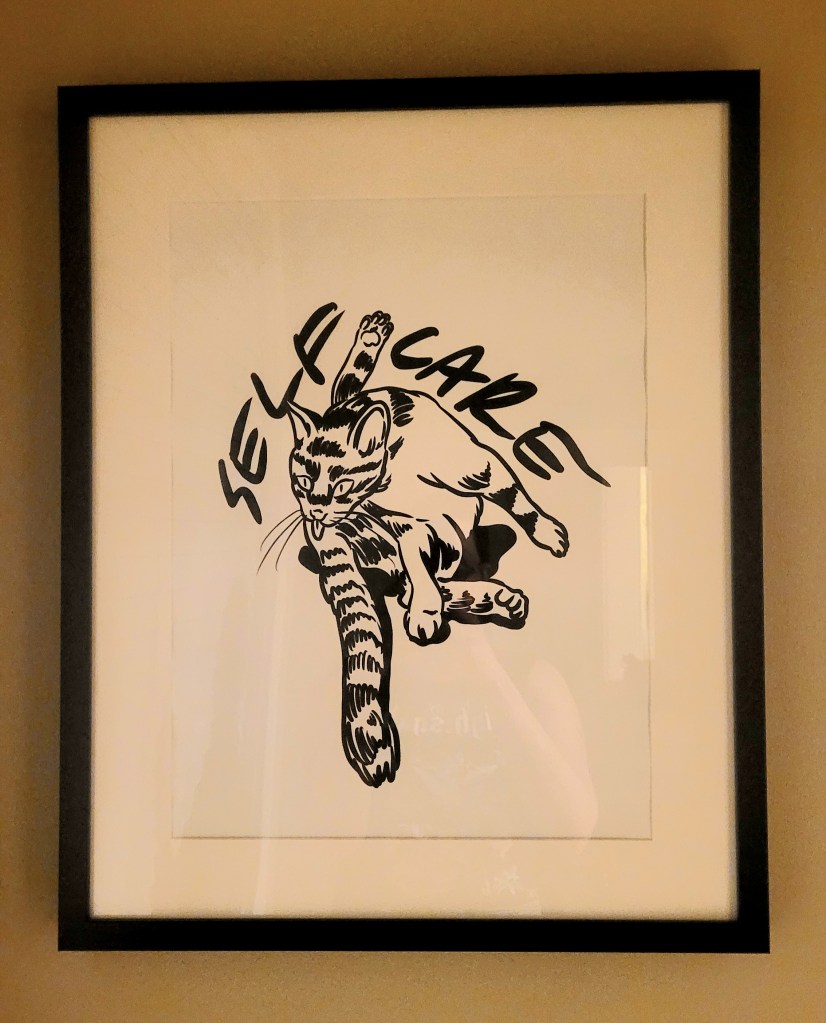
I bought a print just before the pandemic lockdowns from Primal Screaming with Friends that shows a cat cleaning its butt (at the time, I bought it because I thought it would be funny to hang in my bathroom). It sums up my newfound perception of self-care. Sometimes self-care is doing those things that aren’t immediately pleasurable but contribute to well-being. Not that you have to, or should, engage in the least pleasurable exercises or keep friends who make you feel shitty; Find those exercises and friends you like. Self-care must consider the whole gamut of what you do to take of yourself.
And with that, I wish everyone a genuinely healthy 2024, filled with happiness and the ability to work through whatever life throws at you.
 Kat Dornian