Still Here

It’s hard to believe I have cancer. Four years ago I had a port implanted in my chest and started chemotherapy. Four years later, I’m still here. I’m still on chemotherapy. It still feels surreal. Nonetheless, I am here.

I joked with my dermatologist that I’ve had cancer for as long as it takes to do an undergraduate degree. Although many of the feelings of grief, disbelief, wonder, and passion for living echo what I felt four years ago, there is also the journey I have been on and growth I have had in this time. Surprisingly, the hardest lessons have not been the innumerable drug names or what these drugs are doing or what all the different proteins and enzymes in my bloodwork are showing. The hardest lessons are what I’ve learned about cancer and the profound impacts of ableism on us—all of us. To this latter point, I’ll say that I still struggle with the ableist notions from which my understanding of the world grew, but I’m improving.

I’ve touched on my ableist belief system and my relationship with wellness culture before in my writing. Ableism is so ubiquitous and entrenched in society that it is a hard to shake. However, I’m becoming more adept at spotting ableist ideas and phrases now. This practice of spotting has allowed me to deepen my imagining of a world that’s possible if we treated disability differently.

I have much work to do toward this imagining. First, I must stop blaming myself for cancer. At least weekly, I see a post on social media or read an article or overhear a conversation where the individual with cancer is blamed for their cancer or rewarded for their remission: “if only they had been more healthy…”, “if only they had eaten better…”, “if only they had decided to do a complete 180 on their life to fight cancer…”. I understand how blame—or, to say it more gently, a cause and effect story—can give a sense of control and safety. And while I often think of myself as someone who is able to dwell in uncertainty, it is a draining practice. And so, I resort to ableism and the blaming of my imperfect body and my imperfect will: for skipping a workout, or eating a slice of cake, or staying out late for a few more songs to dance to.

I imagine, in a less ableist world, we see more grey areas—the magic in the liminal spaces—and are able to dwell in that uncertainty. We are not afraid of the vast differences in bodies and minds, allowing us to be gentler with “imperfections.” Perhaps we don’t use the words ‘perfection’ or ‘imperfection’ anymore. Perhaps, as our need for control gently dissolves, we see our connections to one another rather than the us-versus-them that’s awakened by fear and blame. Perhaps we feel our shared responsibility to care for our collective wellbeing. Cancer is not caused or reversed or worsened by the sole actions of an individual—it takes a community. It really does. And I am so thankful for mine.

For those who have stuck with me, thank you. Enough philosophizing; here’s an update of happenings since my last post to this site: I completed my creative writing certificate from the University of Calgary and am continuing to create and submit words. I pursued a liver transplant, but have decided that it is not right for me at this time. This is a tough decision to make; liver transplants do offer some patients many years of survival. However, recurrence rates are high (in my opinion), the surgery is risky, and I’d have more chronic health issues to manage for the rest of my life. I continued the chemotherapy treatment that caused skin irritation until June, at which point my health team and I decided it best to look at other treatments. Now, I am back on the chemotherapy regimen I had four years ago, with the hopes that it will be as effective as it was then and that the associated neuropathy holds off for a while. I also went to Iceland with my friend in March, which was an extraordinary adventure to an absolutely unique place. While travel was stressful for me, I somehow managed not to get sick and enjoy much of Icelandic culture and scenery.

I’m looking forward to the rest of 2025 and to being able to enjoy the outdoors a bit more now that my skin is not as sensitive to the sun. I’ll continue to write and learn (for another four years, at least, hopefully). And I’m continuing to look for emerging cancer treatments that might work for me; there are some promising therapies on the way to Canada, so stay tuned.

It’s hard to believe this is my life. It’s hard to accept my illness. But I’m getting better at that too!

References

Lorde, Audre. The cancer journals. Penguin, 2020.
Colorectal Cancer Awareness Month: My Story and Advice

It’s colorectal cancer awareness month. I haven’t “celebrated” this month in the past as I’ve been dealing with resentment and anger that held me back from believing anything could be done. But I’ve done a lot of work and feel ready to share my journey in hopes that it may help others.

My most significant barrier in this journey was getting the testing I needed. I want to encourage people, especially young people, to advocate for themselves when they have symptoms. Symptoms of colorectal cancer include unusual bowel habits, blood in stool, abdominal pain, fatigue, and unexplained weight loss (among others: https://cancer.ca/en/cancer-information/cancer-types/colorectal/signs-and-symptoms).

My first symptom was blood in my stool. I brought this concern to my family doctor who told me it was hemorrhoids without any assessment. Still concerned, I went to two walk-in clinics, but they said they were unable to order tests as I’d need follow-up that they couldn’t provide and repeated that it was probably just hemorrhoids anyway given my age and good health. I switched family doctors. My new doctor seemed unconcerned about my symptoms, repeating that I was young and healthy. In 2020, I had an episode of such painful abdominal cramps that I went to emergency. The doctor there told me it was menstrual cramps and menstrual bleeding; as a 34-year-old with ample experience of both, I knew this wasn’t the case, but because of Covid, I had no one with me to deny this, and I was in too much pain at the time to speak up. I followed up with my family doctor and was referred for a colonoscopy; I was put on the non-urgent list.

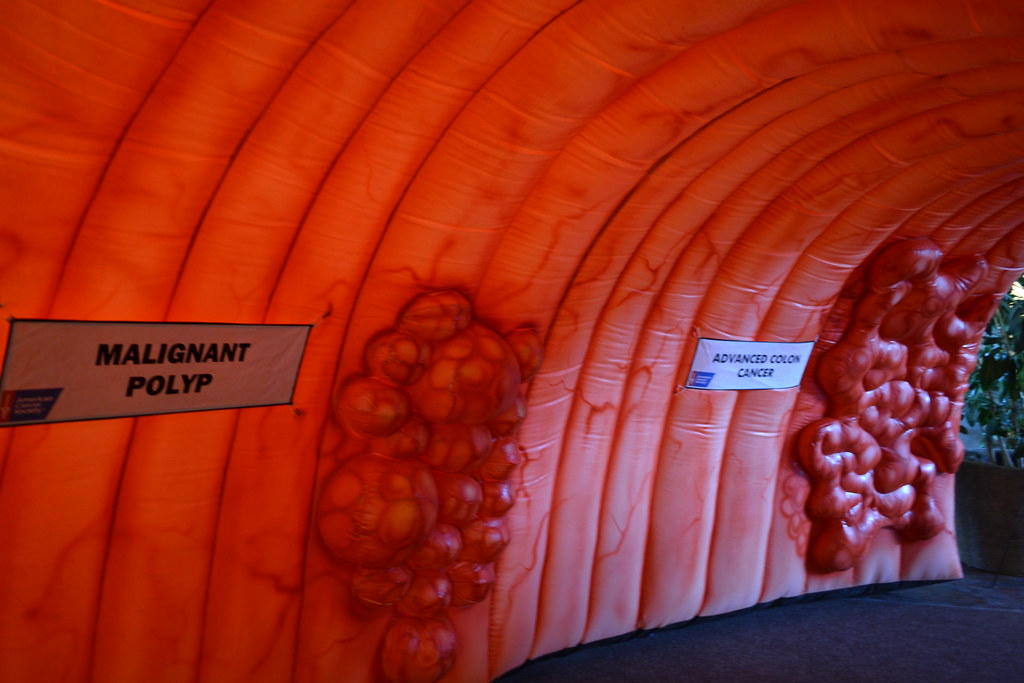
A large-scale colon showing a small growth labeled malignant polyp and a larger growth labeled advanced colon cancer
The epic inflatable colon courtesy A Healthier Michigan/flickr

What is described above, unfortunately, is all too common of a story for young people. By the summer of 2021, I felt sick constantly, had trouble eating, experienced poor bowel habits, and always felt exhausted. I went to the emergency again and was told I had to pick one thing that was bothering me, which at the time was my chest (it turned out the metastasis in my liver was pushing on my lungs and causing pain). The x-ray showed spots on my liver. They didn’t say cancer, but I knew this wasn’t good. My family doctor followed up the next day and changed my colonoscopy order to urgent. And that’s how this whole journey began.

I do not want other people to go through this. If I could make one suggestion that would have helped me, it would be to bring people with you to appointments! Tell your supporter what concerns you and ask for their help pushing back. I’ve been a very independent person for much of my life, but I found it difficult when I was in pain to speak up. Not only that, but it was hard for me to admit that something could be wrong despite knowing that early cancer detection leads to better outcomes.

One thing that constantly tripped me up was being “healthy.” I can’t count the number of times doctors would ask me, “Are you healthy?” What does that even mean? I’ve placed a high value on health since I was a teenager. Being a competitive swimmer, outdoorsy person, and diabetic made me learn how to take care of myself. Sure, I sometimes went too far, but I’ve always prided myself on healthy habits. It was this pride that ultimately made me believe doctors when they assured me that someone healthy like me wouldn’t have something like cancer! Since then, I’ve discovered lots of healthy people get cancer: marathon runners, weight lifters, and regular people with great routines. There are many pathways and variations to colon cancer and any cancer.

I have heard friends say that they don’t see a point in being healthy if someone like me could get cancer. Well, here’s the thing: I value having the healthy habits I had before cancer. It took me a long time (42 months at least) to overcome my resentment, but here I am. For one, my healthy habits brought me benefits as I practiced them (joy, self-discovery, better emotional regulation, great poops, better blood sugar management, etc). For two, it’s been easy for me to continue these habits through treatment, which has been helpful. And for three, I believe some of my recovery and stability can be attributed to these habits.

For me, healthy habits include

  1. Maintaining a strong social network. I love my book clubs, writing groups, friend circles, and one-on-one hangs. This has become vital as I navigate cancer, yet the work I did throughout my 20s and the people who reciprocated have proven invaluable in my support network. As social media and smartphones make loneliness all the more pervasive, it is critical that we put in the effort to maintain in-person connections as much as we can.
  2. Paying attention to stress. I started a serious meditation practice around 2017. It helped me move slower and be more aware of my feelings. At the same time, I started seeing a CBT psychologist who helped me look for stress warning signs and practice emotional regulation. I’m grateful to my mom, who modelled work-life balance. Although I’m a real go-getter, I have always tried to keep work to 8 hours a day. However, my enthusiasm for life and fear of boredom cause some overcommitment issues, which I’m working on.
  3. Exercising! Exercise is one of my favourite things. I love how it makes me feel, positively affects my mood, and helps me control my blood sugar. I love going for morning jogs and discovering the places where I am (I have seen wildlife like armadillos, storks, deer, and so much more)! Morning jogs let me catch beautiful sunsets and capture the most serene moment of the day. Swimming allowed me time for quiet reflection and focus. I’ve been lucky to have wonderful ways to get to work that bring me through forests and along rivers, even if they take a bit longer.
  4. Eating whole foods. I’ve always loved cooking from scratch. I love playing with flavours and how satisfying a home-cooked meal is. I used to indulge in much more cake and candy than I do now. And I feel a lot better cutting back on those things. My tummy is a lot happier, and my energy is even. I’m hopeful my high-probiotic, high-fibre diet pre-cancer—and a bit of luck—helped my colon get back on track after surgery! Butt [sic[, you got to love your microbiomes.
  5. Taking care of my environment. Oddly, I never thought of this as a health measure. I care about the Earth, so I bought organic, local, and non-toxic products. Now that I have cancer, this comes up from time to time, and apparently what’s good for the Earth (low chemicals, low plastics, sustainable manufacturing practices) is also good for us! Go figure. It feels good to be doing something that helps the planet and us, and it’s nice that I don’t have to learn responsible purchasing habits from scratch.
  6. Living meaningfully. One thing that lifted my spirits more than anything at the time I was diagnosed was having felt I lived a good life. I chose meaningful work, made choices based on my values, strove to minimize harm, and helped where I could. I embraced life and kept an open mind to experiences, leading to a sense of fullness. Living meaningfully has made the fear of death unthinkable for me. Ever since my dad died, I have always wanted to go to sleep knowing that if I should die tomorrow, I’d have lived well.
  7. Sleeping has been the toughest thing for me. I’m still working on it, but I know it’s essential. I’ve always known sleep is important and aimed for the 7–8 hours a night, but I struggled in this hyper-lit and connected world. I have started dedicating more to a good sleep routine and love it. I feel like a regular routine and good sleep help me focus, but cancer treatment is also weird and zaps a lot of my energy. Still, I appreciate a good sleep routine.
  8. Having financial stability. This one is tough because there are so many factors that affect my financial well-being, such as my family history and support (plus a pretty good settlement after a car hit me), which I do recognize not everyone has. Still, learning good financial practices early in life, like becoming confident in budgeting and investing, has served me well and has made me less stressed in this cancer journey.

I’m sorry to say that these habits won’t definitely prevent cancer. But, I do think they have helped me survive through cancer. I have resented this, and I have resented that I didn’t get to undergo some miraculous lifestyle change that somehow reversed my cancer; I don’t even know if I believe that is possible without modern medicine.

Nonetheless, the benefits of healthy living are vast, and I’d encourage everyone to try out one or two this year. And advocate for testing!!!

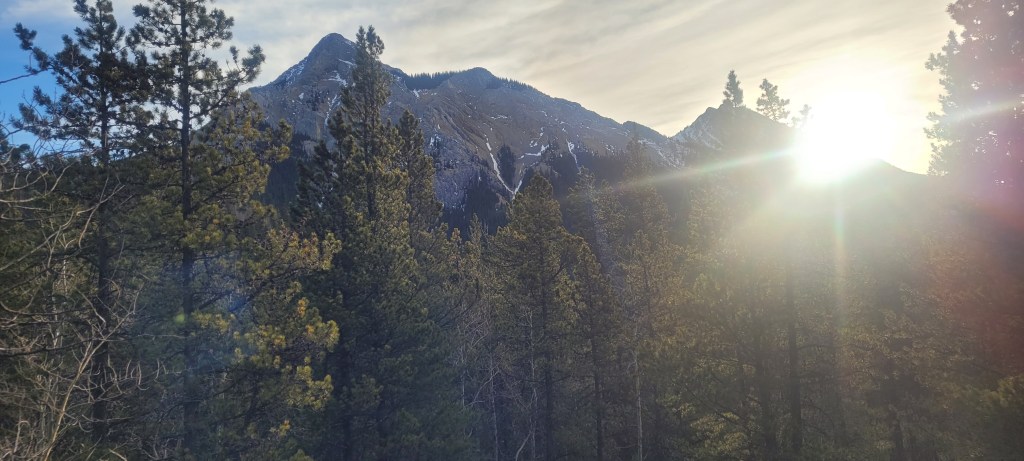
A photo of the sun peeking over the mountains with pine trees in the foreground.
Oh yeah, and getting outside is really nice!

Gratitude

Another milestone approaches, one I’d never thought I’d reach: my fiftieth round of chemo. Honestly, I thought I’d have left cancer well behind me by this point. There’s a small chance I have; there’s many chances I haven’t. I’m choosing a practical optimism at every opportunity I get, but to be honest, it’s difficult to deal with the uncertainty of what this actually means.

The remaining three tumors in my liver (each the size of dice) appear to be largely calcified—like little skeletons buried in the vibrant ecosystem of my liver. I’m so grateful and awed by the ways the body strives to live. And, I’m grateful for medicine, and the ongoing development of new and better tests and therapies. The thought of going off of the treatment that has kept me alive for the last thirty-two months is frightening, while also relieving (two seemingly competing truths existing together). But even to be here is amazing. Even just fifteen years ago, I wouldn’t have had access to the same drugs I have today.

This got me thinking. I looked up causes of death through history. The first thing I saw was that only a century ago almost fifty percent of people died before they were adults. Nowadays, that number is below one percent. Frankly, I’d be dead if I was born a century earlier. I had pneumonia when I was around eight years old. It would have killed me a hundred years ago, and it could have killed me had I not been born in a wealthy country even now. Type 1 diabetes was a miserable death sentence a century ago. It’s frankly amazing that discoveries and innovations, combined with a handful of other close calls, have given me as much life as I have. And this is probably true for nearly half of the people reading this, half of your friends, half of your coworkers, half of the brilliant people making these discoveries.

I have a lot of gratitude these days. It keeps me uplifted and hopeful. It helps me see all beings as caring and giving of their best. It helps me see and feel my place in the web of being. Basically, it helps me just to see so much. I think about being a kid, and writing thank you cards to family members after Christmas gifts were exchanged. It was a simple practice of gratitude that informed my inclination to the practice later in life. And am I ever thankful for that too.

I remember (perhaps inaccurately, but to the best of my knowledge) being part of the health and safety committee at work, and as part of a mental health strategy, we implemented a thank you board in the office. It was largely a success, but concerns were raised that we shouldn’t be thanking people just for doing their jobs. I get where people are coming from with this argument, but I put forth that thanking someone is a rather simple action in comparison to the meaningful effect it can have. And who knows, some people struggle to get out of bed in the morning, how does some recognition change their morning? Others may feel like an imposter, or face any other struggles that plague us in the workplace, how does some appreciation change their work? I think about how differently I show up to conversations when someone simply shows appreciation for the effort I have put into a piece of work, even if my efforts turn out to be misinformed or otherwise shit.

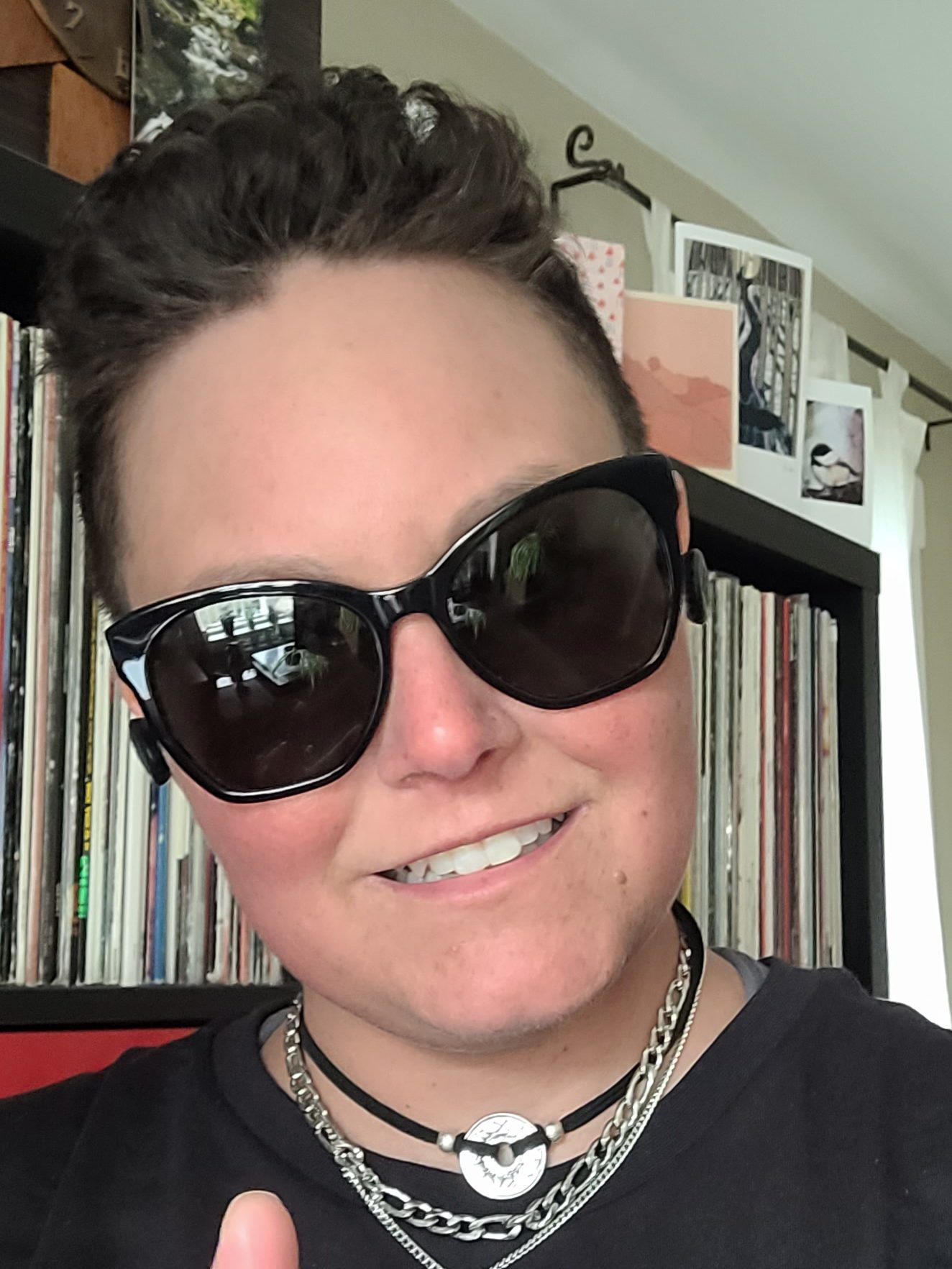
In this spirit of appreciation, I’ll stop with the sappy, self-helpy vibes and say that the best thing these days is my hair. Although there is chemo-induced thinning, there is also chemo-induced curls. After getting over the initial confusion of coping with this newfound mess, I found a style that I adore. I honestly think that this is the first time in my life that I’m genuinely pleased with how my hair looks. It’s a funny fluff on the top of my head, which is perfect for my face shape, looks the perfect amount of androgynous, actually requires very minimal styling, and the curl shampoo and conditioner moisturizes my scalp so no more dry skin flakes! It’s a bit weird to be overjoyed with a hairstyle that was caused by cancer treatment, but there you have it. Thanks chemo!

Chemo curls always look cool

I’ll leave it there for now. I’ve been changing and learning (and being grateful for my consistently curious self) these last thirty-two months. Perhaps I’ll say more next time. Be well and be grateful!

The New Year and Now

December had been coming to a close with a glow of optimism. In the final weeks of 2024, I had a CT and MRI scan. I expected good results, given that September’s tests showed an excellent response to the new drugs I was on. My continued skin problems should have been a sign that the drugs were working on my tumours as much as they were irritating my skin. As you might detect in my wording here, the scans were not great, but not terrible. Heck, maybe they’re better than I’m giving them credit for. The lesions in my liver remain the same size as they were in September, which means I probably won’t qualify for surgery and that I may need to move onto another treatment path (or not) yet again. This isn’t uncommon, but it still sucks. In particular, the ongoing uncertainty sucks.

With this news, the new year didn’t have the “turning a new page” glow that I often experience around this time.

After ringing in two new years while on chemo and having been in treatment for so long, the fascination with it all–which gave some excitement to the otherwise horrendous experience–has largely faded into the dull hum of life. (This is part of the reason I don’t post as much anymore). I’ve gotten so much bloodwork and so many scans that they all feel mundane. One pathetic highlight of the last year was finding free parking near the hospital, which also provides a rather scenic and peaceful walk before appointments.

It feels like I’ll be on this journey forever, and I don’t know what that means or looks like.

Although uncertainty about the future is a fact of all our lives, going into 2024 feels like a particularly unwelcome point of uncertainty for me. I still look forward to the fruition of some projects, but I worry about my ability to be fully present. I expect myself to be the person I was before diagnosis, which just isn’t the case anymore. I have chosen projects that give me the flexibility and accommodations I need. Still, I remember when prioritizing flexible work hours and modes of work was less important. Navigating my abilities and limitations makes everything more complicated.

I try to find grounding, joy, and hope, but sometimes the ominous grey clouds do not clear as readily.

I am frustrated by the slow pace at which I operate. For one, treatments put me out for a few days, followed by a few more slow days as I recover my energy. I have so many healthcare appointments to manage. My mental ability is hit or miss; I find myself forgetting a lot more and finding it hard to focus for extended periods of time. I lose words. I become overwhelmed with how best to take care of myself. I worry about people noticing my difficulty forming and expressing coherent thoughts.

I’m practicing several ways to cope, and I am grateful for a younger version of myself who developed many healthy strategies.

Photo by Kym MacKinnon on Unsplash

Of all the healthy routines I’ve practiced, I’ve always struggled with enjoying the present moment. A moment can be a fraction of a second or extend over millennia. The past and future press into even the most minuscule moment, shaping it. I can’t divorce the history of my body and surroundings from the millisecond I reside in, the present. Likewise, although in a more obscured way, I am aware of the buzzing of the future that my body enters and builds from this moment. For these reasons, I struggle to find presence.

Is the present a tiny speck in the universe of time? By the time I register what my senses perceive, the present is past, and I am catapulted against the portal to the future.

I am working on being present. That’s the most sure thing I can lay down for 2024. I don’t know where my health journey will take me, but the projects I’m working on are full of possibilities, and I look forward to them taking their shape. For me, I’ll be sitting in the present each day and trying to sense its fullness. Maybe this year, I’ll find it.

Winter Solstice

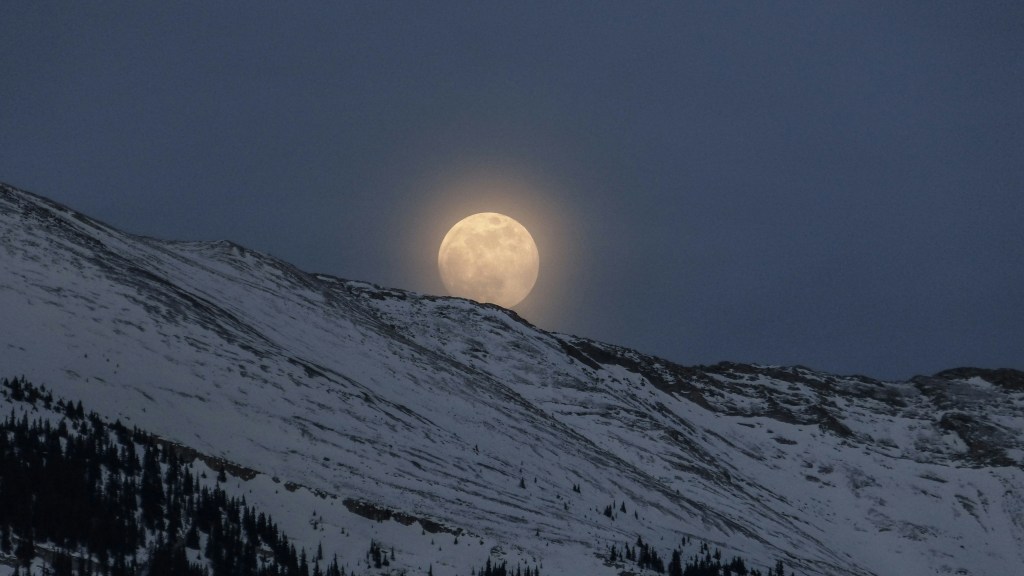
The longest night is approaching for those of us who reside in the northern hemisphere. After the winter solstice, we will begin our journey of turning closer to the sun once again. I’m sure many are looking forward to more light and longer days. But there are also special opportunities that come with the long nights (back to that in a second).

The waning of sunny hours has been difficult, bringing with it seasonal malaise and melancholy. The body longs to nest and sleep, but the deadlines of year-end and holiday stresses do not allow us to follow circadian inclinations, nor allow us to truly savour the community warmth and signs of life we crave. Perhaps, after the fires are lit, food is baked, and tea is steeped, there will be time to nestle into a blanket in the cozy company of others.

The opportunities to be near others, rest, and dream are important. Dreaming, in particular, is a chance to process and internalize memories as well as create and envision something new from the embers of the past. (Isn’t dreaming fascinating?) I love taking time during these long nights to reflect on the year and set plans for the new one.

Over the last year, my hope and optimism has continued to flourish despite the escalating tragedies around the world. I am finding and continuing to nurture the relationships with the many lovely people in my life who are infusing the world with good. I don’t know if I tell you, my friends, how valuable and important you are to this planet, but I think it every day and it gives me so much hope and inspiration. Although it often feels like our influences are small, I can see the good that comes from our being together, practicing gratitude, processing our pain, sharing, shifting, changing, and acting. Even though these gatherings often focus on efforts larger than myself, they’ve been immensely helpful in keeping my personal spirits lifted and getting me out of bed each day. I am eternally grateful for my friends and community.

I’ve had twenty-one rounds of chemo this year and have one left before 2023 wraps up. When I was first diagnosed, hearing this would have terrified me. I’m grateful for my body for putting up with the drugs, but it’s been difficult. I started a new medication in July, whose side effects included acne and rashes. To combat the acne, I was put on an antibiotic that caused sun sensitivity. By August I had developed such a severe rash that I’d spend entire days researching anything that would alleviate the pain. The rash turned out to be a severe sunburn with an area of infected skin as well, so I stopped the antibiotic and switched to something else. I have to maintain ongoing care for my skin, as well as everything else, but I’ve still had two more infections in the last few months. I’ve gone through about 2 liters of moisturizer in this time, and hundreds of bandages for my splitting skin. This past week has been a much needed respite. My face is a normal shade of pink, although I still have purple scarring from the acne down my arms, which seems to be slowly healing. I’m able to go to sleep without the fear of waking up in utter discomfort. I’m so grateful for my care team and dermatologist for helping me through this.

As things were getting better in September (after seeing a dermatologist), I enrolled in a creative writing program. One of my new year’s resolutions was to write 80,000 words and submit something to a magazine. I’m much behind on my word count (about 40,000 at the end of November), but I have sent out a few proposals, manuscripts and poems. So far, nothing published, but I’m enjoying the process immensely and learning a lot. At the end of this post, I’ve included a poem I wrote as a “talk-back” to John Lennon and Yoko Ono’s Imagine (a song that I’ve found myself humming a lot this year as I witness what humans can do to their kin).

One of my favourite memories from the year was the canoe expedition I got to go on in May with the Fondation Sur La Pointe Des Pieds. We canoed along Lac Poisson-Blanc in Quebec, guided and assisted by an incredible team, and accompanied by fellow cancer survivors. The power of this trip was unexpected. While I went in thinking the outdoor experience would be transformative, I less expected to be transformed by the people as well. The joy, camaraderie, and selflessness shared infused me with hope.

I realize there’s a lot I could say about this year. So many fantastic things have been happening. For next year, I’m still optimistic about getting another surgery to remove the remaining tumors. But here and now, on this long night in the tail of autumn, Rod and I are still here, cozy, and laughing a lot.


Winter Solstice

by Kat Dornian

Give yourself to slumber
under ink black clouds.
Moon below the horizon,
light for when it’s dark.
Lie in peaceful presence.
Silhouette of the trees
mythologies reverberate
of songs, put us to sleep.
Dream of all the beings,
our kin gathered around,
flames flicker in shadows
mysteries of living found.
Maybe someday you’ll join us
under the sky’s moonlight.
Stories, song and dancing
long into the warm night.
I hope someday you’ll join us
maybe for just one tale.
World quiet from the fighting
a chance to just exhale.

Abundance

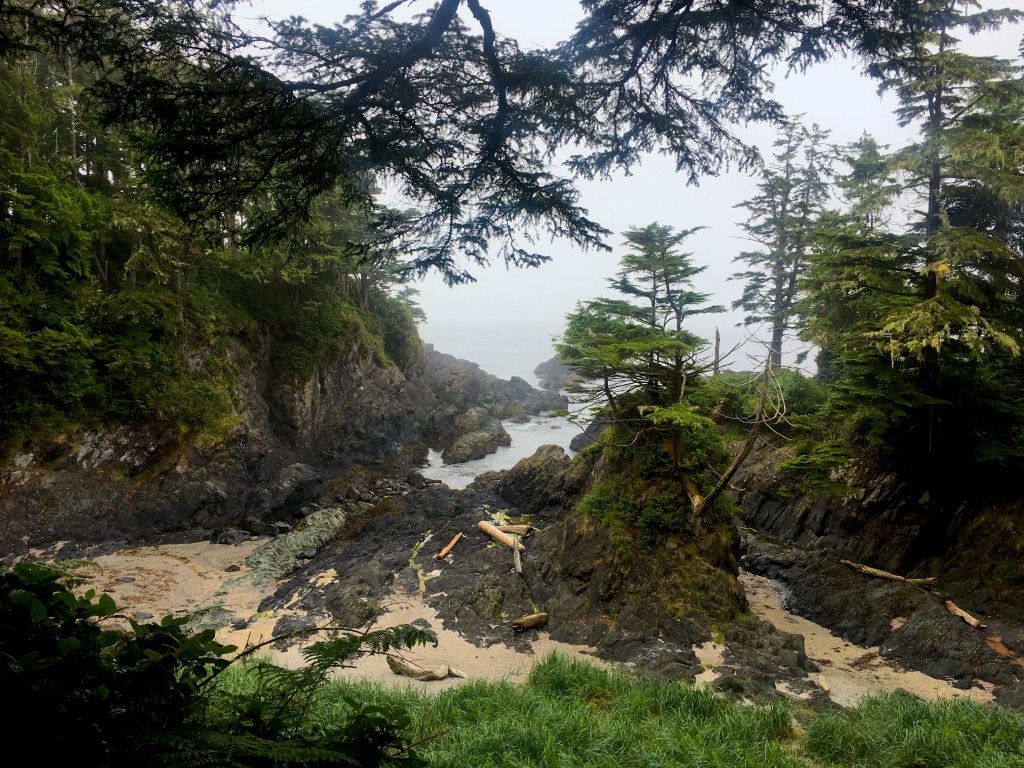
Took a quick road trip to the coast. I wish I could stay, erase the cancer cells in my body, and breathe in the continuous flow of rainforest air forever.

Wild Pacific Trail

Unfortunately, nature doesn’t erase cancer. It does soothe my nervous system. It calms my breathing. It puts things in perspective.

I should be heading into surgery, round one, sometime in September to erase the cancer cells, so to speak. A date is to be determined. Before that, I hope to soak up as much nature as possible in these waning days of summer. Hence, a trip to the magnificent Pacific Ocean and the North American temperate rainforest.

Way Point Beach at sunrise, on Yuułuʔiłʔatḥ territory

Before taking this trip, I wanted to explore some apps that facilitated connections with nature. I played with a few of them throughout my travels. My favourites have been Roots: Connect with Nature (nature meditations and soundscapes) and Seek by iNaturalist (identify and find wildlife). Both offer experiences that seem to enhance time in nature rather than detract from it.

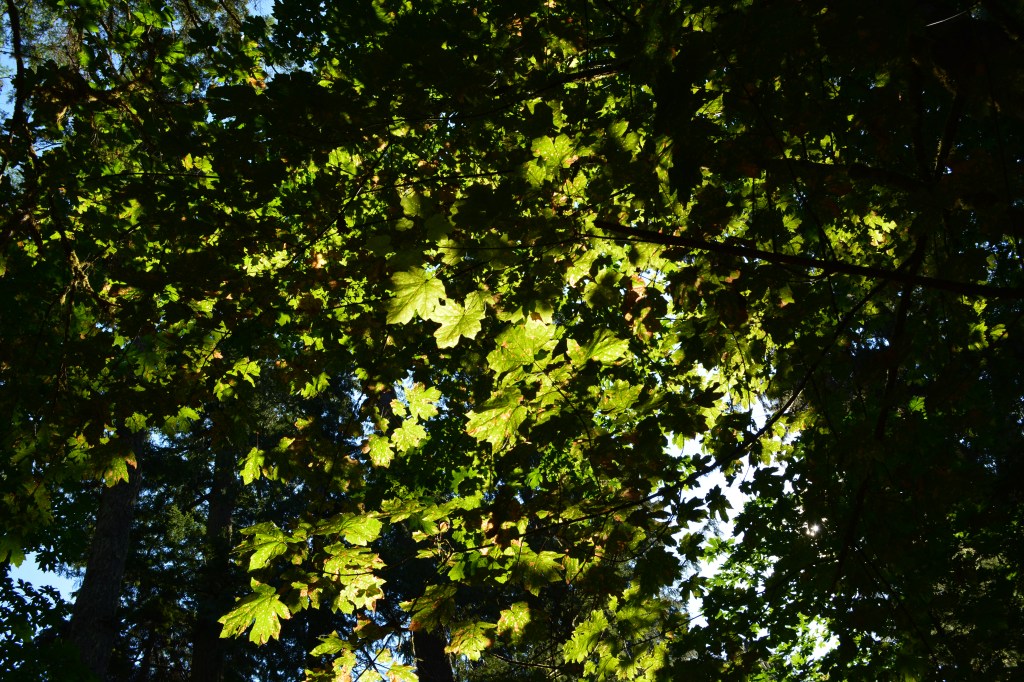
Bigleaf Maple in Cathedral Grove

During my explorations, I thought a lot about abundance. The forests are so rich in life. I thought about how there could be enough for everyone, especially now. Our wisdom, knowledge, and technological advancements can eliminate hunger, poverty, and much disease. Yet, the fear of scarcity is baked into our bones and synapsis. It began before we became humans; from the millennia we spent running and fighting; from the times before we built walls and locks and the times after, up to today. These learned behaviours are ancient. So we hoard and control resources from minerals to the carbon of dead beings to seeds to people. Instead of happiness, the resources require more walls, more locks, more protection, more fighting, more resources… And we never say, “Enough!” Despite all the advances, we’re forcing ourselves back into scarcity. Heat waves are drying out massive rivers. Wars are destroying staple crops. Rapid extinctions are collapsing ecosystems that maintain our (and many others) lives. These are just a few of the issues bearing down on us as we simultaneously have the know-how to stop them and continue to ignore the warnings about what brought us here.

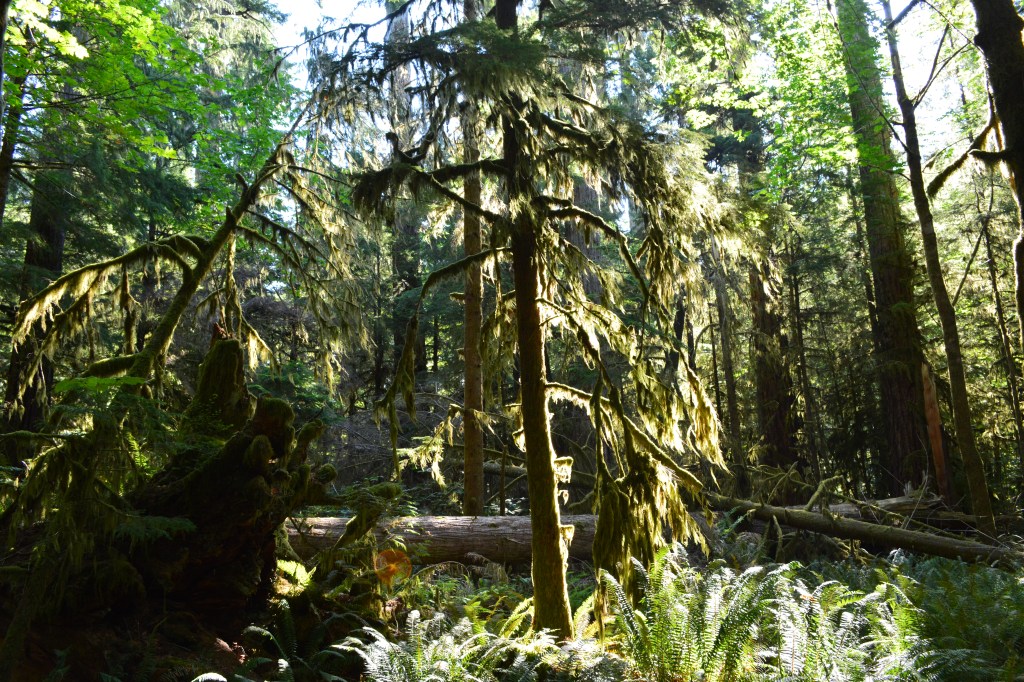
Cathedral Grove

I wish pictures could bring the experience of abundance to everyone. Even the closest facsimiles seem to fall short. (However, I’ve experienced some pretty good ones like iMax nature documentaries and—very oddly—that Avatar ride at Disney.) Luckily, I don’t think one needs to travel to distant places to feel that wonder: Gazing at the night sky, watching the clouds, waking up early for a sunrise, catching the murmurations of birds, enjoying a rain shower, going into a forest near where one lives and just soaking it all in.

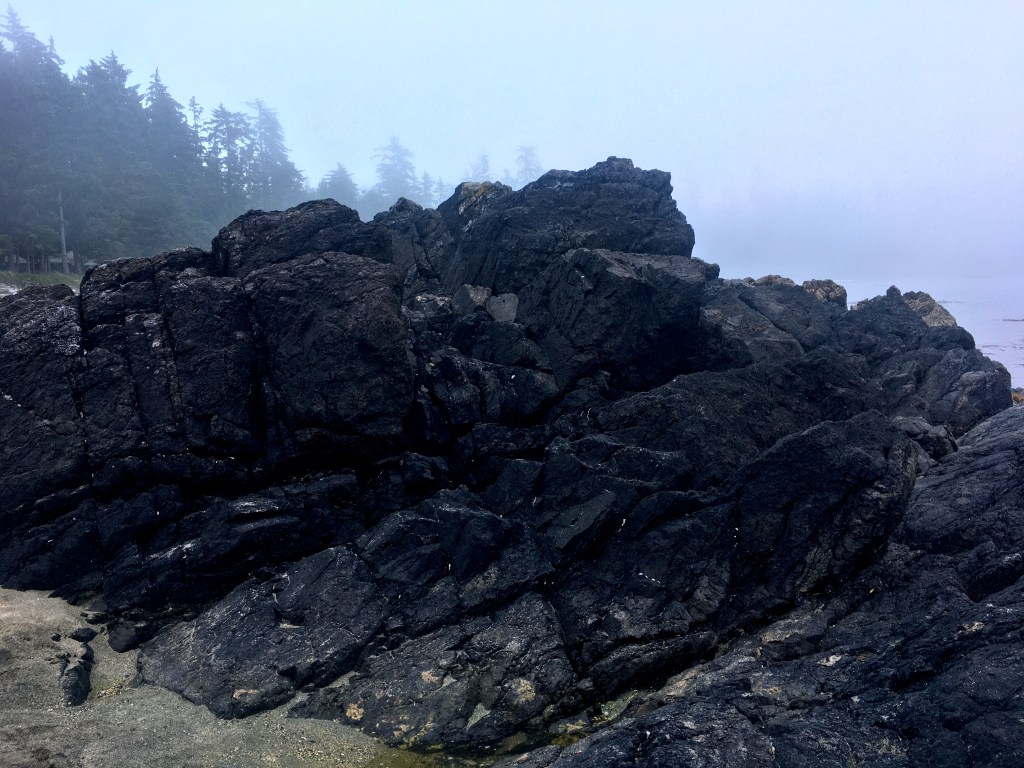
Black rocks on Wya Point Beach

Maybe technology can help. So, I’m curious: what technology connects you more to nature?

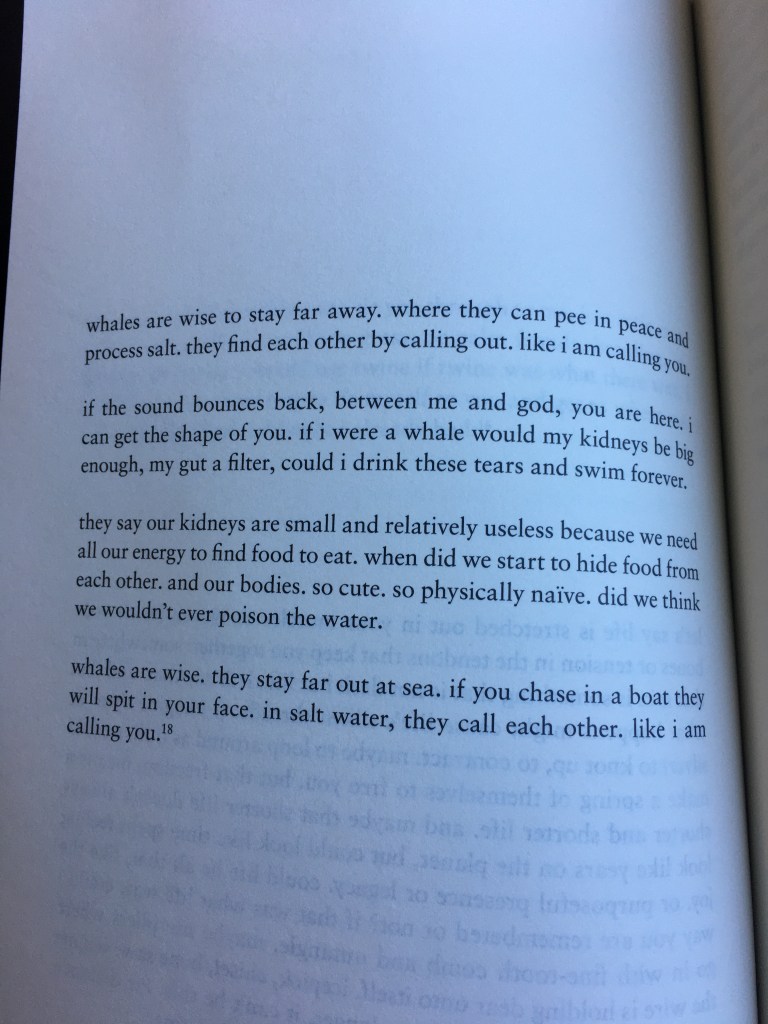
From the book I packed for the trip: “Dub: Finding Ceremony” by alexis pauline gumbs

Love

I’ve been wanting to write an update to my blog for sometime about my treatments. Not today though. What I can say for now is that I’m still flowing with the ups and downs of treatment. Or, at least, trying. Figuring out how to be myself, how to slip back into creativity after fatigue, and still manage all the appointments, prescription pickups, self-care etc. This week has been exhausting.

I’ve had some really good laughs though.
Belly laughing.
Laughs from resonating hearts.

My love and my loves

This year I’ve been thinking a lot about love. I am awestruck by love. I remember first being in love and feeling my soul open up so wide, seeing life so vividly, the earth shaking, my being rooting so deep into the universe that nothing seemed to matter while at the same time every cell of every being seemed so sacred. It was awkward love as young love is, but it was really good love. It was love that saw me and wanted me as I was. An eros love, but an eros love that truly valued the life in me. It shocked me—and I don’t mean that lightly. It was life changing. Even thinking about it now I can feel my centre shaking like those days love washed over me.

I’d thought I’d been in love years before this. But, when I realized love does not impose rules on how one must be, I realized how one-sided my love had been. False love like this became easy to spot and it is abundant, unfortunately. The love I felt gave me purpose. But that purpose was just to be. And that purpose made me want the world to be well, if not flourishing.

“The transformative power of love is not fully embraced in our society because we often wrongly believe that torment and anguish are our ‘natural’ condition.”

bell hooks

I don’t know how I’ve been so blessed in my life. To have had that experience. To have met that person who cared so much for me that I wanted to ensure everything that makes life is thriving for them, for us, for me. I have been feeling so loved over this past year. I hope it is due in part to having loved well more than not; And I also hope that love can enter less hospitable places too… even if I am that place at times.

There’s so much to say about love. bell hooks is a good start. I may write more about it too. I love love.

The reason I wrote this: I was listening to a podcast the other day and the co-host, Autumn Brown, said, “love is what makes surviving worth it.” So true.

Holding Pattern

There hasn’t been much change to my routine in the last few weeks. Not much news either, as I find myself in a sort of holding pattern. I am finding it difficult to write about myself amidst all the world’s heaviness. To find focus, I put together a playlist. Let’s start this entry there:

As I said, it’s difficult to focus solely on healing my own body when it feels the larger body of the Earth is also undergoing existential threats. It’s never seemed this heavy before. Is it the fatigue from two years of navigating a pandemic? The sight of love being co-opted and abused—a movement of toxic love-bombing? Is it the magnitude of information streaming from the internet? Countless streams begging for attention? Is it the sheer power of human technology? The exponential growth lines shooting away from our organic presence? The ability of these technologies to wipe out cities? To poison the Earth even more? Perhaps all these factors mark the equation for my current melancholy.

I can make out the reflections between my personal healing work and my response to global issues that threaten life on a much more global scale. So, I strive to choose my actions intentionally with each day I can get up. I balance my tasks, finding both challenges and relaxation. I welcome all my emotions, knowing they are arriving for a reason and that they shall ebb and flow as terrible as it is in the moment. I remember to breathe.

Still, I feel discombobulated. I don’t always get it right. I lose my temper. I scream. I yell cruel words. I make mistakes. I always hope I find my way back to my centre. I’m not seeking any unattainable perfection, no perfection at all. I’m just hoping that my actions result in a net positive, one day at a time.

Keeping Busy: Ten low-cost things to do while stuck at home forever

I’m flipping my format for this post. In the last few months, I’ve struggled to keep myself occupied. There was a series of days in late November where I languished with boredom. I wouldn’t have it though, no more funnelling television into my brain. I needed hobbies. Of course, I must be aware of health-risks in public spaces (Covid and the flu), as well as manage my own abilities brought on by side-effects of treatment. Furthermore, being on medical leave means reduced income, adding limits to certain activities. Nonetheless, there are plenty of distractions. 

I’ve compiled a bunch of activities below that I really enjoy. Most don’t require leaving the house, or even much money. Admittedly, I’m a bit of a weirdo and eccentric so they might not be for everyone. But I’m also known to partake in the acclaimed and tried and true at times as well. in the end, I hope my suggestions may help someone who finds themselves languishing on a medical leave or just bored.

1. Watch television:

I’m pretty over television at this point, but it does help to pass the time. Services that offer these shows will vary widely by region. If you’re in Canada, CBC Gem is free and hosts a surprising abundance of quality shows, including the first three on this list. Otherwise, you may have to do a bit of searching to find a (paid) service. Sorry I can’t help more.

Here’s what I’ve enjoyed recently (that’s not too depressing):

  • Chewing Gum (comedy, offbeat, British)
  • Pen15 (comedy, for 90s kids)
  • The Great British Bake-Off (reality, feel-good, baking, British, lots of episodes)
  • Westworld (sci-fi, drama)
  • Fleabag (comedy, drama, brilliant, British)
  • We Are Lady Parts (comedy, music, british)
  • Halt and Catch Fire (drama, nerdy)
  • Mr. Robot (drama, great ending)
  • Atlanta (comedy, drama, music)
  • Twin Peaks (crime, surreal)
  • How to with John Wilson (comedy, documentary-ish, new york)
  • Ted Lasso (feel-good, comedy, sport)
  • The Orville (sci-fi, comedy)
  • Firefly (sci-fi, adventure)
  • Taskmaster (comedy, game-show, british, lots of episodes, free on YouTube: https://www.youtube.com/c/Taskmaster)

2. Play video games:

I’m not a huge video game person, but boy do I love Untitled Goose Game. It’s stealth and adventure and a good dose of humour. I just wanted to mention that. You may have to pay a bit of coin, but it is hours of entertainment well worth the buck.

3. Do citizen science:

Find projects on scistarter.org. There are lots of science research initiatives that don’t need you to leave the house, with varying degrees of commitment. None of them require much expertise so you can dive right in, have fun, and help out scientific discovery!

4. Go for walks:

If you’re not completely housebound, AllTrails lists walks you can take even in city settings! They provide difficulty and the community often leaves comments on current trail conditions. I’d be remiss not to caution you to only try for what you’re actually qualified to take on; Too many people overextend themselves and require emergency rescues from not being properly prepared for their hike. That said, as someone on medical leave, I’m personally not taking anything particularly difficult at this time.

5. Or workout indoors:

If going out doesn’t work (read: treatment side effect), here are a few sites I’ve tried that offer accessible workouts that can be done indoors and don’t necessarily need equipment or a ton of space. I’m keeping the list to the lower intensity stuff as there’s enough healing to do when on medical leave that adding the stress of intense workouts needs to be handled carefully.

6. Read books:

First, find a library near you! Books are very accessible. My library has ebook apps as well so I don’t even need to leave the house to have tons of books delivered to me.

These are some books that have really stuck with me over the last few years (in no particular order):

  • The Gift: How the Creative Spirit Transforms the World by Lewis Hyde (nonfiction, arts, philosophy)
  • Invisible Cities by Italo Calvino (fiction, fantasy)
  • Parable of the Sower and Parable of the Talents by Octavia Butler (fiction, sci-fi, dystopia)
  • Fahrenheit 451 by Ray Bradbury (fiction, sci-fi, dystopia)
  • Split Tooth by Tanya Tagaq (fiction, poetry, canadian, adult)
  • Life of Pi by Yann Martel (fiction, fantasy, adventure)
  • Packing for Mars: The Curious Science of Life in the Void by Mary Roach (nonfiction, science, humour)
  • Far From the Tree by Andrew Solomon (nonfiction, psychology, parenting)
  • On Looking: Eleven Walks with Expert Eyes by Alexandra Horowitz (nonfiction, observation)
  • Braiding Sweetgrass by Robin Wall Kimmerer (nonfiction, nature, science)
  • Between the World and Me by Ta-Nehisi Coates (memoir, race, culture)
  • Homegoing by Yaa Gyasi (fiction, historical)
  • The Hate U Give by Angie Thomas (fiction, young adult, social justice)
  • The Five Invitations by Frank Ostaseski (nonfiction, philosophy, self-help)
  • The Body Is Not An Apology: The Power of Radical Self-Love by Sonya Renee Taylor (nonfiction, feminism, self-help)
  • The Marrow Thieves by Cherie Dimaline (fiction, sci-fi, young adult)
  • How to See by Thich Nhat Hanh (nonfiction, spirituality)
  • From The Ashes by Jesse Thistle (memoir, canadian)
  • Tree: A Life Story by David Suzuki and Wayne Grady (nonfiction, nature, science)
  • The Break by Katherena Vermette (fiction, canadian, adult content)

7. Learn something:

If you know me, you know I’m a learning fiend! So naturally I’ve tried a lot of different learning platforms:

Coursera and edX have a wide selection of courses and excellent platforms to inspire learning. Their courses are free, with the option to pay for a certificate and other features (like unlimited access). These sites offer courses mostly from universities so focus on the sorts of things you might find in a university: science, business, health, literature, philosophy, etc.

There are lots of resources online to help you learn to code, including the two sites above. There are also dedicated sites like FreeCodeCamp and Codecademy. Also, game-making tools like Unity (used to build hundreds of games like Untitled Goose Game and even Pokémon Go) have tutorials so you can create an app/game in no time at no cost (if you want to get more complex though, you’ll need to start purchasing additional tools and collections) . Compared to Coursera and edX, these are more casual and open ended.

You might have access to kanopy (i.e. through your library); This streaming site has several courses made by The Great Courses on a wide range of subjects from history to cooking, science to self-help. The courses are a little less interactive than the previous suggestions, but they are full of content and if you choose to follow along with their suggested activities in a class like cooking, drawing, or meditation, it can be really engaging.

For more creative-oriented learning there are lots of subscription and pay-per-class sites like Skillshare, Udemy, Domestika, and CreativeLive. I’ve used the first two and turned out some interesting projects from the classes I’ve taken and grown my skills at things like Photoshop, hand-lettering, writing, and storytelling.

8. Socialize:

Even thought it’s challenging to do big events when managing a compromised immune system, not all hope is lost. Sites like EventBrite.com and Meetup.com offer easy ways to find happenings in your area and beyond (seriously, don’t limit yourself to local when the world is available via these amazing wire networks). Both allow you to filter for online and by price. You can even subscribe to hosts that appeal to your interests to get updates when they open a new event.

If you just like chatting with people, the Clubhouse app offers real-time voice conversations around various and wide-ranging topics. It’s pretty cool to both eavesdrop and participate with people around the globe.

9. Do crafts and make art:

There are several relatively low-cost crafts to keep someone busy. Of course, there is some money needed for supplies, whose cost will depend on how much you want to dedicate to it. That said, you can learn almost any craft for free through YouTube and other online resources (see the learn something category above). I’ve tried a lot of these hobbies over my time, and have added what seems to be a good resource for learning each. A quick search online will turn up many results if the one I provide isn’t your jam.

10. Learn a language:

I’m sure everyone’s heard of this by now, but if you haven’t, get yourself over to Duolingo and learn how to say “I want a sandwich” in Klingon.

BONUS. Volunteer:

I’ve found volunteering has really helped lift my spirits while being stuck at home. It lets me apply my skills to help others without the pressure of it being work. The people I’ve volunteered for have been really understanding and flexible to accommodate my needs. I used a very local-specific platform (Volly) to find volunteer opportunities, but the Canadian government website seems to offer some help in this domain.

Rays

The grief that’s been holding me for five months begins to crack. I see more light pushing through where the substance gives way. Grieving takes time. A shrouding. A breaking. A healing. New growth finds purchase within me, reaching into the illuminated places. Learning how to laugh and dance and sing and read again, with joy now. Growing into these lightened spaces where cancer doesn’t hang like a black cloud.

I still think about cancer a lot. There’s always an appointment on the horizon and side effects from treatment reminding me of my condition. It’s a long, persistent presence. There’s the uncertainty of what the coming months will bring. I wonder if it will always be this way—if the grieving will someday fade to an hour a day or a week. I wonder how joy will show up tomorrow or in a month. Settling into uncertainty is challenging but something many of us are learning. Treasuring the present. Dreaming a tomorrow. Taking small steps.

It’s been said many times, but the holidays are challenging for people moving through grief. There are many ways it manifests. For me, the absence of the usual joy that giving brings me and the burden it places on my scattered chemo-brain has been a struggle. Missing holiday gatherings that are too risky for my immune system sucks (not that these are happening with Covid, to be honest). I desperately want to spend time in the warm lakes of companionship. All of this is on top of navigating ever-colder weather that I’m painfully sensitive to because of chemo.

While laughter touches more of my days, I broke down last week. Thursday evening was set aside for card writing and present wrapping. My heart was heavy, and the usual joy these activities bring was nowhere to be found. I couldn’t concentrate, and even the simple task of signing my name felt overwhelming. I hadn’t planned carefully, and I sensed cards were in short supply. It was too much. I found myself shaking and crying. Thank goodness for my excellent partner. Even though it was late, he and I decided to go to the mall before it closed and see Christmas lights. The first display we saw was the twinkling moose standing at least twelve feet high. We marvelled and enjoyed it. After leaving the mall, we drove through the community, catching glimpses of decorated houses and inflatable figurines propped up on lawns and balconies. It was an act so small, but it broke me out of the doldrums this time. I’ve since been to two more malls for holiday decor admiration. It’s silly, but it’s helping. I’m surprised at what aids me to move forward. I hold a compassionate space for myself to explore these salves.

Today, I’m doing good. Despite the lengthening nights of winter, the light is coming through the cracks. I am connecting with friends, dancing, and singing most days. I’m finding more balance. Not every day is this way, but I’ll take it when it comes and enjoy the rays as they come through.

Lighting up the room with a twinkling tree!