The dark is getting to me this year—persistent, cold, bitter. But, I’ll be damned if I let it stop me. One thing I know about the dark, is it must be faced. Not feared. Not ignored. Not fought. Not run from. And, for goodness sake, not given into.
That’s my weakness—giving in. I’m captivated by the dark. The stars, that milky stroke across the sky, the fleeting shadows, and the mystery draw me in. I could easily fall into the dark and let it consume me. Indeed, for much of the last four years I’ve had to hide in the dark to protect my skin, sanity, and immune system—staying away from sun and people.
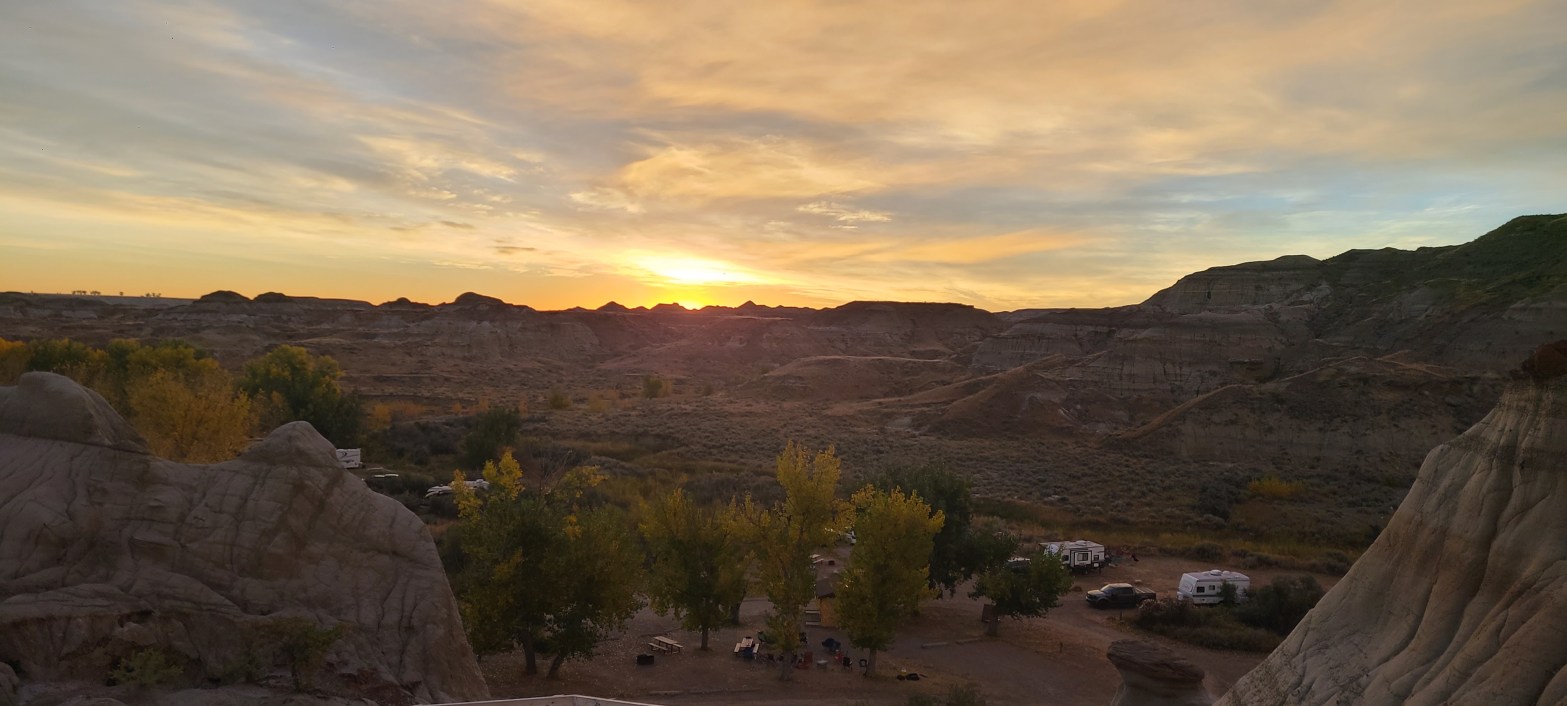
Rod and I went to Dinosaur Provincial Park in September.
A month ago, I sat in my doctor’s office and tears trickled down my cheeks, my breath caught in my throat, and sobs rang from my chest. I held my heart like a hug—a way to comfort myself. My onocologist handed me the tissue box. I’d just been told that the treatment I’m on usually extends survival by about 10 months. It’s a hard thing to hear. I’d just turned 39 and the laughter of my best friend’s first child still rang in my ears from the day before. There’s always light in the darkness, those stars that make the shadows flicker.
It’s not easy getting bad news as the nights grow longer and days become colder. There’s fewer activities to distract me and I’m forced to stay still, to nest… and ruminate. Furthermore, my new treatment makes me quite fatigued, which suits the 16 hour-long nights, but not keeping busy. Still, I get up the next day and make a grocery list because, goodness, I’ve dealt with everything else ad nauseam.
But this is what I’m talking about. I can give in too easy. I can plan so much for darkness that may never come (some darkness always does though). But my weakness is also my strength, because I can also plan for miserable things that need to be planned for. Not that I think death is miserable or dark, per se. But, to be honest, I still like life quite a lot and want to get the full experience—the good and bad, the sublime and imperfect, the light and dark—before I become dust and soil. And, so, I am looking at options. I may be going to the States next year for treatment, if I qualify. There’s a clinical trial coming to Calgary that may be a strong option for me.
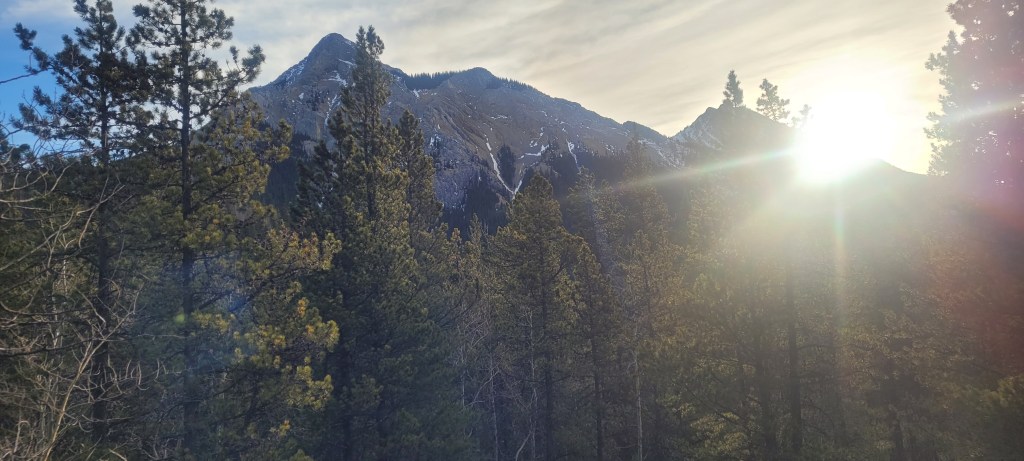
And so, I dwell in the darkness of the season, for a bit. I go for walks when the low-hanging sun hits my face. I let stars guide me to new horizons and opportunities, being ready for what may come.
It’s hard to believe I have cancer. Four years ago I had a port implanted in my chest and started chemotherapy. Four years later, I’m still here. I’m still on chemotherapy. It still feels surreal. Nonetheless, I am here.
I joked with my dermatologist that I’ve had cancer for as long as it takes to do an undergraduate degree. Although many of the feelings of grief, disbelief, wonder, and passion for living echo what I felt four years ago, there is also the journey I have been on and growth I have had in this time. Surprisingly, the hardest lessons have not been the innumerable drug names or what these drugs are doing or what all the different proteins and enzymes in my bloodwork are showing. The hardest lessons are what I’ve learned about cancer and the profound impacts of ableism on us—all of us. To this latter point, I’ll say that I still struggle with the ableist notions from which my understanding of the world grew, but I’m improving.
I’ve touched on my ableist belief system and my relationship with wellness culture before in my writing. Ableism is so ubiquitous and entrenched in society that it is a hard to shake. However, I’m becoming more adept at spotting ableist ideas and phrases now. This practice of spotting has allowed me to deepen my imagining of a world that’s possible if we treated disability differently.
I have much work to do toward this imagining. First, I must stop blaming myself for cancer. At least weekly, I see a post on social media or read an article or overhear a conversation where the individual with cancer is blamed for their cancer or rewarded for their remission: “if only they had been more healthy…”, “if only they had eaten better…”, “if only they had decided to do a complete 180 on their life to fight cancer…”. I understand how blame—or, to say it more gently, a cause and effect story—can give a sense of control and safety. And while I often think of myself as someone who is able to dwell in uncertainty, it is a draining practice. And so, I resort to ableism and the blaming of my imperfect body and my imperfect will: for skipping a workout, or eating a slice of cake, or staying out late for a few more songs to dance to.
I imagine, in a less ableist world, we see more grey areas—the magic in the liminal spaces—and are able to dwell in that uncertainty. We are not afraid of the vast differences in bodies and minds, allowing us to be gentler with “imperfections.” Perhaps we don’t use the words ‘perfection’ or ‘imperfection’ anymore. Perhaps, as our need for control gently dissolves, we see our connections to one another rather than the us-versus-them that’s awakened by fear and blame. Perhaps we feel our shared responsibility to care for our collective wellbeing. Cancer is not caused or reversed or worsened by the sole actions of an individual—it takes a community. It really does. And I am so thankful for mine.
For those who have stuck with me, thank you. Enough philosophizing; here’s an update of happenings since my last post to this site: I completed my creative writing certificate from the University of Calgary and am continuing to create and submit words. I pursued a liver transplant, but have decided that it is not right for me at this time. This is a tough decision to make; liver transplants do offer some patients many years of survival. However, recurrence rates are high (in my opinion), the surgery is risky, and I’d have more chronic health issues to manage for the rest of my life. I continued the chemotherapy treatment that caused skin irritation until June, at which point my health team and I decided it best to look at other treatments. Now, I am back on the chemotherapy regimen I had four years ago, with the hopes that it will be as effective as it was then and that the associated neuropathy holds off for a while. I also went to Iceland with my friend in March, which was an extraordinary adventure to an absolutely unique place. While travel was stressful for me, I somehow managed not to get sick and enjoy much of Icelandic culture and scenery.
I’m looking forward to the rest of 2025 and to being able to enjoy the outdoors a bit more now that my skin is not as sensitive to the sun. I’ll continue to write and learn (for another four years, at least, hopefully). And I’m continuing to look for emerging cancer treatments that might work for me; there are some promising therapies on the way to Canada, so stay tuned.
It’s hard to believe this is my life. It’s hard to accept my illness. But I’m getting better at that too!
It’s colorectal cancer awareness month. I haven’t “celebrated” this month in the past as I’ve been dealing with resentment and anger that held me back from believing anything could be done. But I’ve done a lot of work and feel ready to share my journey in hopes that it may help others.
My most significant barrier in this journey was getting the testing I needed. I want to encourage people, especially young people, to advocate for themselves when they have symptoms. Symptoms of colorectal cancer include unusual bowel habits, blood in stool, abdominal pain, fatigue, and unexplained weight loss (among others: https://cancer.ca/en/cancer-information/cancer-types/colorectal/signs-and-symptoms).
My first symptom was blood in my stool. I brought this concern to my family doctor who told me it was hemorrhoids without any assessment. Still concerned, I went to two walk-in clinics, but they said they were unable to order tests as I’d need follow-up that they couldn’t provide and repeated that it was probably just hemorrhoids anyway given my age and good health. I switched family doctors. My new doctor seemed unconcerned about my symptoms, repeating that I was young and healthy. In 2020, I had an episode of such painful abdominal cramps that I went to emergency. The doctor there told me it was menstrual cramps and menstrual bleeding; as a 34-year-old with ample experience of both, I knew this wasn’t the case, but because of Covid, I had no one with me to deny this, and I was in too much pain at the time to speak up. I followed up with my family doctor and was referred for a colonoscopy; I was put on the non-urgent list.
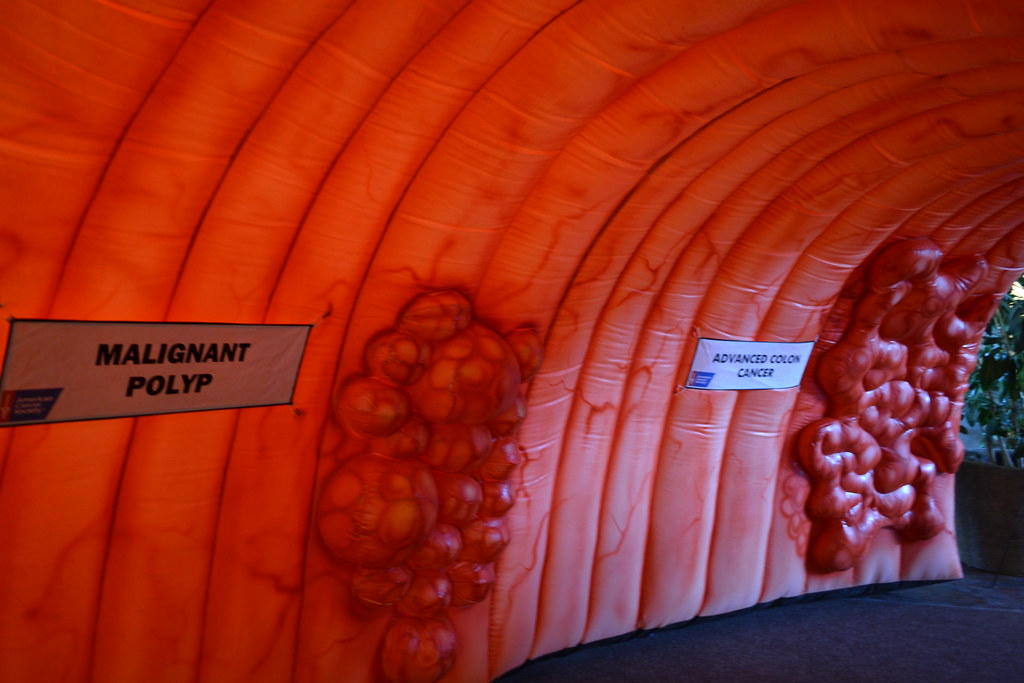
The epic inflatable colon courtesy A Healthier Michigan/flickr
What is described above, unfortunately, is all too common of a story for young people. By the summer of 2021, I felt sick constantly, had trouble eating, experienced poor bowel habits, and always felt exhausted. I went to the emergency again and was told I had to pick one thing that was bothering me, which at the time was my chest (it turned out the metastasis in my liver was pushing on my lungs and causing pain). The x-ray showed spots on my liver. They didn’t say cancer, but I knew this wasn’t good. My family doctor followed up the next day and changed my colonoscopy order to urgent. And that’s how this whole journey began.
I do not want other people to go through this. If I could make one suggestion that would have helped me, it would be to bring people with you to appointments! Tell your supporter what concerns you and ask for their help pushing back. I’ve been a very independent person for much of my life, but I found it difficult when I was in pain to speak up. Not only that, but it was hard for me to admit that something could be wrong despite knowing that early cancer detection leads to better outcomes.
One thing that constantly tripped me up was being “healthy.” I can’t count the number of times doctors would ask me, “Are you healthy?” What does that even mean? I’ve placed a high value on health since I was a teenager. Being a competitive swimmer, outdoorsy person, and diabetic made me learn how to take care of myself. Sure, I sometimes went too far, but I’ve always prided myself on healthy habits. It was this pride that ultimately made me believe doctors when they assured me that someone healthy like me wouldn’t have something like cancer! Since then, I’ve discovered lots of healthy people get cancer: marathon runners, weight lifters, and regular people with great routines. There are many pathways and variations to colon cancer and any cancer.
I have heard friends say that they don’t see a point in being healthy if someone like me could get cancer. Well, here’s the thing: I value having the healthy habits I had before cancer. It took me a long time (42 months at least) to overcome my resentment, but here I am. For one, my healthy habits brought me benefits as I practiced them (joy, self-discovery, better emotional regulation, great poops, better blood sugar management, etc). For two, it’s been easy for me to continue these habits through treatment, which has been helpful. And for three, I believe some of my recovery and stability can be attributed to these habits.
For me, healthy habits include
Maintaining a strong social network. I love my book clubs, writing groups, friend circles, and one-on-one hangs. This has become vital as I navigate cancer, yet the work I did throughout my 20s and the people who reciprocated have proven invaluable in my support network. As social media and smartphones make loneliness all the more pervasive, it is critical that we put in the effort to maintain in-person connections as much as we can.
Paying attention to stress. I started a serious meditation practice around 2017. It helped me move slower and be more aware of my feelings. At the same time, I started seeing a CBT psychologist who helped me look for stress warning signs and practice emotional regulation. I’m grateful to my mom, who modelled work-life balance. Although I’m a real go-getter, I have always tried to keep work to 8 hours a day. However, my enthusiasm for life and fear of boredom cause some overcommitment issues, which I’m working on.
Exercising! Exercise is one of my favourite things. I love how it makes me feel, positively affects my mood, and helps me control my blood sugar. I love going for morning jogs and discovering the places where I am (I have seen wildlife like armadillos, storks, deer, and so much more)! Morning jogs let me catch beautiful sunsets and capture the most serene moment of the day. Swimming allowed me time for quiet reflection and focus. I’ve been lucky to have wonderful ways to get to work that bring me through forests and along rivers, even if they take a bit longer.
Eating whole foods. I’ve always loved cooking from scratch. I love playing with flavours and how satisfying a home-cooked meal is. I used to indulge in much more cake and candy than I do now. And I feel a lot better cutting back on those things. My tummy is a lot happier, and my energy is even. I’m hopeful my high-probiotic, high-fibre diet pre-cancer—and a bit of luck—helped my colon get back on track after surgery! Butt [sic[, you got to love your microbiomes.
Taking care of my environment. Oddly, I never thought of this as a health measure. I care about the Earth, so I bought organic, local, and non-toxic products. Now that I have cancer, this comes up from time to time, and apparently what’s good for the Earth (low chemicals, low plastics, sustainable manufacturing practices) is also good for us! Go figure. It feels good to be doing something that helps the planet and us, and it’s nice that I don’t have to learn responsible purchasing habits from scratch.
Living meaningfully. One thing that lifted my spirits more than anything at the time I was diagnosed was having felt I lived a good life. I chose meaningful work, made choices based on my values, strove to minimize harm, and helped where I could. I embraced life and kept an open mind to experiences, leading to a sense of fullness. Living meaningfully has made the fear of death unthinkable for me. Ever since my dad died, I have always wanted to go to sleep knowing that if I should die tomorrow, I’d have lived well.
Sleeping has been the toughest thing for me. I’m still working on it, but I know it’s essential. I’ve always known sleep is important and aimed for the 7–8 hours a night, but I struggled in this hyper-lit and connected world. I have started dedicating more to a good sleep routine and love it. I feel like a regular routine and good sleep help me focus, but cancer treatment is also weird and zaps a lot of my energy. Still, I appreciate a good sleep routine.
Having financial stability. This one is tough because there are so many factors that affect my financial well-being, such as my family history and support (plus a pretty good settlement after a car hit me), which I do recognize not everyone has. Still, learning good financial practices early in life, like becoming confident in budgeting and investing, has served me well and has made me less stressed in this cancer journey.
I’m sorry to say that these habits won’t definitely prevent cancer. But, I do think they have helped me survive through cancer. I have resented this, and I have resented that I didn’t get to undergo some miraculous lifestyle change that somehow reversed my cancer; I don’t even know if I believe that is possible without modern medicine.
Nonetheless, the benefits of healthy living are vast, and I’d encourage everyone to try out one or two this year. And advocate for testing!!!
Another milestone approaches, one I’d never thought I’d reach: my fiftieth round of chemo. Honestly, I thought I’d have left cancer well behind me by this point. There’s a small chance I have; there’s many chances I haven’t. I’m choosing a practical optimism at every opportunity I get, but to be honest, it’s difficult to deal with the uncertainty of what this actually means.
The remaining three tumors in my liver (each the size of dice) appear to be largely calcified—like little skeletons buried in the vibrant ecosystem of my liver. I’m so grateful and awed by the ways the body strives to live. And, I’m grateful for medicine, and the ongoing development of new and better tests and therapies. The thought of going off of the treatment that has kept me alive for the last thirty-two months is frightening, while also relieving (two seemingly competing truths existing together). But even to be here is amazing. Even just fifteen years ago, I wouldn’t have had access to the same drugs I have today.
This got me thinking. I looked up causes of death through history. The first thing I saw was that only a century ago almost fifty percent of people died before they were adults. Nowadays, that number is below one percent. Frankly, I’d be dead if I was born a century earlier. I had pneumonia when I was around eight years old. It would have killed me a hundred years ago, and it could have killed me had I not been born in a wealthy country even now. Type 1 diabetes was a miserable death sentence a century ago. It’s frankly amazing that discoveries and innovations, combined with a handful of other close calls, have given me as much life as I have. And this is probably true for nearly half of the people reading this, half of your friends, half of your coworkers, half of the brilliant people making these discoveries.
I have a lot of gratitude these days. It keeps me uplifted and hopeful. It helps me see all beings as caring and giving of their best. It helps me see and feel my place in the web of being. Basically, it helps me just to see so much. I think about being a kid, and writing thank you cards to family members after Christmas gifts were exchanged. It was a simple practice of gratitude that informed my inclination to the practice later in life. And am I ever thankful for that too.
I remember (perhaps inaccurately, but to the best of my knowledge) being part of the health and safety committee at work, and as part of a mental health strategy, we implemented a thank you board in the office. It was largely a success, but concerns were raised that we shouldn’t be thanking people just for doing their jobs. I get where people are coming from with this argument, but I put forth that thanking someone is a rather simple action in comparison to the meaningful effect it can have. And who knows, some people struggle to get out of bed in the morning, how does some recognition change their morning? Others may feel like an imposter, or face any other struggles that plague us in the workplace, how does some appreciation change their work? I think about how differently I show up to conversations when someone simply shows appreciation for the effort I have put into a piece of work, even if my efforts turn out to be misinformed or otherwise shit.
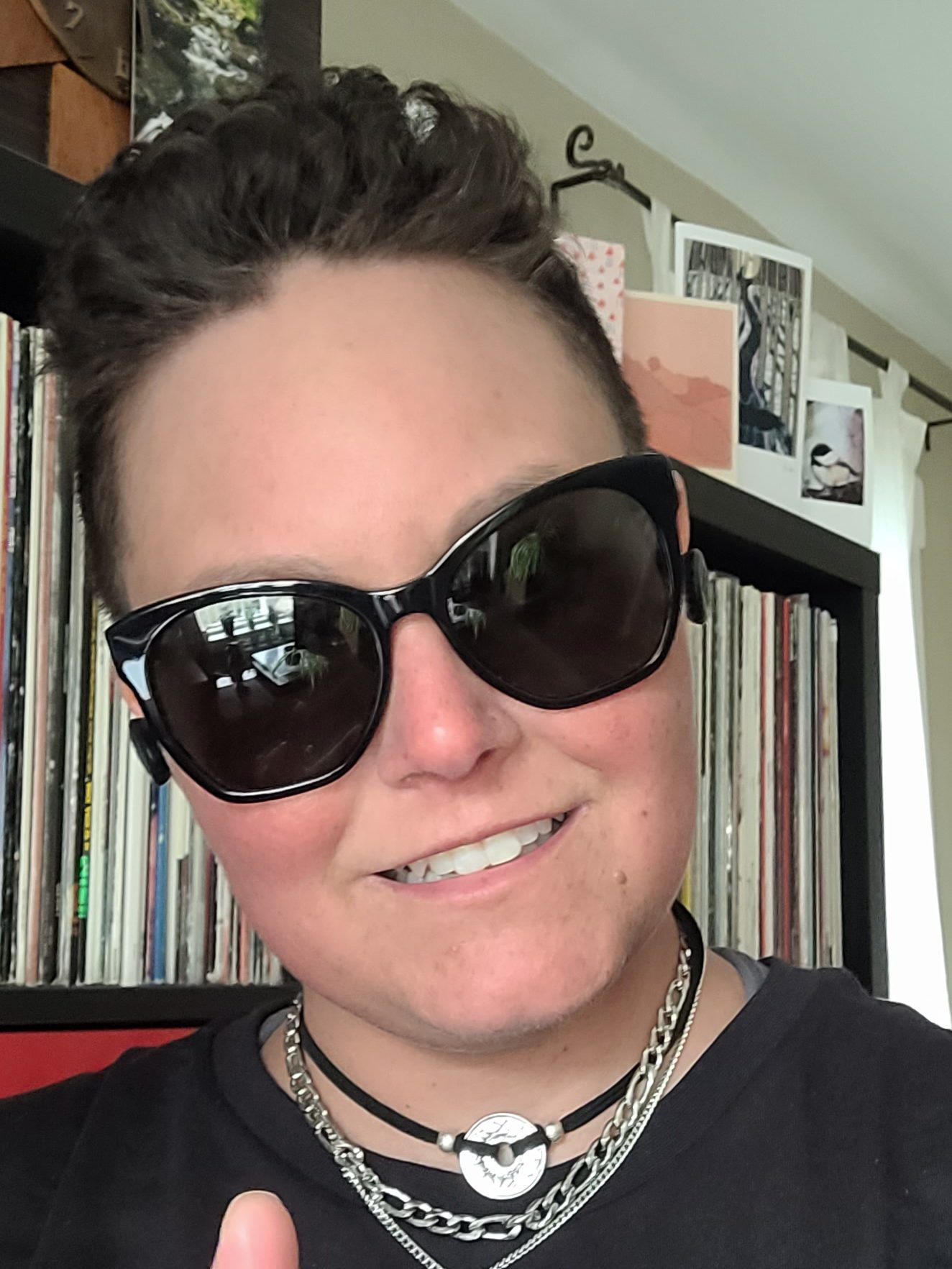
In this spirit of appreciation, I’ll stop with the sappy, self-helpy vibes and say that the best thing these days is my hair. Although there is chemo-induced thinning, there is also chemo-induced curls. After getting over the initial confusion of coping with this newfound mess, I found a style that I adore. I honestly think that this is the first time in my life that I’m genuinely pleased with how my hair looks. It’s a funny fluff on the top of my head, which is perfect for my face shape, looks the perfect amount of androgynous, actually requires very minimal styling, and the curl shampoo and conditioner moisturizes my scalp so no more dry skin flakes! It’s a bit weird to be overjoyed with a hairstyle that was caused by cancer treatment, but there you have it. Thanks chemo!
Chemo curls always look cool
I’ll leave it there for now. I’ve been changing and learning (and being grateful for my consistently curious self) these last thirty-two months. Perhaps I’ll say more next time. Be well and be grateful!
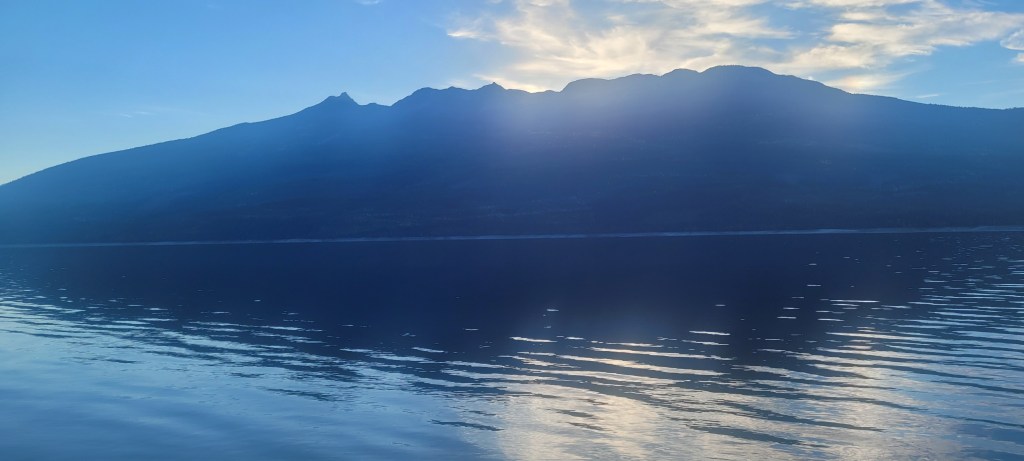
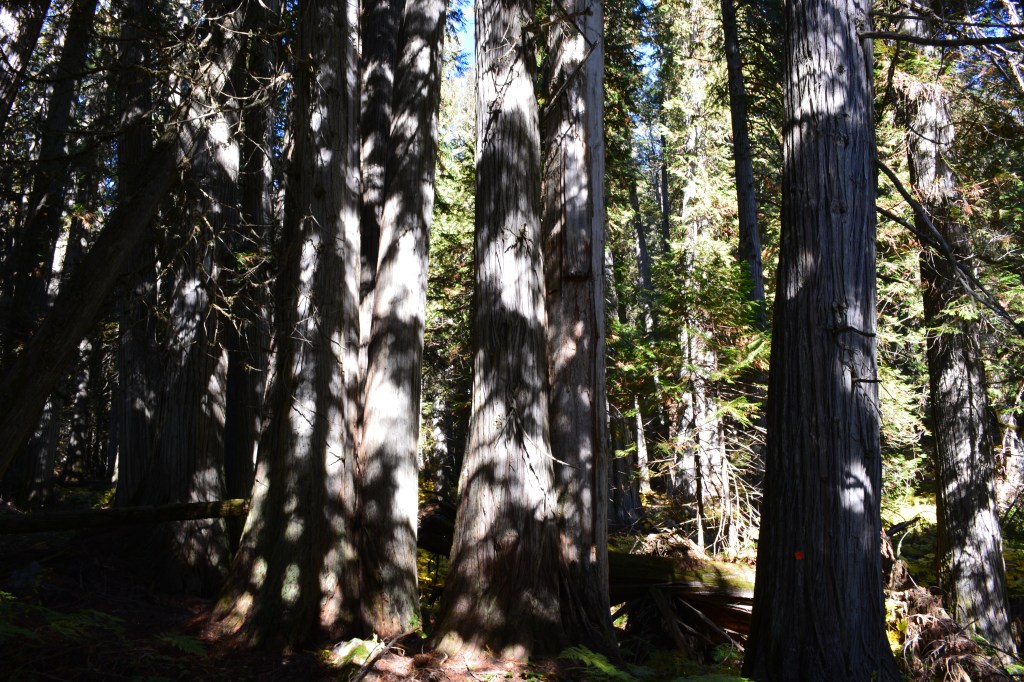
I’ve returned from a short birthday “vacation,” full of waterfalls, cedars, and lakes. Although side effects from my current chemo regime afflicted me, Rod and I were able to enjoy the peaceful days together (except maybe the part where I took us up a daunting service road in our tiny civic to see a cedar grove. I think the adrenaline of the drive added to our eventual enjoyment. Also, not the first time I’ve taken civics on such inadvisable drives).
I’ve been reading John O’Donohue’s Anam Cara (a Celtic word, meaning soul friend). Early on, he introduces the idea that the soul holds the body within it, rather than the soul being an entity within the body [Amazingly, when I asked Rod where his soul was, he said everywhere! For me, this was a bit of a revelation]. I loved the practice he offers of breathing in the soul, feeling the relationships I share with all that is around me, and how nourishing–maybe even healing–this is.
Beyond all else, I am immensely grateful for my friends and community. The walks and chats I’ve had with you have been so invigorating, and kept my optimism alive. Reading books, taking courses and doing workshops with you has fed my soul. The peaceful and reflective times where we’ve merely just soaked in each other’s presence has been nourishing. Your gifts of company, conversation, care giving, food, money, art and books [if you’ve lent me books, I will get them back to you, promise] have all been so appreciated. I keep many of these gifts in my living room with me so I am regularly reminded of you. Thank you thank you thank you!
In this exercise of gratitude, I am also extending these words to myself and to my more-than-human companions (the saskatoon bushes, the strawberry plants, the bluff and its grasses, the rivers, the squirrels…). I realize how fortunate I have been to find great friends in myself and in the landscapes, for with these friends I am never alone.
I am not hosting a gathering this year for my birthday, I have tried to schedule various one-on-one hangouts instead. Last year’s gathering–in the days before my liver and colon surgery–was hosted in appreciation of all that you’ve done for me. Although there’s no formal gathering this year, I just want to send everyone a big hug of gratitude, some nice pictures, and these closing words by John O’Donohue:
“A Friendship Blessing
May you be blessed with good friends. May you learn to be a good friend to yourself. May you be able to journey to that place in your soul where there is great love, warmth, feeling, and forgiveness.
May this change you. May it transfigure that which is negative, distant, or cold in you. May you be brought in to the real passion, kinship, and affinity of belonging.
May you treasure your friends. May you be good to them and may you be there for them; may they bring you all the blessings, challenges, truth, and light that you need for your journey.
May you never be isolated. May you always be in the gentle nest of belonging with your anam ċara.”
There hasn’t been much change to my routine in the last few weeks. Not much news either, as I find myself in a sort of holding pattern. I am finding it difficult to write about myself amidst all the world’s heaviness. To find focus, I put together a playlist. Let’s start this entry there:
As I said, it’s difficult to focus solely on healing my own body when it feels the larger body of the Earth is also undergoing existential threats. It’s never seemed this heavy before. Is it the fatigue from two years of navigating a pandemic? The sight of love being co-opted and abused—a movement of toxic love-bombing? Is it the magnitude of information streaming from the internet? Countless streams begging for attention? Is it the sheer power of human technology? The exponential growth lines shooting away from our organic presence? The ability of these technologies to wipe out cities? To poison the Earth even more? Perhaps all these factors mark the equation for my current melancholy.
I can make out the reflections between my personal healing work and my response to global issues that threaten life on a much more global scale. So, I strive to choose my actions intentionally with each day I can get up. I balance my tasks, finding both challenges and relaxation. I welcome all my emotions, knowing they are arriving for a reason and that they shall ebb and flow as terrible as it is in the moment. I remember to breathe.
Still, I feel discombobulated. I don’t always get it right. I lose my temper. I scream. I yell cruel words. I make mistakes. I always hope I find my way back to my centre. I’m not seeking any unattainable perfection, no perfection at all. I’m just hoping that my actions result in a net positive, one day at a time.
I’m three-quarters through chemotherapy… hopefully. Nine cycles down, three to go. Then an MRI will dictate if I can go for liver surgery or if I need to pursue another course of treatment. My cancer responds to the chemo very well, so the surgery seems likely, and I am thankful. This is the persistent crush of uncertainty. It’s not something particularly new for me to manage, but it is still tricky.
Each round of chemotherapy seems to bring different issues. I don’t know why. Currently, tiny islands are forming on my hands as gravel-sized pieces of skin peel away. It’s beautiful in a strange way (and, thankfully, not uncomfortable), but also most definitely gross. Fatigue fluctuates. Nausea comes and goes. A dry mouth seems likely. A random bloody nose. Intense tingling reactions to the cold seem constant. At least half of my days see me feeling in relatively good shape, though, and I can freely sing and dance and pursue projects. Yay!
I’ve been keenly navigating these ups and downs. The invisible virus plaguing us for two years adds to the uncertainty. Even the weather—perhaps giving me the chance to spend time outdoors—is uncertain. I’m strengthening my skills to accept what I can’t control, adapt for what I can control, and fertilize the stories I want for the future. It’s been like this for years and requires an adaptive and aware way of seeing.
Adaptation and awareness are skills like any other; they require building and work. I’ve known intimately how fragile life is and how quickly things can change. This awareness I’ve carried with me for some twenty years has given me a specific approach to time management; An approach especially helpful as I’ve been navigating this journey. It’s an appreciation of the moment and gratitude for what I have. A short-term outlook to what’s within my reach—a seize the day kind of way filled with joyful hope and dreaming and doing. And a long view of how intricately interwoven our lives are with this planet and all people. A vast expanse of possibility that my precious life feeds and manipulates even at this tiny, human-sized scale.
I have had to adapt so much these last few months. I sense that our society will have to become accustomed to adjusting in the years ahead. If I could offer advice from my experiences, I’d say it starts small (“small is all,” as adrienne maree brown would say). It begins with gratitude for even the tiniest things: laughter, kind words, a ride to the hospital. Enjoying the small actions I can do: volunteering, helping a friend. A both-eyes-open awareness and consciousness help offer a perspective of what is beyond my circle of control and what is in it. It makes me aware of the vast unknown that is constantly expanding, and approach it with curiosity. It helps make informed decisions, even difficult ones. I allow myself to grieve my losses even if the loss is temporary. I adapt: my workouts move into my living room, volunteering moves online, I make movie nights in the den a festive event, I video-call my husband nightly, and we share a secret virtual hug ritual. I don’t put an end to hope. I keep moving and nurturing the stories I want to see unfold and the communities making them happen. I bathe in the abundance of life around me. For if one cannot find the joy of life in the most difficult moments, what kind of joy is to be found when things get better?
I’d like to acknowledge here the work of adrienne maree brown, who’s informed my thinking about intentional adaptation, resilience, and so much more. Her book Emergent Strategy outlines much of this in the context of strategic social change, and is a delight to read with a dedicated group of friends.
The grief that’s been holding me for five months begins to crack. I see more light pushing through where the substance gives way. Grieving takes time. A shrouding. A breaking. A healing. New growth finds purchase within me, reaching into the illuminated places. Learning how to laugh and dance and sing and read again, with joy now. Growing into these lightened spaces where cancer doesn’t hang like a black cloud.
I still think about cancer a lot. There’s always an appointment on the horizon and side effects from treatment reminding me of my condition. It’s a long, persistent presence. There’s the uncertainty of what the coming months will bring. I wonder if it will always be this way—if the grieving will someday fade to an hour a day or a week. I wonder how joy will show up tomorrow or in a month. Settling into uncertainty is challenging but something many of us are learning. Treasuring the present. Dreaming a tomorrow. Taking small steps.
It’s been said many times, but the holidays are challenging for people moving through grief. There are many ways it manifests. For me, the absence of the usual joy that giving brings me and the burden it places on my scattered chemo-brain has been a struggle. Missing holiday gatherings that are too risky for my immune system sucks (not that these are happening with Covid, to be honest). I desperately want to spend time in the warm lakes of companionship. All of this is on top of navigating ever-colder weather that I’m painfully sensitive to because of chemo.
While laughter touches more of my days, I broke down last week. Thursday evening was set aside for card writing and present wrapping. My heart was heavy, and the usual joy these activities bring was nowhere to be found. I couldn’t concentrate, and even the simple task of signing my name felt overwhelming. I hadn’t planned carefully, and I sensed cards were in short supply. It was too much. I found myself shaking and crying. Thank goodness for my excellent partner. Even though it was late, he and I decided to go to the mall before it closed and see Christmas lights. The first display we saw was the twinkling moose standing at least twelve feet high. We marvelled and enjoyed it. After leaving the mall, we drove through the community, catching glimpses of decorated houses and inflatable figurines propped up on lawns and balconies. It was an act so small, but it broke me out of the doldrums this time. I’ve since been to two more malls for holiday decor admiration. It’s silly, but it’s helping. I’m surprised at what aids me to move forward. I hold a compassionate space for myself to explore these salves.
Today, I’m doing good. Despite the lengthening nights of winter, the light is coming through the cracks. I am connecting with friends, dancing, and singing most days. I’m finding more balance. Not every day is this way, but I’ll take it when it comes and enjoy the rays as they come through.
I was in a very different place three months ago. The shifts and changes over this time surprise me. Some expectations unmet, and some exceeded. I find myself in new territory and navigating with determination on my way.
Over the last few months, I have met more and more cancer survivors—seeing the incredible variety of forms this generic term “cancer” contains. The treatments are just as vast and remarkably progressing in their effectiveness. Although we forge different courses on the proverbial map, I see how mine is shaped by those who’ve travelled before me. I think of the leaders of cancer organizations, often cancer survivors themselves, and of donors and researchers who contribute to the journey. Much support and research flourishes, and I’m thankful my path benefits from this growth of understanding.
The tumours in my colon and liver have come exceptionally down in size since starting chemotherapy three months ago. The path set by my medical team has indeed been a good one. Granted, it leaves me fatigued, sensitive to cold, and nauseous. Still, I have visions of a future where there’ll be treatments less brutal as well as more early detection in young people like myself. This journey is tiring indeed. I will continue to chart forward, continuing chemo for a bit longer, and then a high chance of surgery in a couple months.
I have a fantastic support community and a lovely psychologist with cancer expertise. The effects on my mental health are some of the most difficult to navigate. Not having the straightforward tasks of a job make some days feel bleak, but small projects are helping uplift me in that regard. I find myself dreaming more, laughing more, and reminding myself of the value of doing small acts.
That said, the shortening days and colder air have brought on a particular sorrow. The grey of the sky drones with the grey of grief in my spirit. I try to light my candle for brightness, but its light is small and untrained for this ordeal. Although there is much to hope for in my progress so far, cancer is a nebulous threat that looms with fierce uncertainty. I return to the present moment often—the flickering candle and my steady breath—but cancer sits ominously near… and within. It feels heavy, but I am getting to know it better. I imagine my community in my body, clearing the misguided cells and setting them down a river. Healing. This is the best way I’ve found to approach my cancer. I’ve found little gratitude or warmth for it. Do I need to? Who knows what the future will bring.
When I look back at the beginning of this trek, I remember the pervading feeling of guilt. So. Much. Guilt. It manifested in my angry reaction to questions about causes. I’d felt this was my doing and felt the reason was my mistake. That’s the story I’d heard in my life. To avoid cancer, you must exercise, eat greens, avoid red meat, limit alcohol, cut sugar, live in alignment, live in balance, and so forth. And even though I did my best (most of the time), here I am. I wish I’d been more firm with doctors when my concerns were being written off… but perhaps I was scared myself. I find forgiveness. I release the guilt. Some days it is more challenging than others, but when I look back at the path I travelled, I see the burial mounds where guilt was shed. I’m doing better now. I hope others know they can ask for more from doctors, and I hope others know that life plays out as chaotically as the stars overhead and cancer follows these same rules. Whether you did everything right or everything wrong, there is always a chance that the path ahead will be more treacherous than anticipated. We will never dominate the natural world. So, I’m learning how to live with it beyond the longing to control what scares me.
My gratitude for a life well-lived has come to my aid many times. Over the worst parts, I lean on the strengths I’ve gained to ease the turmoil and remind myself how to move forward. Gratitude is definitely one of my strengths, and thank goodness. I know the coming months and years will continue to put me to the test. I learn, and I grow as I go. And keep living well.
A new phase of healing. I’m feeling quite good (after the chemo side effects wear off)—a win I’ll accept. I’ve been able to enjoy some movies in theatres and a wider breadth of tasty foods. I’m finding more energy here and there throughout the days. These are good signs and contribute to a mood of heightened spirits, which I need. I find myself surprised that the drugs could possibly be working when they feel so brutal. I guess that’s the point.
While the cancer moves out of my body, the shift from autumn into winter signals change as well. The excitement of diagnosis has wound down, and I’m turning inward more. I’m valuing time to myself. The last couple of months have been somewhat of a marathon, and it feels like I can breathe a bit more this week. I’m enjoying the space and quiet while I can, although it’s not all easy.
I’m bemoaning the shorter days and colder air. It’s the signal for hibernation, but it brings its own anxiety. Am I ready for the coming months? What is even coming? More rest? More treatment? More fatigue and nausea or some other adventure? I’m a leaf on the wind, not knowing where I’m headed. I’ll get answers soon, but it’s a bit unsettling.
The hardest thing I’ve been confronting these last few weeks is my ablism. I’ve thought of myself as so accepting of everyone and an advocate for accessibility. But until being faced with my own inabilities, I’ve failed to see how much prejudice I hold. I’m seeing how I’ve valued work and productivity so much. I’m hard on myself when I’m not pursuing a challenge. I’ve harboured these thoughts of others too, and now I’m learning it’s necessary to let go. It’s not easy. I’m learning to accept all life in the way I accept the bugs, soil, and streams for just being alive and beautiful. I realize that engaging in joy does not need to be a reward for hard work. I’ve had to confront the scorn I’ve cast on myself and others for not constantly pursuing difficult or challenging things, and it is a tough cookie to chew. I realize the irony that this tough cookie is yet another challenge. It is what it is: necessary. But, I’m trying to be kind with how I learn this lesson.
So here I go into the calm: more healing, more joy, more life.
 Kat Dornian